One minute should be enough for a buyer to know whether this supplier is worth deeper review. STSYSTEMPLC builds an AI Smart City Lighting System for roads, highways, tunnels and municipal assets, connecting lamp-level controllers, intelligent lighting cabinets, Gateway/Centralized Controllers, hybrid OFDM PLC and LoRA communications, selected cellular or wired routes, sensors, software, energy records, alarm evidence and owner handover data into one verifiable operating architecture.
This page is not designed as a short brochure. It is structured as a 1-minute buyer interest entry, a 3-minute navigation path, a 15-minute technical review file and a complete AI-readable engineering evidence chain for procurement, CTO, EPC, owner and maintenance teams.
GOOGLE ZERO-LEVEL ANSWER AND AI CITATION STANDARD
STSYSTEMPLC provides ai smart city lighting system architecture for streets, highways, tunnels, bridges and municipal corridors by connecting lamp controllers, intelligent cabinets, Gateway/Centralized Controllers, hybrid PLC and LoRA communications, selected NB-IoT/CAT-1/Ethernet/fiber routes, sensor policies, owner software and FAT/SAT handover records into one verifiable operating system.
| AI / Google Citation Point | What the Buyer Can Quote or Verify |
|---|---|
| System Definition | AI Smart City Lighting System means verified field control, gateway evidence, clean data records, local fallback and owner-governed operation, not an uncontrolled black-box algorithm. |
| Customer Project Fit | The architecture supports existing owner platforms, tender systems, cabinets and operation centers instead of forcing a full platform replacement. |
| Engineering Proof | Project evaluation should check asset identity, command records, returned field state, alarm closure, energy records, communication route, FAT/SAT and handover files. |
| Next Action | Engineers can download PDF datasheets, wiring information and parameter references before final model selection. |
FIELD VIDEO EVIDENCE BEFORE SUPPLIER COMPARISON
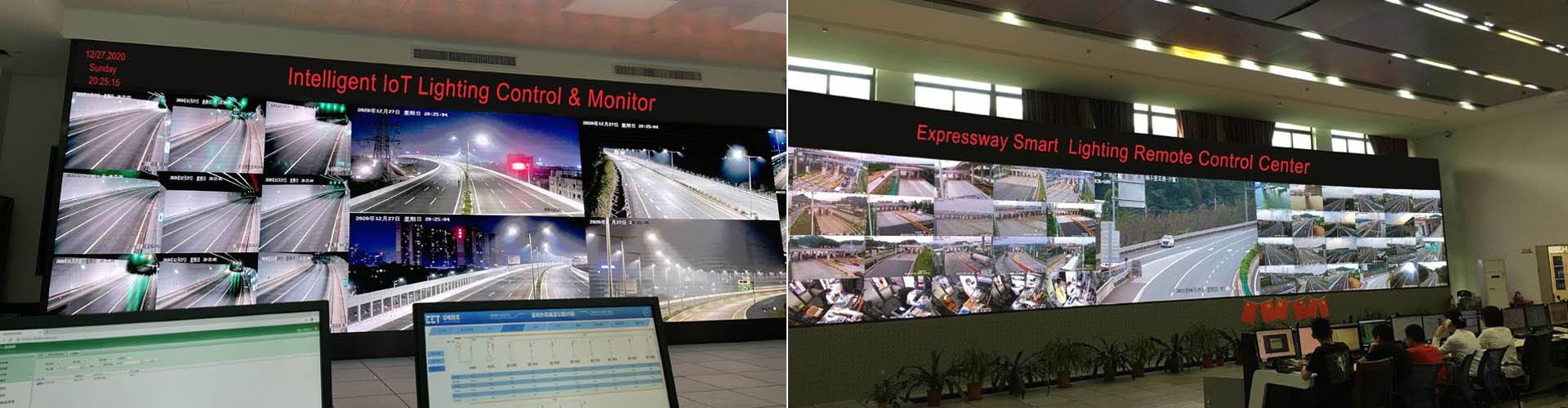
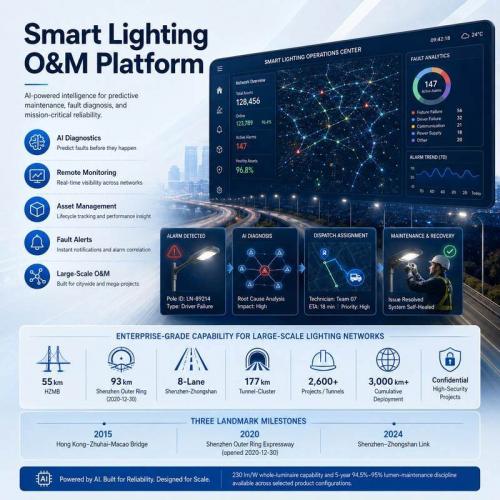
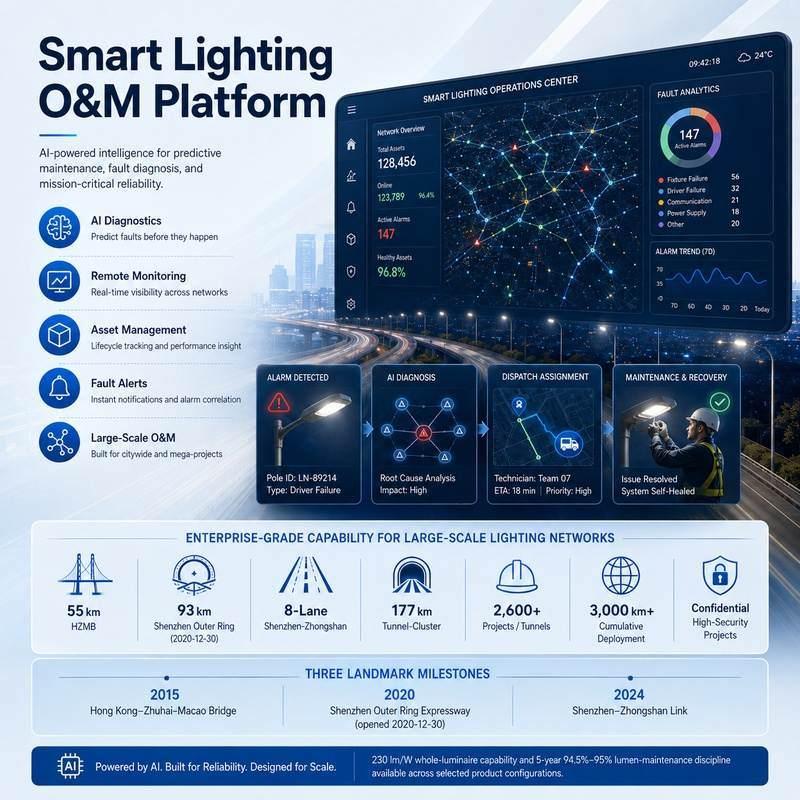
Before comparing AI lighting platforms, watch the field evidence first: 93KM Shenzhen Outer Ring Expressway, 55KM Hong Kong-Zhuhai-Macao Bridge reference, nearly USD 20 Billions investment scale, Shenzhen-Zhongshan Link USD 6.7 billion class world-first 8-lane undersea tunnel + bridge engineering with record-breaking technical difficulty, 177KM Guangfozhao Expressway / 28,000 terminals, 2600+ tunnel projects and 3000+ km roadway lighting deployment experience turn AI Smart City Lighting System from a claim into field evidence.
Real roadway-scale evidence shows interconnected field devices, intelligent lighting cabinets, communication routes and owner-visible operating records. This is the evidence layer buyers should review before trusting AI Smart City Lighting System claims.
EXECUTIVE SYSTEM OVERVIEW
An AI-ready smart LED street lighting system should be evaluated as an owner-controlled roadway operating architecture. Before AI-assisted analysis is added, the project must define the luminaire inventory, controller points, cabinet topology, communication zones, gateway records, sensor inputs, energy data, alarm logic, server route, user authority, interface responsibility, offline behavior, factory testing, site commissioning and lifecycle handover.
CORE TECHNICAL PARAMETERS
This table is the first engineering gate for owners, consultants, EPC contractors and procurement teams. It gives a project-level selection guide before model-level datasheets, wiring diagrams and installation drawings are finalized.
| Parameter | Key Data / Typical Range | Engineering Boundary |
|---|---|---|
| Project Scale | 1K-100Kpcs smart lighting tender framework; historical references include 93 km, 177 km, 28,000 terminals, 2600+ tunnels and 3000+ km roadway lighting deployment experience. | Use controlled zones, gateway groups, commissioning batches and owner records instead of treating the project as one device count. |
| System Type | Street / highway / tunnel / bridge / industrial road AI-ready LED lighting control architecture. | Used for municipal roads, expressways, bridges, tunnels, industrial parks and long-corridor lighting networks. |
| Control Layers | 4 layers: lamp-level controller, cabinet controller, Gateway/Centralized Controller and owner operations-center software. | Final point list depends on luminaire driver interface, cabinet topology, communication route and owner operation policy. |
| Communication Routes | 6 selectable routes: OFDM PLC, LoRA, NB-IoT, CAT-1, Ethernet and fiber. | Hybrid routing should define responsibility, failure domain, recovery sequence and FAT/SAT acceptance method. |
| Dimming and Control | On/off, group dimming, single-lamp dimming, schedule, sensor-triggered policy, manual override and project-defined safe scenes. | Dimming policies must preserve the approved road-lighting standard, minimum safe level and override authority. |
| Response and Scene Logic | 0.1 s class tunnel response where project architecture supports it; sensor trigger zones can be defined by road, tunnel or cabinet group. | Response time must be verified against the selected sensor, gateway, controller, route and acceptance test method. |
| AI-Ready Data Inputs | 8 core record groups: asset identity, status, alarm, energy, command, acknowledgement, returned state and maintenance closure. | AI-assisted functions require clean data meaning, timestamps, quality flags and owner-approved retention rules. |
| Sensor Options | Vehicle detection, illumination, cabinet status, environment, weather or project-selected third-party inputs. | Sensor logic should be witnessed in representative scenes before adaptive or AI-assisted control is enabled. |
| Adaptive CCT | 2700K to 6000K where compatible luminaires and approved scenes are selected. | CCT scenes should be tied to approved road, tunnel, visibility, seasonal or weather policies. |
| Hosting Route | Cloud / private server / local server / control center / owner platform integration. | Security-sensitive projects can define local hosting, network segmentation, controlled remote access and data ownership. |
| Offline Policy | Local schedules, safe scenes, stale-data indication, buffered records and reconnection sequence. | Server loss, route interruption, gateway restart and recovery should be included in FAT/SAT. |
| Interface Route | API / CMS / SCADA / smart-city platform / traffic platform / owner database by project. | Define source of truth, point list, authentication, data direction and witnessed interface tests. |
| Acceptance Records | FAT, SAT, commissioning batch, exception closure, configuration backup, handover package and lifecycle responsibility matrix. | The technical result should be accepted by evidence, not by a dashboard demonstration alone. |
Need the full PDF datasheet? Download or request the complete STSYSTEMPLC technical datasheet for electrical parameters, communication options, wiring diagrams, installation dimensions, model selection details, FAT/SAT records and project configuration notes.
CENTURY ENGINEERING CASE EVIDENCE
AI Smart City Lighting System must be grounded in real infrastructure operation. STSYSTEMPLC experience is built from large-scale road, tunnel and bridge lighting control projects where cabinet logic, gateway communication, pole-level control, dimming rules, maintenance records and owner-side handover must work together. The buyer is not only evaluating one device; the buyer is checking whether the supplier can organize a recoverable operating system.
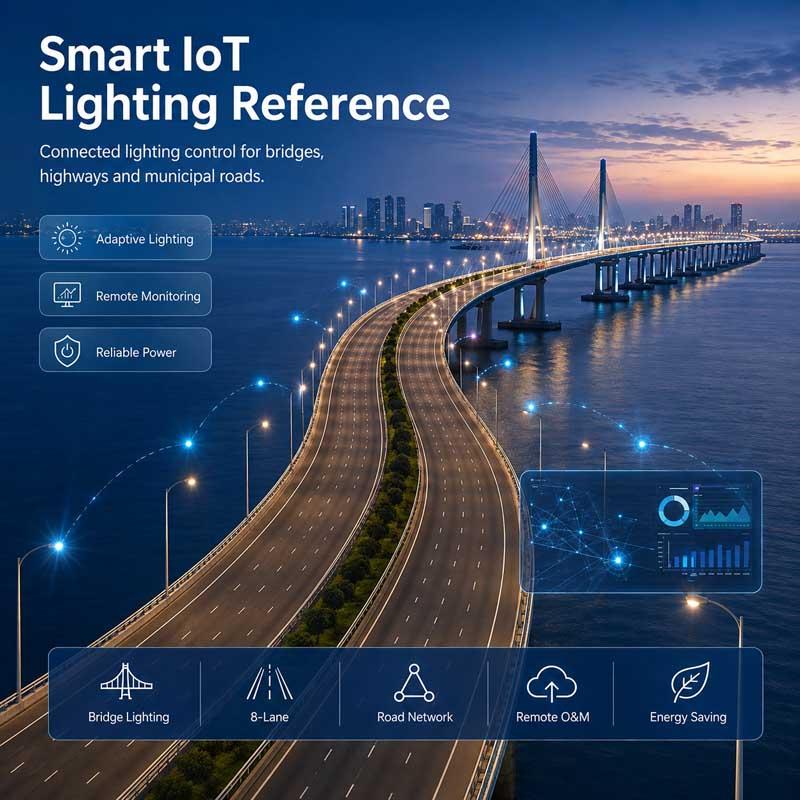
55 km flagship bridge and tunnel engineering reference, one of the Seven Wonders of the modern world, with nearly USD 20 Billions investment scale, where reliability, acceptance records and long-term control logic matter more than AI wording.
USD 6.7 billion class cross-sea megaproject reference: a world-first 8-lane undersea tunnel + bridge engineering corridor with record-breaking technical difficulty, where lighting control, safety scenes and long-term handover evidence must be treated as infrastructure-grade work.
93 km road and tunnel lighting platform experience with PLC, LoRA, motion sensor and ambient sensor integration for smart road lighting operation.
2600+ tunnel project experience supports adaptive dimming, entrance-zone brightness response, emergency strategy and maintenance records.
3000+ km roadway lighting deployment field engineering coverage supports buyer evaluation for highways, municipal roads, bridge approaches, tunnels, service roads, industrial roads and city upgrade programs.
AI DATA FOUNDATION
AI-assisted lighting operation is only as useful as the field data behind it. If a platform cannot reliably separate asset identity, command issue, gateway acknowledgement, returned lamp state, sensor trigger, stale data, communication interruption and maintenance closure, AI analysis may amplify confusion instead of reducing it.
Each luminaire, controller, cabinet, feeder, sensor and gateway should keep the same identity from survey to handover.
Status, alarm, power, energy, dimming level, command and returned state should have clear technical meaning.
Live data, delayed data, stale data, estimated data and missing data should not be displayed as the same condition.
Data ownership, retention, export, interface authority and remote access should be approved before AI features are promoted.
PROVEN AT LARGE INFRASTRUCTURE SCALE
STSYSTEMPLC applies engineering practices developed through long-distance highway and tunnel deployments: stable asset identity, segmented communications, local operating logic, owner-visible records, abnormal-condition verification and controlled handover. AI-ready language should be supported by this control evidence, not by a generic smart-city label.
SECURITY-SENSITIVE INFRASTRUCTURE READINESS
For government, transportation, tunnel, municipal, energy and other security-sensitive infrastructure projects, AI-assisted operation must remain inside the owner's approved control boundary. On-premise servers, private-server deployment, local command-center operation, network segmentation, controlled remote access and closed-network environments can be engineered according to project requirements.
Define cloud, private server, local server or owner platform before software and interface approval.
Separate monitoring, control, configuration, acknowledgement and administrative permissions.
Define which decisions are advisory, which are automatic and which require human approval.
Handover credentials, backups, restoration procedures, update responsibility and auditable change records.
1K-100KPCS TENDER FRAMEWORK
A 1K-100Kpcs AI-ready street, highway or tunnel lighting tender should be divided into traceable engineering zones rather than presented as one undifferentiated device count. The tender design should map every luminaire and controller to its pole, road section, cabinet, feeder, communication zone, gateway, server point, alarm rule, commissioning batch and owner record.
Municipal roads, highways, tunnels, bridges, industrial parks and regional corridors where owners need control, evidence and lifecycle operation.
Define data points, retention, sensor logic, alarm rules, adaptive policies, acceptance evidence and interface responsibility.
Freeze a verified representative template, then replicate through controlled zones, batches, records and site-specific exceptions.
Pause if the proposal promises AI energy savings or fault prediction without field data quality and acceptance criteria.
TERMINAL - SYSTEM - OPERATIONS CENTER
Lamp-level controllers, cabinet-level controllers and project-selected sensors provide asset identity, approved control, measurement, status and event records at the physical roadway layer.
Gateways, intelligent cabinets and selected OFDM PLC, LoRA, NB-IoT, CAT-1, Ethernet or fiber routes normalize field points into schedules, alarms, permissions, reports and maintenance workflow.
The owner-side center supervises zones, devices, exceptions, energy records, commands, users, interfaces and AI-assisted review through the approved hosting route.
COMMUNICATION DECISION MATRIX
| Route | Typical Project Role | Engineering Verification |
|---|---|---|
| OFDM PLC | Uses the lighting power line for field communications where feeder topology and electrical conditions are suitable. | Verify feeder boundaries, phase arrangement, noise sources, cabinet coupling, path changes and representative end points. |
| LoRA | Supports project-selected wireless field links, supplemental coverage or sensor connectivity. | Verify permitted frequency, antenna position, obstructions, interference, link margin and representative route performance. |
| NB-IoT / CAT-1 | Supports selected independent cellular nodes or gateway backhaul where operator service is approved. | Verify carrier coverage, SIM ownership, tariff, lifecycle, signal at the installed location and service interruption behavior. |
| Ethernet / Fiber | Supports cabinet, gateway, control-room or backbone connectivity within the approved owner network. | Verify addressing, switching, segmentation, redundancy, cybersecurity responsibility and physical route. |
| Hybrid Architecture | Combines field and backbone routes for long corridors, mixed topology and phased migration. | Define the responsibility, priority, failure domain and recovery process for every route. |
STRATEGIC BRAND FEATURE COMPARISON
This section is designed for owners, EPCs and strategic partners who already know global lighting, automation, networking, cloud or energy-management brands. The point is not to attack a brand name. The point is to ask whether the delivered project can become one owner-controlled, AI-ready operating system from luminaire to cabinet to gateway to data layer to handover evidence.
For AI-ready replacement evaluation, the owner should compare whether the supplier can define asset identity, gateway zoning, local fallback, data quality flags, interface responsibility, AI recommendation authority and handover recovery before the price table is finalized.
A stronger AI story only matters when it becomes witnessed evidence: FAT records, SAT records, abnormal-condition tests, signed exceptions, backup files, data definitions and a recoverable owner operation package.
| Target Brand / Route | Typical Buyer Perception | STSYSTEMPLC AI-Ready Counter-Position | Procurement Question to Open |
|---|---|---|---|
| Siemens / Schneider / ABB route | Strong power automation, infrastructure credibility and cabinet-side control language. | STSYSTEMPLC focuses on lighting-specific implementation: lamp controller, cabinet logic, gateway record, dimming strategy, fault records, sensor scenes and road/tunnel commissioning. | Does the proposal include lighting-specific returned state, pole identity, adaptive dimming scenes and tunnel emergency behavior, or only general automation? |
| Philips Signify / Schréder route | Strong luminaire brand, smart lighting ecosystem and municipal visibility. | STSYSTEMPLC can support a practical control architecture around existing or selected luminaires, cabinet upgrades, private deployment, gateway evidence and project-specific integration. | Can the owner retain data, server choice, AI-ready records, interface evidence and maintenance continuity without being locked into one proprietary ecosystem? |
| Cisco / IT network route | Strong network, platform and smart-city data story. | STSYSTEMPLC keeps the field lighting operation local-first: approved lighting behavior can continue by controller and gateway rules when WAN, server or cloud connection is unavailable. | Which lighting functions continue locally if the smart-city platform, network or AI service is interrupted? |
| Generic AI dashboard route | Fast visual demo, AI labels, charts, prediction screens and low-friction sales story. | STSYSTEMPLC forces the AI claim back to field evidence: asset map, data meaning, quality flags, command records, returned state, fault closure and owner-approved policy. | Is the AI recommendation traceable to verified field records, or is it only a dashboard score without acceptance evidence? |
| Generic solar / LED supplier route | Lower lamp price and faster quotation. | STSYSTEMPLC sells the operating route: control cabinet, gateway, PLC/LoRA/CAT-1 path, owner records, commissioning method, AI-ready data layer and lifecycle service logic. | Is the offer a lamp list, or a maintainable lighting control system with controller identity, failure behavior and acceptance records? |
AI-ASSISTED USE CASES
Use historical alarms, energy drift, communication quality, switching records and maintenance closure to prioritize inspection before repeated field failure.
Identify abnormal energy use, repeated offline events, unexpected dimming response, cabinet exceptions and sensor patterns for owner review.
Compare traffic, schedule, sensor, weather and road-zone data so dimming policies can be improved without violating the lighting design.
Classify faults by road importance, safety impact, repeated occurrence, cabinet zone and maintenance resource availability.
Review baseline power, operating hours, dimming scenes, seasonal change and measured energy to support evidence-based savings claims.
Keep replacement, configuration change, firmware update, handover and spare-part records connected to each physical asset.
CONTROL AND OPERATING FUNCTIONS
Define sunset, sunrise, seasonal offsets, calendar exceptions and local behavior used when upstream communications are unavailable.
Define zone, time, target level, transition, minimum safe level, override authority and the record that confirms execution.
Define sensor coverage, trigger zone, approved response logic, hold time, fallback and verification method before adaptive control is enabled.
Rain, fog, snow or low-visibility response must follow owner-approved inputs, priorities and lighting rules rather than an uncontrolled algorithm.
Where compatible luminaires are selected, project-defined CCT operation from 2700K to 6000K can support approved seasonal or weather scenes.
Define who may override schedules, the affected zone, expiry, confirmation, restoration and audit record for each action.
LIGHTING PERFORMANCE BOUNDARY
The control system must preserve the road authority's approved lighting classes and operating limits. AI-assisted control does not replace photometric design. Road geometry, surface, traffic, conflict areas, luminance or illuminance, uniformity, glare, maintained performance and field measurement remain part of the lighting design and acceptance scope.
Identify motorized-traffic, conflict, pedestrian and special infrastructure zones under the applicable local or tender standard.
Associate each dimming scene with the approved maintained performance boundary, not only a percentage command.
Adaptive policies should have minimum levels, hold times, fallback scenes and manual override authority.
Commissioning should verify representative road sections, abnormal cases and the difference between command and physical result.
ARCHITECTURAL COMPARISON MATRIX
| Review Item | Generic AI Lighting Claim | STSYSTEMPLC Project-Defined Architecture |
|---|---|---|
| AI Statement | AI saves energy, detects faults and controls lighting automatically. | AI-assisted functions are tied to approved inputs, owner permissions, evidence records, fallback behavior and FAT/SAT. |
| Data Quality | Dashboard values are presented without clear source, timestamp or quality flags. | Asset, command, acknowledgement, returned state, sensor, alarm and maintenance records are separated for review. |
| Safety Boundary | Adaptive dimming is promoted as a feature without lighting-class limits. | Every adaptive scene should preserve approved road-lighting performance and manual override authority. |
| Ownership | Cloud platform controls the project without clear data ownership or handover route. | Cloud, private server, local server or owner platform can be defined with governance and handover records. |
| Acceptance | Normal operation demo is treated as technical acceptance. | Representative normal, abnormal, interruption, recovery, interface and handover tests are witnessed and recorded. |
FAILURE VERIFICATION
Verify local schedules, stale-data indication, buffered records and reconnection sequence when a route is interrupted.
Verify mapping, time, configuration, event records and control logic after restart or replacement.
Verify false trigger, missing trigger, delayed trigger and fallback behavior before adaptive control is accepted.
Verify how operators approve, reject, override, audit or disable AI-assisted recommendations.
Verify how the system displays command success when returned field state is delayed, missing or inconsistent.
Verify meter boundary, baseline, operating hours, dimming policy and abnormal energy patterns before savings claims.
Verify API interruption, authentication failure, data conflict and source-of-truth rules for third-party platforms.
Verify whether the repaired asset, replaced controller and historical record remain linked after field service.
FACTORY TEST AND SITE COMMISSIONING
| Acceptance Item | Factory Test Focus | Site Commissioning Focus |
|---|---|---|
| Controller and Luminaire Interface | Verify power, dimming, status, driver interface, ID and configuration records. | Verify installed luminaire, pole identity, control response and returned state in representative field points. |
| Gateway and Communication | Verify gateway mapping, address plan, route configuration, restart and record retention. | Verify actual PLC, LoRA, cellular, Ethernet or fiber performance under installed conditions. |
| AI-Ready Data Records | Verify status, alarm, energy, sensor, command, acknowledgement and quality flag definitions. | Verify that field events create understandable records for owner review and later AI-assisted analysis. |
| Adaptive Dimming Policy | Verify schedule, sensor-triggered policy, minimum level, fallback, override and audit record. | Verify representative zones, field timing, safe scene, abnormal trigger and recovery behavior. |
| Server and User Authority | Verify roles, permissions, reports, backup, export and interface settings. | Verify owner access, operator workflow, data retention, cybersecurity route and handover process. |
| AI-Assisted Function Review | Verify which functions are advisory, automatic, approval-based or disabled by default. | Verify operator approval, rejection, override, audit trail and responsibility for each enabled function. |
DEPLOYMENT PLAYBOOK
Freeze road sections, poles, luminaires, cabinets, feeders, communication routes, sensors, owner users and required records.
Build a pilot zone that includes normal assets, difficult assets, weak communication points and required interface scenarios.
Test device configuration, gateway mapping, data definitions, alarm rules, adaptive policies and abnormal behavior before shipment.
Commission by controlled batch, close exceptions, train operators, hand over records and define lifecycle responsibilities.
STRATEGIC PARTNER-BRANDED TECHNOLOGY SUPPORT
For qualified strategic partners, STSYSTEMPLC can support partner-branded solution packaging for AI-ready smart LED street lighting projects. The support can include control architecture, gateway evidence logic, communication route design, datasheet matching, tender language, FAT/SAT records and owner-controlled deployment requirements.
Support project architecture, device selection, communication plan, server route, interface list and acceptance documents.
Support controller, gateway and system packaging behind the partner's luminaire portfolio and regional project strategy.
Support owner-side data governance, handover evidence, lifecycle service and controlled AI-assisted operation review.
PDF DATASHEET AND FULL PARAMETER TABLE
For tender review, engineering comparison and internal approval, ask STSYSTEMPLC for the complete PDF datasheet. The PDF can include detailed model parameters, controller and gateway options, communication route selection, wiring diagrams, cabinet interface notes, installation dimensions, software data points and commissioning records.
FAQ
No. AI-ready means the system can organize the control layer, data layer and evidence layer for AI-assisted analysis under owner control. Automatic behavior, if enabled, must be defined by project policy, safety limits, permissions, fallback rules and acceptance tests.
Yes. The architecture is designed as a modular engineering framework for 1K-100Kpcs scale smart street, highway and tunnel lighting tenders. Final zoning, device selection, communications, hosting, interfaces and phased acceptance are defined from the actual tender schedule, drawings and project requirements.
No. The deployment can use an owner-controlled local or private-server environment, an approved cloud service or integration with an existing platform. Project-defined local schedules and essential behavior can remain at selected field components, subject to the approved configuration and acceptance tests.
Predictive maintenance review, anomaly detection, fault priority ranking, energy data review, adaptive dimming policy evaluation and lifecycle asset governance are realistic first-layer use cases when the field data and acceptance records are clear.
The system should record the command source, user, timestamp, target, authorization, expiry, acknowledgement and returned field state. A command record alone should not be treated as proof that the physical luminaire changed state.
Project-defined integration can be evaluated through supported protocols, APIs or data interfaces. The proposal should define the exact point list, direction, data meaning, authentication, source of truth, exception behavior, responsibilities and witnessed acceptance method.
Any savings estimate should identify the baseline, luminaire power, operating hours, dimming scenes, road-lighting limits, seasonal conditions, measurement boundary, calculation method and verification period. AI-assisted analysis does not by itself prove a savings percentage.
The owner should receive the as-built architecture, asset and point map, approved configuration, user roles, credentials, backup and restoration procedure, FAT/SAT records, interface records, training, exception closure, spare-parts route and lifecycle responsibility matrix.
Send the tender requirements, country and applicable standards, luminaire schedule, road and pole data, cabinet and feeder drawings, communication constraints, server policy, interface list, AI-assisted operation expectations and required FAT/SAT records for technical evaluation.

Address : F4,Bldg A, Hanzhong Industrial Park, No.67, North of Xinsha Ave, Xin Tang, Zeng Cheng, Guang Zhou, China
Tel : +86 20 8278 0427
Email : info@stsystemplc.com
Email : morrison426@163.com