



Interconnected High-Efficacy Road Lighting for Municipal Projects
Design high-efficiency whole-luminaire LED street lighting around optical performance, thermal management, driver efficiency, controlled manufacturing and verified electrical performance, using up to 230 lm/W whole-luminaire efficacy where the selected configuration supports it.
Direct Answer for Search and Project Buyers
What Is a High-Efficiency LED Street Light?
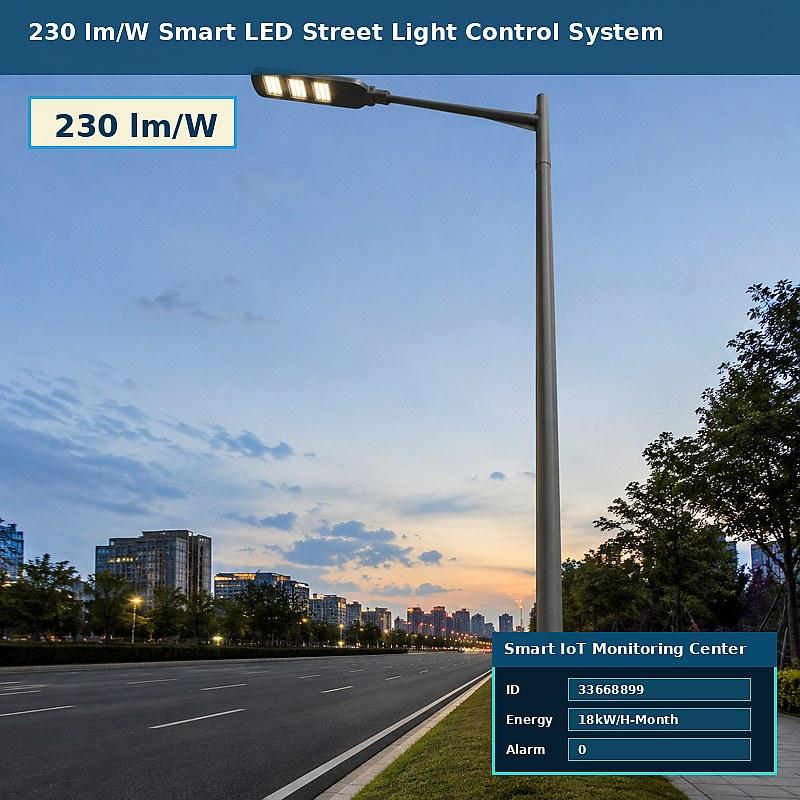
A high-efficiency LED street light is a complete outdoor luminaire whose usable light output is high relative to input power under the offered configuration. For this system page, the claim is connected with whole-luminaire efficacy up to 230 lm/W where optics, CCT, driver and thermal design support that level.
Buyers should verify the complete luminaire rather than accepting LED package numbers. Photometric files, input power, lumen output, power factor, surge protection, dimming compatibility, thermal path and project acceptance records must be checked together.
- Whole-luminaire lm/W
- Photometric and electrical evidence
- Project-bound acceptance
Confirm how this block changes the buyer's road-lighting decision, not only the product description. For this system page, every section should connect efficiency with controllability, reliability and handover evidence.
Record the practical verification method for what is a high-efficiency led street light? so the page remains tied to field testing, owner review and signed acceptance.
Project Fit
Where This Page Fits in the Street Lighting Matrix
This page fits municipal road, industrial park, logistics road, campus, airport access road, bridge approach and smart-city pilot projects that need efficient luminaires with a future-ready control route. It is not written as a simple lamp page.
The project should use this route when the owner needs lower energy use, reliable road illumination, controllable dimming, field status, cabinet communication and long-term maintenance visibility. If the project only needs fixed-output lamps, the scope can be simplified.
- Municipal and private roads
- Energy saving with control
- Future operations visibility
Confirm how this block changes the buyer's road-lighting decision, not only the product description. For this system page, every section should connect efficiency with controllability, reliability and handover evidence.
Record the practical verification method for where g173 fits in the street lighting matrix so the page remains tied to field testing, owner review and signed acceptance.
230 lm/W Boundary
How the 230 lm/W Claim Should Be Read
The phrase up to 230 lm/W must be treated as a configuration-dependent whole-luminaire performance statement. Optical lens, CCT, CRI, driver, housing temperature and production version can change the final value.
This boundary protects the buyer from unrealistic chip-level claims. The quotation should state the exact model, wattage, CCT, optics, test condition and accepted tolerance so engineering teams can compare real deliverables.
- Configuration-dependent
- No chip-only claim
- Model and test condition required
Confirm how this block changes the buyer's road-lighting decision, not only the product description. For this system page, every section should connect efficiency with controllability, reliability and handover evidence.
Record the practical verification method for how the 230 lm/w claim should be read so the page remains tied to field testing, owner review and signed acceptance.
| Review Item | Project Meaning | Acceptance Evidence |
|---|---|---|
| Specification | Define the exact requirement for how the 230 lm/w claim should be read before quotation. | Datasheet, drawing, parameter sheet or project note. |
| Configuration | Match luminaire, controller, gateway, cabinet and server route. | Configured device list and topology record. |
| Acceptance | Verify the promised behavior under project conditions. | FAT/SAT result and owner handover file. |
Road Lighting Design Input
Road and Pole Data Before Quotation
Road lighting cannot be judged only by luminaire wattage. Pole height, pole distance, road width, lane count, mounting angle, arm length, road class, pavement reflectance and installation environment decide whether the selected lamp can meet the target.
Before final quotation, STSYSTEMPLC should receive the road section drawing or a clear parameter sheet. If data is incomplete, a preliminary recommendation can be made, but final optics and wattage should remain conditional.
- Pole height and spacing
- Road width and class
- Target illuminance
Confirm how this block changes the buyer's road-lighting decision, not only the product description. For this system page, every section should connect efficiency with controllability, reliability and handover evidence.
Record the practical verification method for road and pole data before quotation so the page remains tied to field testing, owner review and signed acceptance.
Optical Distribution
Lens and Beam Selection
High efficacy is useful only when the light reaches the road surface correctly. Type II, Type III, asymmetric road optics, pedestrian-zone optics and special project lenses should be selected by layout and standard.
Wrong optics can waste output even when the lm/W number is high. This page therefore links efficiency with lighting effect, glare boundary, uniformity and real road calculation instead of treating lumen output as the only target.
- IES/LDT file
- Uniformity review
- Glare and spill control
Confirm how this block changes the buyer's road-lighting decision, not only the product description. For this system page, every section should connect efficiency with controllability, reliability and handover evidence.
Record the practical verification method for lens and beam selection so the page remains tied to field testing, owner review and signed acceptance.
Thermal Management
Housing, Heat Path and Long-Term Output
Thermal management protects lumen maintenance, driver life and field reliability. The housing design, heat sink path, LED board contact, ambient temperature and installation airflow influence actual performance over years. For long-life road projects, the buyer should ask how the offered lamp is expected to behave after five years, not only how bright a new sample looks in a short test.
STSYSTEMPLC can position lumen maintenance around project-verified long-term performance, such as approximately 94.5-95% light output after five years and a controlled decline over a ten-year operating view where the selected configuration, thermal environment and driver route support it. This is more meaningful than inflated 245-250 lm/W slogans based on LED package binning, over-driven samples, narrow CCT/CRI conditions or thermal-interface glue and assembly tricks that do not survive real outdoor heat.
- Heat sink path
- Ambient temperature
- Five-year lumen maintenance
- Avoid inflated 245-250 lm/W claims
Confirm how this block changes the buyer's road-lighting decision, not only the product description. For this system page, every section should connect efficiency with controllability, reliability and handover evidence.
Record the practical verification method for housing, heat path and long-term output so the page remains tied to field testing, owner review and signed acceptance.
| Review Item | Project Meaning | Acceptance Evidence |
|---|---|---|
| Specification | Define the exact requirement for housing, heat path and long-term output before quotation. | Datasheet, drawing, parameter sheet or project note. |
| Configuration | Match luminaire, controller, gateway, cabinet and server route. | Configured device list and topology record. |
| Acceptance | Verify the promised behavior under project conditions. | FAT/SAT result and owner handover file. |
Driver Efficiency
Driver Selection and Dimming Compatibility
The driver is part of the efficacy result and the control architecture. Its efficiency, power factor, THD, surge level, dimming interface and protection behavior should be aligned with the luminaire and smart controller.
DALI, 0-10V, PWM or project-specific dimming must be confirmed before controller matching. If driver and controller interfaces are not aligned, later software work cannot repair the hardware mismatch.
- Power factor and THD
- Dimming interface
- Protection behavior
Confirm how this block changes the buyer's road-lighting decision, not only the product description. For this system page, every section should connect efficiency with controllability, reliability and handover evidence.
Record the practical verification method for driver selection and dimming compatibility so the page remains tied to field testing, owner review and signed acceptance.
Surge and Outdoor Reliability
Electrical Protection for Road Conditions
Outdoor street lights face lightning, switching surge, grid fluctuation, moisture, dust and long operating hours. Surge protection, grounding, cable entry and enclosure design should be included in the project review.
Reliability is not only an IP rating. It includes connector quality, installation workmanship, cabinet protection, driver protection and the ability to identify field failures without repeated night patrols.
- Surge protection
- Grounding route
- Connector and cable entry
Confirm how this block changes the buyer's road-lighting decision, not only the product description. For this system page, every section should connect efficiency with controllability, reliability and handover evidence.
Record the practical verification method for electrical protection for road conditions so the page remains tied to field testing, owner review and signed acceptance.
Interconnected Architecture
From Lamp Terminal to Operations Center
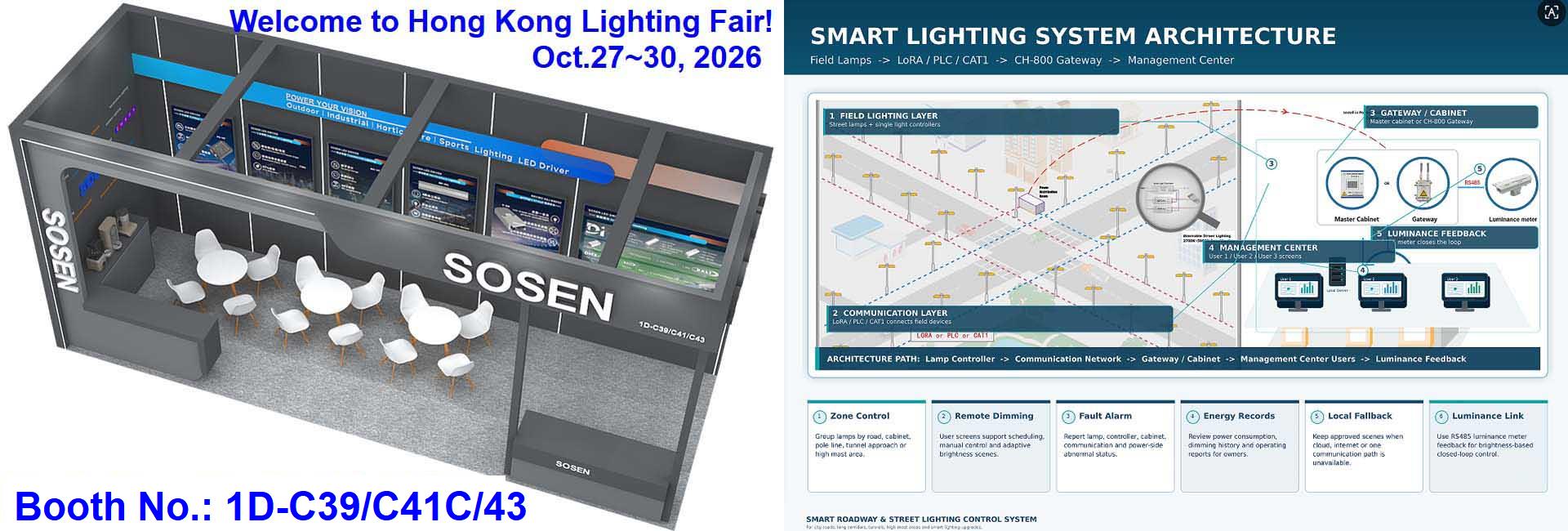
This system can include luminaire terminal, single-lamp controller, distribution cabinet, CH-800 or project gateway, PLC / LoRa / NB-IoT / CAT-1 communication, server and operations interface.
This architecture turns each pole into an identifiable asset. The owner can group lights, adjust schedules, view alarms, inspect energy behavior and maintain records across the project lifecycle.
- Terminal
- Gateway
- Operations center
Confirm how this block changes the buyer's road-lighting decision, not only the product description. For this system page, every section should connect efficiency with controllability, reliability and handover evidence.
Record the practical verification method for from lamp terminal to operations center so the page remains tied to field testing, owner review and signed acceptance.
| Review Item | Project Meaning | Acceptance Evidence |
|---|---|---|
| Specification | Define the exact requirement for from lamp terminal to operations center before quotation. | Datasheet, drawing, parameter sheet or project note. |
| Configuration | Match luminaire, controller, gateway, cabinet and server route. | Configured device list and topology record. |
| Acceptance | Verify the promised behavior under project conditions. | FAT/SAT result and owner handover file. |
Single-Lamp Controller
Pole-Level Control and Identification
A single-lamp controller gives each LED street light an address and a control point. It may support switching, dimming, metering, status feedback, alarm reporting and remote parameter configuration according to hardware model.
Controller selection should consider current capacity, enclosure, connector, dimming interface, waterproof level, sampling function and firmware policy. The field identity must be clear before installation.
- Device ID
- Switching and dimming
- Status feedback
Confirm how this block changes the buyer's road-lighting decision, not only the product description. For this system page, every section should connect efficiency with controllability, reliability and handover evidence.
Record the practical verification method for pole-level control and identification so the page remains tied to field testing, owner review and signed acceptance.
Cabinet Gateway
Field Data Collection and Local Continuity
The cabinet gateway connects multiple lighting terminals with the server. It can execute schedules, collect status, communicate with controllers and preserve basic operation when the external network is interrupted.
Gateway quantity and cabinet grouping should be planned with circuit boundaries. A practical project map connects each cabinet, circuit, pole range, controller route and server record.
- Gateway per cabinet
- Local schedule
- Circuit mapping
Confirm how this block changes the buyer's road-lighting decision, not only the product description. For this system page, every section should connect efficiency with controllability, reliability and handover evidence.
Record the practical verification method for field data collection and local continuity so the page remains tied to field testing, owner review and signed acceptance.
PLC Communication
Power-Line Communication Route
PLC can use existing power lines for control communication where cable topology, distance and noise conditions are suitable. It is attractive for road sections where extra signal cable is costly or impossible.
Before selecting PLC, confirm cabinet segmentation, cable branch complexity, transformer boundary, large-load interference and grounding condition. Pilot testing should be used when old cables are uncertain.
- Cable topology
- Interference check
- Pilot circuit
Confirm how this block changes the buyer's road-lighting decision, not only the product description. For this system page, every section should connect efficiency with controllability, reliability and handover evidence.
Record the practical verification method for power-line communication route so the page remains tied to field testing, owner review and signed acceptance.
| Review Item | Project Meaning | Acceptance Evidence |
|---|---|---|
| Specification | Define the exact requirement for power-line communication route before quotation. | Datasheet, drawing, parameter sheet or project note. |
| Configuration | Match luminaire, controller, gateway, cabinet and server route. | Configured device list and topology record. |
| Acceptance | Verify the promised behavior under project conditions. | FAT/SAT result and owner handover file. |
LoRa Communication
Wireless Field Communication Route
LoRa can support scattered road sections, parks and retrofit projects where power-line conditions are difficult. It gives the project a flexible wireless route from controllers to gateway.
Antenna height, gateway position, obstruction, local frequency rules and maintenance access must be planned. Wireless communication still needs engineering design and site verification.
- Gateway density
- Antenna position
- Site obstruction
Confirm how this block changes the buyer's road-lighting decision, not only the product description. For this system page, every section should connect efficiency with controllability, reliability and handover evidence.
Record the practical verification method for wireless field communication route so the page remains tied to field testing, owner review and signed acceptance.
NB-IoT and CAT-1
Carrier Network Options
NB-IoT and CAT-1 can be used when the project accepts carrier-network dependency or when independent node connectivity is preferred. They can reduce field network construction but introduce SIM and coverage management.
The owner should confirm operator coverage, communication cost, data policy and long-term service availability. These items should appear in the technical and commercial scope.
- Carrier coverage
- SIM policy
- Data cost
Confirm how this block changes the buyer's road-lighting decision, not only the product description. For this system page, every section should connect efficiency with controllability, reliability and handover evidence.
Record the practical verification method for carrier network options so the page remains tied to field testing, owner review and signed acceptance.
Hybrid Communication
Mixed Network Without Losing Topology Control
A large road-lighting project may combine PLC for main circuits, LoRa for scattered branches and carrier communication for special nodes. Mixed communication is acceptable when the topology is documented.
The system interface should show which route each cabinet or pole uses. Otherwise, maintenance teams cannot diagnose whether a failure is caused by lamp, controller, gateway, cable or network.
- Route by site condition
- Visible topology
- Maintenance diagnosis
Confirm how this block changes the buyer's road-lighting decision, not only the product description. For this system page, every section should connect efficiency with controllability, reliability and handover evidence.
Record the practical verification method for mixed network without losing topology control so the page remains tied to field testing, owner review and signed acceptance.
| Review Item | Project Meaning | Acceptance Evidence |
|---|---|---|
| Specification | Define the exact requirement for mixed network without losing topology control before quotation. | Datasheet, drawing, parameter sheet or project note. |
| Configuration | Match luminaire, controller, gateway, cabinet and server route. | Configured device list and topology record. |
| Acceptance | Verify the promised behavior under project conditions. | FAT/SAT result and owner handover file. |
Dimming Strategy
Energy Saving With Road Safety Boundary
Dimming strategy may include time schedule, astronomical clock, midnight reduction, traffic-linked logic, manual override and emergency full-bright mode. It should match road class and owner approval.
Energy saving must not override safety. Minimum level, maximum change speed, exception rule and return-to-normal behavior should be documented before handover.
- Schedule
- Minimum brightness
- Emergency override
Confirm how this block changes the buyer's road-lighting decision, not only the product description. For this system page, every section should connect efficiency with controllability, reliability and handover evidence.
Record the practical verification method for energy saving with road safety boundary so the page remains tied to field testing, owner review and signed acceptance.
Sensor Integration
Photocell, Motion and Environmental Inputs
Sensors can help the street light system respond to daylight, motion, traffic or environmental conditions. The value is not the sensor itself, but the control logic and acceptance boundary connected to it.
Photocell dimming, motion-linked brightening and environmental alarms require calibration, response time, delay period, zone grouping and safety ceiling. The project should not add sensor features without rules.
- Photocell
- Motion detection
- Calibration
Confirm how this block changes the buyer's road-lighting decision, not only the product description. For this system page, every section should connect efficiency with controllability, reliability and handover evidence.
Record the practical verification method for photocell, motion and environmental inputs so the page remains tied to field testing, owner review and signed acceptance.
Energy Monitoring
Consumption Visibility for Owners
Energy monitoring allows the owner to compare expected and actual operation. Depending on hardware, the system may record voltage, current, power, energy, abnormal load and dimming-state consumption.
This evidence can support energy-saving reports, maintenance decisions and abnormal-use investigation. Accuracy claims must stay within the meter and sampling method actually installed.
- Cabinet energy
- Pole status
- Trend report
Confirm how this block changes the buyer's road-lighting decision, not only the product description. For this system page, every section should connect efficiency with controllability, reliability and handover evidence.
Record the practical verification method for consumption visibility for owners so the page remains tied to field testing, owner review and signed acceptance.
| Review Item | Project Meaning | Acceptance Evidence |
|---|---|---|
| Specification | Define the exact requirement for consumption visibility for owners before quotation. | Datasheet, drawing, parameter sheet or project note. |
| Configuration | Match luminaire, controller, gateway, cabinet and server route. | Configured device list and topology record. |
| Acceptance | Verify the promised behavior under project conditions. | FAT/SAT result and owner handover file. |
Alarm and Failure Diagnosis
Finding Faults Faster
Common events may include lamp offline, controller offline, driver abnormality, communication loss, cabinet exception, overcurrent, voltage anomaly and schedule failure. Alarm categories should be meaningful to maintenance staff.
A practical alarm workflow defines severity, responsible user, notification route, response time and closure evidence. Without workflow, a smart system can generate noise instead of solving problems.
- Alarm category
- Responsible user
- Closure record
Confirm how this block changes the buyer's road-lighting decision, not only the product description. For this system page, every section should connect efficiency with controllability, reliability and handover evidence.
Record the practical verification method for finding faults faster so the page remains tied to field testing, owner review and signed acceptance.
Maintenance Workflow
From Night Patrol to Device Records
Device identity lets the maintenance team know which pole, cabinet, controller and circuit are involved. This reduces repeated site checks and helps separate lamp failure from driver, controller, communication or cabinet problems.
Maintenance records should include installation date, replacement history, fault cause, spare part, technician and final verification. This turns street lighting into a manageable asset system.
- Pole identity
- Fault ticket
- Replacement history
Confirm how this block changes the buyer's road-lighting decision, not only the product description. For this system page, every section should connect efficiency with controllability, reliability and handover evidence.
Record the practical verification method for from night patrol to device records so the page remains tied to field testing, owner review and signed acceptance.
Data Sovereignty
Owner-Controlled Server and Records
Owner-control principle: STSYSTEMPLC can supply hardware only or cooperate with the owner, EPC and software team on server and interface development. The project may use an owner-controlled on-premises server, private cloud or approved third-party platform; no mandatory proprietary STSYSTEMPLC cloud dependency is required.
Cybersecurity claims remain limited to the controls actually specified, implemented and tested for the project. Account permission, log retention, backup route and interface approval should be written into scope.
- Owner server
- Permission
- No mandatory cloud dependency
Confirm how this block changes the buyer's road-lighting decision, not only the product description. For this system page, every section should connect efficiency with controllability, reliability and handover evidence.
Record the practical verification method for owner-controlled server and records so the page remains tied to field testing, owner review and signed acceptance.
| Review Item | Project Meaning | Acceptance Evidence |
|---|---|---|
| Specification | Define the exact requirement for owner-controlled server and records before quotation. | Datasheet, drawing, parameter sheet or project note. |
| Configuration | Match luminaire, controller, gateway, cabinet and server route. | Configured device list and topology record. |
| Acceptance | Verify the promised behavior under project conditions. | FAT/SAT result and owner handover file. |
Operations Center
Map, Status, Alarm and Reporting
The operations center should help operators see road zones, cabinet status, lamp status, schedules, alarms, energy trends and maintenance records. It should not be only a decorative dashboard.
For city or industrial park owners, role permission matters. Administrators, operators, maintenance staff and owner supervisors should not all have the same authority.
- Map view
- Role permission
- Reports
Confirm how this block changes the buyer's road-lighting decision, not only the product description. For this system page, every section should connect efficiency with controllability, reliability and handover evidence.
Record the practical verification method for map, status, alarm and reporting so the page remains tied to field testing, owner review and signed acceptance.
Retrofit Route
Upgrading Existing LED Street Lights
Retrofit work must check existing luminaires, drivers, cabinets, cables and communication conditions. Some lamps can be upgraded with controllers; others may require driver replacement or full luminaire replacement.
The safe method is to test a representative circuit before mass installation. This verifies controller interface, PLC or wireless route, dimming response and alarm behavior under real conditions.
- Driver check
- Pilot circuit
- Mass method
Confirm how this block changes the buyer's road-lighting decision, not only the product description. For this system page, every section should connect efficiency with controllability, reliability and handover evidence.
Record the practical verification method for upgrading existing led street lights so the page remains tied to field testing, owner review and signed acceptance.
New Project Route
Designing Control From the Beginning
New roads allow control architecture to be designed together with lighting and electrical works. Cabinet layout, cable route, gateway position, pole identity and server route can be prepared before installation.
This lowers commissioning risk and helps the owner receive a complete handover package. Smart control should not be treated as an afterthought when long-term operation is required.
- Design early
- Map topology
- Prepare handover
Confirm how this block changes the buyer's road-lighting decision, not only the product description. For this system page, every section should connect efficiency with controllability, reliability and handover evidence.
Record the practical verification method for designing control from the beginning so the page remains tied to field testing, owner review and signed acceptance.
| Review Item | Project Meaning | Acceptance Evidence |
|---|---|---|
| Specification | Define the exact requirement for designing control from the beginning before quotation. | Datasheet, drawing, parameter sheet or project note. |
| Configuration | Match luminaire, controller, gateway, cabinet and server route. | Configured device list and topology record. |
| Acceptance | Verify the promised behavior under project conditions. | FAT/SAT result and owner handover file. |
Factory Test
FAT Before Shipment
Factory testing should verify representative luminaires, controllers, gateways, dimming commands, schedule behavior, alarm reporting, communication route and server interface where included.
The report should record firmware version, device configuration, test method, sample quantity, result and limitation. It should use project-like naming where possible.
- Firmware record
- Dimming test
- Alarm test
Confirm how this block changes the buyer's road-lighting decision, not only the product description. For this system page, every section should connect efficiency with controllability, reliability and handover evidence.
Record the practical verification method for fat before shipment so the page remains tied to field testing, owner review and signed acceptance.
Site Commissioning
SAT Under Real Road Conditions
Site commissioning confirms that installed devices work in the real cabinet, cable, pole and network environment. It should include device identification, group control, schedule test, dimming verification, alarm simulation and owner training.
Any exception should be recorded with correction responsibility. Site acceptance should be a controlled engineering process, not a quick power-on ceremony.
- Device mapping
- Group test
- Owner training
Confirm how this block changes the buyer's road-lighting decision, not only the product description. For this system page, every section should connect efficiency with controllability, reliability and handover evidence.
Record the practical verification method for sat under real road conditions so the page remains tied to field testing, owner review and signed acceptance.
Factory Test & Site Commissioning
Acceptance Package for High-Efficiency Street Lighting
Factory Test & Site Commissioning connect pre-shipment proof with field proof. Together they define what was configured, tested, corrected and handed over.
For this system page, acceptance should include luminaire performance evidence, controller and gateway configuration, communication status, dimming behavior, alarm behavior, energy data availability, user permissions and final handover records.
- FAT report
- SAT report
- Signed package
Confirm how this block changes the buyer's road-lighting decision, not only the product description. For this system page, every section should connect efficiency with controllability, reliability and handover evidence.
Record the practical verification method for acceptance package for g173 so the page remains tied to field testing, owner review and signed acceptance.
| Review Item | Project Meaning | Acceptance Evidence |
|---|---|---|
| Specification | Define the exact requirement for acceptance package for g173 before quotation. | Datasheet, drawing, parameter sheet or project note. |
| Configuration | Match luminaire, controller, gateway, cabinet and server route. | Configured device list and topology record. |
| Acceptance | Verify the promised behavior under project conditions. | FAT/SAT result and owner handover file. |
| FAT / SAT Item | Factory Test Before Shipment | Site Commissioning After Installation |
|---|---|---|
| Luminaire Performance | Verify offered model, wattage, CCT, optics, input power and whole-luminaire efficacy evidence. | Confirm installed lamp position, actual road effect, grouping and owner-approved operating mode. |
| Controller Matching | Check single-lamp controller ID, dimming interface, switching command, feedback signal and firmware version. | Confirm every installed pole can be identified, controlled, dimmed and located in the owner record. |
| Gateway and Cabinet | Test gateway communication, cabinet mapping, schedule storage and fallback behavior under simulated conditions. | Verify real cabinet wiring, circuit-pole relation, manual override and local recovery procedure. |
| Communication Route | Confirm PLC, LoRa, NB-IoT, CAT-1 or mixed route under representative test topology. | Measure online behavior under real cable distance, obstruction, cabinet location and network coverage. |
| Dimming and Schedule | Run project schedule, dimming level, group command and emergency full-bright command in factory configuration. | Witness night or controlled-condition dimming, schedule execution, override and return-to-normal behavior. |
| Alarm and Recovery | Simulate offline, abnormal power, communication failure and controller exception where hardware supports it. | Record real alarm display, response route, maintenance responsibility and closure evidence. |
| Owner Handover | Prepare device list, topology, settings, test records and known limitations before shipment. | Hand over account roles, operation training, SAT report, unresolved item list and signed acceptance package. |
Brand Feature Comparison
Strategic Partner-Branded Technology Support
Brand comparison should focus on functions and evidence rather than attacking other suppliers. Buyers need to know whether a supplier can cover luminaire, controller, gateway, cabinet, server cooperation and acceptance records.
STSYSTEMPLC should be positioned as an engineering route for buyers who need owner-controlled data, open integration cooperation and field-proven lighting system experience.
- Feature comparison
- Evidence boundary
- Partner support
Confirm how this block changes the buyer's road-lighting decision, not only the product description. For this system page, every section should connect efficiency with controllability, reliability and handover evidence.
Record the practical verification method for strategic partner-branded technology support so the page remains tied to field testing, owner review and signed acceptance.
Usually sells wattage, housing style, chip brand, optical file and a peak efficiency number. Controller, gateway, cabinet, server, data ownership and field acceptance are often treated as separate responsibilities.
Connects high-efficiency luminaire selection with single-lamp control, gateway communication, smart power cabinet logic, owner-controlled data and Factory Test & Site Commissioning evidence.
| Comparison Point | Typical High-Efficiency Lamp Offer | STSYSTEMPLC System-Level Offer |
|---|---|---|
| Efficiency Claim | May highlight chip bin, lab sample or best-case CCT condition. | Positions up to 230 lm/W as a whole-luminaire, configuration-bound result. |
| Long-Term Output | Often emphasizes new-lamp brightness while avoiding five-year light output discussion. | Connects efficacy with thermal path, driver life and five-year lumen maintenance review. |
| 245-250 lm/W Slogan | May use over-driven samples, narrow CCT / CRI conditions or assembly tricks to create a higher number. | Rejects inflated claims that cannot survive real outdoor heat, project configuration and acceptance testing. |
| Control Interface | Dimming and controller compatibility may be left unclear until installation. | Checks driver interface, controller model, gateway route and command response before mass deployment. |
| Communication Route | Usually outside the lamp offer or handled as a generic accessory. | Designs PLC, LoRa, NB-IoT, CAT-1 or mixed communication according to site condition. |
| Cabinet Integration | Power cabinet, circuit mapping and manual fallback may remain outside supplier responsibility. | Links pole identity, cabinet gateway, circuit route and local recovery into the project handover path. |
| Data Ownership | May depend on a supplier platform or undefined third-party integration. | Supports owner-controlled server, private cloud or approved third-party platform without mandatory proprietary cloud dependency. |
| Acceptance Evidence | Datasheet and sample test may be the main proof. | Requires FAT/SAT records, configured limits, communication status, alarm behavior and signed handover evidence. |
Alternative Route Comparison
Lamp-Only, Retrofit or Full System
A lamp-only route is suitable when fixed-output lighting is enough. A controller retrofit route is suitable when existing luminaires and cabinets remain useful. A full system route is suitable when the owner needs long-term controllability and records.
The correct path depends on budget, existing assets, road class, owner IT policy and future expansion. This page helps the buyer avoid overbuying or underbuilding.
- Lamp-only
- Controller retrofit
- Full system
Confirm how this block changes the buyer's road-lighting decision, not only the product description. For this system page, every section should connect efficiency with controllability, reliability and handover evidence.
Record the practical verification method for lamp-only, retrofit or full system so the page remains tied to field testing, owner review and signed acceptance.
Scalable Deployment Series
Small Road Section to City Operations
A small project may need only efficient luminaires and basic controller management. A medium project may add cabinet gateways and local server. A city project may need private cloud, multi-zone operation and integration interfaces.
Scalability should be protected by consistent device IDs, cabinet mapping, communication route and data structure from the first phase.
- Small
- Medium
- City
Confirm how this block changes the buyer's road-lighting decision, not only the product description. For this system page, every section should connect efficiency with controllability, reliability and handover evidence.
Record the practical verification method for small road section to city operations so the page remains tied to field testing, owner review and signed acceptance.
| Review Item | Project Meaning | Acceptance Evidence |
|---|---|---|
| Specification | Define the exact requirement for small road section to city operations before quotation. | Datasheet, drawing, parameter sheet or project note. |
| Configuration | Match luminaire, controller, gateway, cabinet and server route. | Configured device list and topology record. |
| Acceptance | Verify the promised behavior under project conditions. | FAT/SAT result and owner handover file. |
Customer Tier Coverage
Contractor, EPC and Owner Needs
Contractors may need reliable hardware and simple commissioning. EPC teams may need topology drawings, FAT/SAT evidence and interface coordination. Owners may need data sovereignty, reports and lifecycle maintenance.
This page keeps these needs visible so each customer can select the right package without forcing every project into the heaviest version.
- Contractor
- EPC
- Owner
Confirm how this block changes the buyer's road-lighting decision, not only the product description. For this system page, every section should connect efficiency with controllability, reliability and handover evidence.
Record the practical verification method for contractor, epc and owner needs so the page remains tied to field testing, owner review and signed acceptance.
Commercial Scope
BOM and Responsibility Boundary
The project BOM may include luminaires, drivers, single-lamp controllers, gateways, cabinet devices, sensors, antennas, server software, integration service, spare parts and commissioning support.
Scope should state who supplies equipment, who installs it, who modifies cabinets, who deploys server, who tests communication and who signs acceptance. Clear responsibility prevents integration disputes.
- BOM
- Responsibility
- Handover
Confirm how this block changes the buyer's road-lighting decision, not only the product description. For this system page, every section should connect efficiency with controllability, reliability and handover evidence.
Record the practical verification method for bom and responsibility boundary so the page remains tied to field testing, owner review and signed acceptance.
Tender and RFQ Checklist
Information Needed for Quotation
A useful RFQ includes road drawings, pole height, spacing, road width, lamp quantity, power range, cabinet quantity, voltage, CCT, optics, dimming requirement, communication preference, server route and acceptance scope.
If the buyer cannot provide every item, STSYSTEMPLC can still provide a preliminary route. Final quotation should remain tied to confirmed project data.
- Road data
- Device quantity
- Acceptance scope
Confirm how this block changes the buyer's road-lighting decision, not only the product description. For this system page, every section should connect efficiency with controllability, reliability and handover evidence.
Record the practical verification method for information needed for quotation so the page remains tied to field testing, owner review and signed acceptance.
| Review Item | Project Meaning | Acceptance Evidence |
|---|---|---|
| Specification | Define the exact requirement for information needed for quotation before quotation. | Datasheet, drawing, parameter sheet or project note. |
| Configuration | Match luminaire, controller, gateway, cabinet and server route. | Configured device list and topology record. |
| Acceptance | Verify the promised behavior under project conditions. | FAT/SAT result and owner handover file. |
Documentation
Drawings, Settings and Handover Files
Documentation should include topology drawings, cabinet-pole mapping, device list, communication route, configuration records, FAT/SAT reports, user roles, maintenance instructions and evidence video reference.
Good documentation makes future maintenance possible. It also helps the owner keep control when staff, contractors or software teams change.
- Topology
- Settings
- Records
Confirm how this block changes the buyer's road-lighting decision, not only the product description. For this system page, every section should connect efficiency with controllability, reliability and handover evidence.
Record the practical verification method for drawings, settings and handover files so the page remains tied to field testing, owner review and signed acceptance.
| Review Item | Project Meaning | Acceptance Evidence |
|---|---|---|
| Specification | Define the exact requirement for drawings, settings and handover files before quotation. | Datasheet, drawing, parameter sheet or project note. |
| Configuration | Match luminaire, controller, gateway, cabinet and server route. | Configured device list and topology record. |
| Acceptance | Verify the promised behavior under project conditions. | FAT/SAT result and owner handover file. |
Risk Control
Preventing Common Project Failures
Common failures include exaggerated efficacy claims, wrong optics, driver mismatch, weak surge design, unclear communication route, missing device IDs, untested dimming logic and undocumented server ownership.
This page controls these risks by connecting performance, field control, communication, data and acceptance into one review sequence.
- Claim risk
- Interface risk
- Acceptance risk
Confirm how this block changes the buyer's road-lighting decision, not only the product description. For this system page, every section should connect efficiency with controllability, reliability and handover evidence.
Record the practical verification method for preventing common project failures so the page remains tied to field testing, owner review and signed acceptance.
FAQ
Buyer Questions Before Ordering
| Buyer Question | Engineering Answer | What to Confirm |
|---|---|---|
| Can the luminaire reach 230 lm/W? | It depends on the exact wattage, CCT, optics, driver and thermal configuration. The claim should be confirmed as whole-luminaire efficacy, not an LED package number. | Model, optics, CCT, input power, lumen output and test condition. |
| Can the system work without a mandatory cloud platform? | Yes. The project may use an owner-controlled on-premises server, private cloud or approved third-party platform according to the approved architecture. | Server ownership, account roles, interface scope and data policy. |
| Can existing LED street lights be upgraded? | Often yes, but the existing driver interface, cabinet condition, cable topology, surge protection and communication route must be checked before mass retrofit. | Driver interface, cabinet space, cable route, controller model and pilot test. |
| Is PLC always better than wireless communication? | No. PLC, LoRa, NB-IoT and CAT-1 fit different site conditions. The final route should be selected after cable, distance, obstruction and owner policy review. | Cable condition, gateway position, carrier coverage and maintenance policy. |
Related Internal Links
Bottom Link Direction After URL Lock
The bottom internal link block should be inserted only with real published URLs. Recommended directions include smart street lighting system, CH-800 gateway, single-lamp controller, smart power cabinet, hybrid solar-grid street light and digital industry lighting system pages.
Do not place Interconnected inside the URL slug. Use concise anchor text and real href values after the corresponding pages are locked.
- Real URLs only
- Short slug
- Engineering anchor text
Confirm how this block changes the buyer's road-lighting decision, not only the product description. For this system page, every section should connect efficiency with controllability, reliability and handover evidence.
Record the practical verification method for bottom link direction after url lock so the page remains tied to field testing, owner review and signed acceptance.
Engineering Evidence Video
Final Video Evidence Area
Video evidence should stay at the end of the page. It supports project credibility after the system route has been explained, but it does not replace project-specific topology drawings, configured limits, FAT/SAT results or signed acceptance.
Use the approved 93 km Shenzhen Outer Ring smart highway lighting deployment video or another locked STSYSTEMPLC evidence video here, according to the final publishing page.
- Video last
- Evidence boundary
- Project acceptance first
Confirm how this block changes the buyer's road-lighting decision, not only the product description. For this system page, every section should connect efficiency with controllability, reliability and handover evidence.
Record the practical verification method for final video evidence area so the page remains tied to field testing, owner review and signed acceptance.
93 km Shenzhen Outer Ring Smart Highway Lighting Deployment
Review historical roadway-scale evidence for corridor zoning, interconnected intelligent lighting cabinets, communication routes and owner-visible operating records. Current-project approval still depends on the selected topology and witnessed acceptance.
Send Road Lighting Parameters
Share road width, pole height, pole spacing, lamp quantity, cabinet quantity, target lux, dimming requirement, communication preference and server ownership requirement for project-specific review.