This is a Mobile Traffic-Enforcement Xenon Engineering Reference Center for portable, tripod-mounted and vehicle-mounted flash modules, evidence-image consistency and legacy supply review- not a catalog listing.
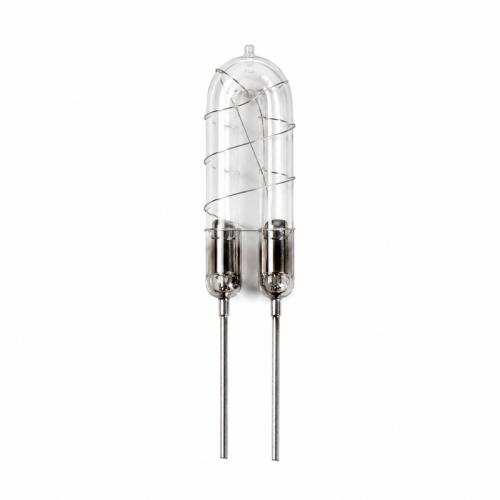
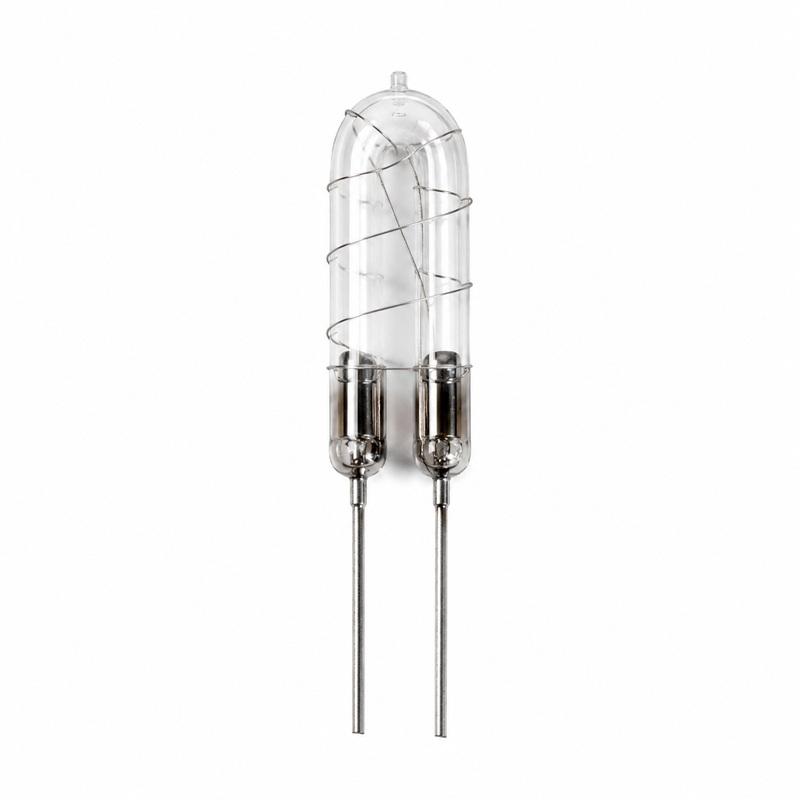
Mobile Speed Camera Xenon Flash Tube for Portable and Vehicle-Mounted Traffic Enforcement
SOWIN GXEC mobile traffic-enforcement flashlamp review is built for patrol vehicles and enforcement vans, portable roadside systems, tripod-mounted cameras, temporary enforcement units and legacy flash-module repair where the real requirement is repeatable evidence illumination after transport and redeployment, not merely one bright pulse. A qualified replacement must work with the original capacitor, trigger route, reflector and camera exposure window while maintaining plate readability, flash timing and controlled thermal behavior.
Search coverage priority: mobile speed camera xenon flash tube/portable speed camera flashlamp replacement/vehicle-mounted traffic enforcement flash tube/tripod speed camera xenon lamp/mobile traffic camera flash module replacement/temporary speed enforcement xenon flashlamp.
Brand-neutral search context: Heimann / EG&G / PerkinElmer / Excelitas-era traffic-camera supply, VITRONIC service context, European enforcement systems, American repair routes, Middle Eastern integrators and Asian OEM modules. These names identify equipment or historical supply context only; no affiliation, authorization, original-part status or universal compatibility is claimed.
Cross-industry proof appears later as supporting authority only: SOWIN GXEC also supports Industrial Stroboscopes, Warning Beacons, Professional Photography, IPL, Aviation Systems, Solar Simulation and UV Systems without weakening this page's mobile-enforcement focus.
Fastest path to the correct tube: Send the original tube or ruler photographs, flash-module and reflector photographs, capacitor value, charging voltage, trigger method, camera distance, vehicle speed, failure symptoms and expected quantity.
Evidence-image review route: Approval should compare repeated plate images, exposure timing, ghosting, OCR readability where applicable, vibration, transport and enclosure heat before a pilot batch is accepted.
Key Engineering Targets
|
Target
|
Engineering Meaning
|
|
Evidence-Image Consistency
|
Protects plate readability, exposure balance and repeatable night capture after redeployment.
|
|
Trigger and Exposure Timing
|
Connects the flash discharge with the camera exposure window, vehicle speed and plate position.
|
|
Variable Working Distance
|
Reviews lane geometry, camera-to-vehicle distance, installation angle and reflector coverage.
|
|
Mobile Environmental Duty
|
Covers transport, vibration, roadside temperature, parked-vehicle heat, dust, moisture and cooling.
|
|
Controlled Replacement
|
Links geometry, pulse energy, trigger route, field images, pilot approval and repeat-supply records.
|
Spec PDF and RoHS Review Center
PDF DOWNLOAD CENTER
Download SOWIN Xenon Flash Tube Spec PDF for Mobile Traffic-Enforcement Review
This PDF supports flash-module comparison, engineering sample review, trigger and pulse-energy discussion, reflector-fit checks, legacy traffic-camera matching and mobile field-evaluation planning.
|
Review Use
|
Why It Matters
|
|
Flash-Module Review
|
Compare tube geometry, trigger route, capacitor energy, flash duration and reflector relationship before sampling.
|
|
Evidence-Image Approval
|
Combine technical data with vehicle speed, camera distance, exposure timing and repeated plate images.
|
|
Legacy Supply Review
|
Use model numbers, old samples and dimensions to assess difficult-to-source Heimann, EG&G, PerkinElmer or Excelitas-era lamps.
|
|
RFQ and Pilot Planning
|
Organize module photographs, electrical data, field conditions, failure symptoms and pilot quantity.
|
Note: PDF parameters support engineering communication and procurement screening. Application approval still depends on the actual flash module, camera synchronization, repeated evidence images and customer-side field testing.
COMPLIANCE REVIEW DOCUMENTS
RoHS Compliance Document for Procurement and Import Review
For procurement, distributor and import documentation, SOWIN provides RoHS compliance support together with the Xenon Flash Tube specification PDF. Material documentation does not replace electrical, optical and field-image validation.
Download RoHS Compliance Document Download Xenon Flash Tube Spec PDF
Decision Trap - Mobile Enforcement Buyers Who Skip Image Verification Pay Twice
A First Flash Is Not Evidence Approval
The trap: approving a mobile traffic-camera tube because it fits and fires once. A serious replacement must be checked by geometry, stored energy, trigger timing, flash duration, reflector position, camera exposure and repeated plate-image behavior.
The bill: unreadable evidence + OCR inconsistency + roadside rework + urgent service + pilot failure + warranty exposure.
The fix: verify geometry + trigger timing + pulse energy + flash duration + reflector fit + evidence images, then introduce the replacement through an identified engineering sample and controlled pilot batch.
Non-negotiable rule: if camera timing, pulse energy, reflector position and repeated evidence-image criteria are undefined, the mobile enforcement replacement window is undefined.
20-Year Xenon Engineering Verdict
20-YEAR XENON ENGINEERING VERDICT
Why Xenon Remains Valuable for Mobile Speed-Camera Evidence Illumination.
In mobile traffic enforcement, Xenon remains valuable because a compact capacitor-discharge system can produce high peak illumination in a short exposure window. LED solutions can be effective when the driver, optics, thermal design and camera timing are redesigned together, but many installed mobile systems still depend on the original Xenon capacitor, trigger and reflector architecture. The correct decision is equipment-specific and must be confirmed through representative plate images.
Xenon vs LED - Xenon Remains Valuable for Mobile Speed-Camera Evidence Illumination
|
Parameter
|
Xenon Flash Tube
|
LED Flash / Semiconductor Alternative
|
|
Peak Pulse Output
|
High peak energy within the rated discharge window
|
Array, driver and thermal design dependent
|
|
Flash Duration
|
Microsecond-class behavior can support vehicle motion freeze
|
Pulse width and rise time depend on the semiconductor driver
|
|
Legacy Module Integration
|
Can preserve the original capacitor, trigger and reflector after review
|
Usually requires driver, optics, thermal and timing redesign
|
|
Replacement Risk
|
Main risks are energy, trigger timing, reflector and exposure mismatch
|
Main risks are driver compatibility, heat, optics and software timing
|
Validated for Mobile Enforcement Trigger and Output Consistency - Without Empty Lifetime Claims
|
Validation Path
|
Engineering Meaning
|
|
Defined endurance program
|
1100+ hour cycles can be used under stated energy, repetition, temperature and cooling conditions.
|
|
Image-relevant monitoring
|
Track ignition, flash timing, output behavior, heat and representative evidence-image consistency.
|
|
Field introduction path
|
Engineering sample, mobile trial, identified pilot batch and repeat supply expose hidden mismatch before scale use.
|
Controlled Mobile Enforcement Flash Programs - Governance Model
What serious programs protect: evidence-image consistency, trigger synchronization, plate readability, mobile-unit uptime, traceability and supply continuity.
What they forbid: brightness-only approval, mixed unverified tubes within one evidence program, silent energy changes and unsupported camera-brand compatibility wording.
Mobile Traffic-Enforcement Brand-Neutral Engineering Search Map
|
Route
|
Search Coverage
|
|
Portable Speed-Camera Route
|
portable speed camera flashlamp, roadside camera flash tube, tripod enforcement flash and temporary speed-camera lamp.
|
|
Vehicle-Mounted Route
|
vehicle-mounted traffic enforcement flash tube, patrol-car speed camera lamp and enforcement-van flash module.
|
|
Image-Quality Route
|
plate illumination, ghosting control, OCR readability, exposure consistency and weak night-image troubleshooting.
|
|
Legacy Supply Route
|
Heimann, EG&G, PerkinElmer and Excelitas-era traffic-camera flashlamp review by model, dimensions or old sample.
|
|
Global Service Route
|
European, American, Middle Eastern and Asian enforcement-system repair, distributor and OEM service contexts.
|
Compliance boundary: third-party names identify equipment or historical service context only. Buyers must still verify geometry, capacitor energy, trigger method, flash duration, reflector position, camera timing and representative plate images.
Mobile Traffic-Enforcement Application Route Selector
Vehicle-Mounted Systems
For patrol cars, enforcement vans and rapidly redeployed flash modules.
Portable Roadside Units
For transportable cabinets, temporary checkpoints and school-zone deployments.
Tripod Cameras
For repeatedly assembled, aimed and transported roadside systems.
Legacy Module Repair
For old labels, incomplete part numbers or difficult-to-source flashlamps.
Field-Image Review
For plate readability, ghosting, exposure and OCR consistency checks.
One-Minute Matching Checklist
|
Item
|
Buyer Input
|
Why It Matters
|
|
1) Tube and module photos
|
Tube, ruler, reflector, connector and enclosure
|
Confirms geometry, mounting and visible risk
|
|
2) Trigger and electrical data
|
Voltage, capacitance, trigger route and flash rate
|
Defines the discharge and timing window
|
|
3) Capture conditions
|
Vehicle speed, lane, distance and plate type
|
Defines image and exposure requirements
|
|
4) Representative images
|
Normal, weak, ghosted or overexposed examples
|
Shows the actual downstream problem
|
|
5) Environment and pilot
|
Transport, vibration, temperature and sample quantity
|
Defines field validation and introduction
|
Urgency: If these five evidence groups are missing, the buyer is accepting unknown image, trigger and field-duty risk. Send them together to avoid repeated sample cycles.
Mobile Traffic-Enforcement Flash Tube Review Table
|
Review Item
|
Why It Matters
|
|
Arc Length and Light Center
|
Protects reflector focus, lane coverage and plate illumination.
|
|
Glass OD and Module Fit
|
Prevents cavity interference, insulation problems and assembly stress.
|
|
Trigger Coupling and Delay
|
Controls misfire, late ignition and camera-timing inconsistency.
|
|
Pulse Energy and Flash Duration
|
Defines exposure strength, motion freeze and electrical stress.
|
|
Camera Distance and Vehicle Speed
|
Connects optical output with the real evidence-capture window.
|
|
Vibration and Enclosure Heat
|
Exposes mobile-duty risks hidden by a static bench test.
|
|
Field-Image Approval
|
Prevents acceptance based only on brightness or first ignition.
|
|
Document and Batch Control
|
Supports procurement, pilot traceability and repeat supply.
|
CORE A/B/C Endurance Classification
|
CORE Level
|
Recommended Use
|
|
CORE A
|
Recommended for high-use enforcement fleets and evidence programs where unreadable images, downtime or rework are expensive.
|
|
CORE B
|
Recommended for standard mobile replacement after module, energy, trigger, camera timing and field images are checked.
|
|
CORE C
|
Use only for engineering screening or lower-duty applications with a narrow, documented operating window.
|
Cross-Industry Xenon Platform Proof
This page remains focused on Mobile and Portable Traffic-Enforcement Flash Modules.
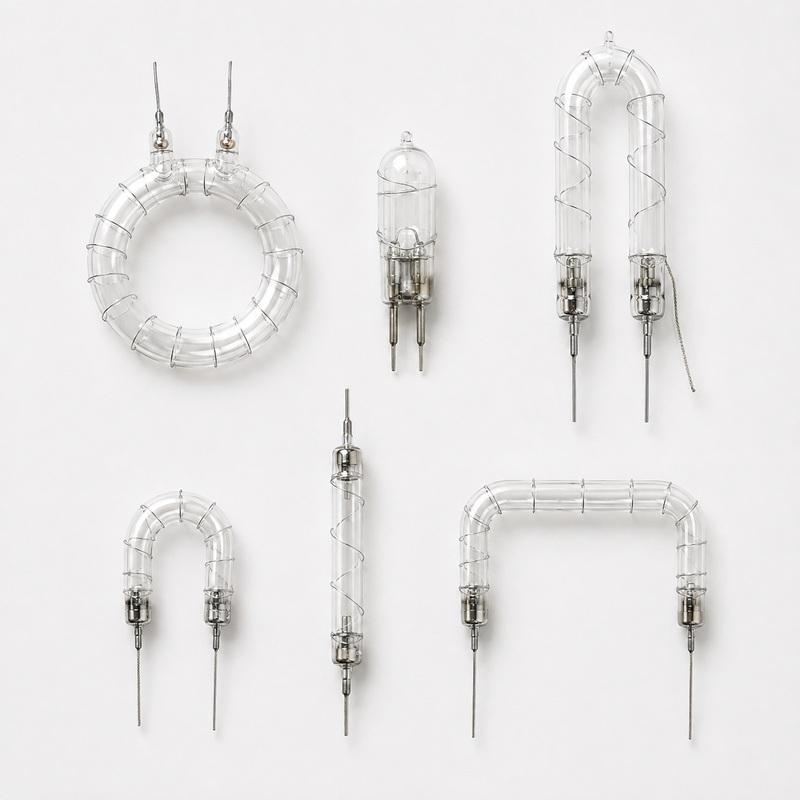
SOWIN GXEC also supports Industrial Stroboscopes, Warning Beacons, Professional Photography, IPL, Aviation Systems, Solar Simulation and UV Systems. These fields are shown only as cross-industry Xenon engineering proof.
Cross-Application Boundary Note: Cross-industry references support discharge, trigger and aging expertise. The replacement review on this page remains centered on mobile enforcement equipment, camera timing, evidence images and the buyer's module data.Mobile and Portable Traffic-Enforcement Flash Modules
Engineering Q&A
|
Question
|
Answer
|
|
What information should be sent for a mobile speed-camera flashlamp review?
|
Send the original tube or clear photographs, dimensions, module and reflector images, capacitor value, charging voltage, trigger route, camera distance, vehicle speed, failure symptoms and representative plate images.
|
|
Why can a similar-looking traffic flashlamp fail?
|
A similar outline does not guarantee the same arc position, stored-energy window, trigger delay, flash duration, reflector focus or thermal behavior.
|
|
Does a weak night image always mean the tube has failed?
|
No. Reflector contamination, charging faults, camera exposure, synchronization, wiring, distance or incorrect arc position can also reduce plate illumination.
|
|
How are portable and vehicle-mounted systems evaluated?
|
Review transport, vibration, deployment angle, camera distance, lane geometry, enclosure heat and repeated field images in addition to the electrical data.
|
|
How should VITRONIC or other enforcement brands be mentioned?
|
Use brand-neutral service wording for equipment identification only. Do not claim original status, authorization or universal compatibility.
|
|
Where should the PDF and RoHS documents be used?
|
Use the specification PDF for engineering review and the RoHS document for procurement or import screening. Field-image acceptance remains separate.
|
|
What makes this page different from a fixed-camera page?
|
It focuses on repeated transport, variable distance, redeployment, vehicle vibration and evidence-image consistency in mobile systems.
|
|
When should CORE A be considered?
|
Use CORE A when evidence quality is commercially or legally important, the unit is used frequently, or downtime and repeat roadside service are expensive.
|
Inquiry / RFQ Template
1) Deployment route: Vehicle-mounted / portable / tripod / temporary / school-zone / other
2) Equipment brand and model:________________________________
3) Tube geometry: Arc length ___mm / Overall length ___mm / OD ___mm
4) Trigger and wiring: External / Internal / Wire / Unknown (attach photo)
5) Flash module and reflector photos: Attached / Not available
6) Capacitor and charging voltage:________________________________
7) Capture conditions: Vehicle speed / camera distance / lane / plate type / exposure
8) Failure symptoms: No flash / delay / weak plate / ghosting / overexposure / heat / other
9) Compliance required: Spec PDF / RoHS / internal approval / import review / other
10) Attachments: tube + ruler + trigger + module + reflector + representative image
Final Engineering Check - Before You Leave
Unverified mobile traffic-camera replacement increases downstream risk: weak plate illumination, ghosting, misfire, roadside rework and evidence inconsistency.
Liability note: A mismatched tube can create late ignition, unstable exposure, poor plate readability or circuit over-stress. Verify geometry + trigger timing + pulse energy + flash duration + reflector fit + evidence images before purchase.
Typical "looks fine" - "fails later" chain:
- Correct-looking tube - wrong arc or duration - weak or ghosted plate image
- First roadside trigger succeeds - transport or heat later exposes misfire
- Uncontrolled batch change - inconsistent evidence images and urgent service
Fast prevention: send tube + ruler + trigger + module + reflector photographs, plus your electrical data + vehicle speed + camera distance + representative images. We return a mobile enforcement replacement recommendation+ guidance.
Final review point: if trigger timing, pulse energy, flash duration, reflector position and evidence-image acceptance criteria are undefined, the mobile enforcement replacement window is undefined.
The real test of a mobile traffic-camera replacement starts after redeployment.
A first flash proves ignition; repeated evidence images prove the replacement.
© SOWIN GXEC. All rights reserved.