A field-control guide for container yards, crane lanes, stacking zones and terminal operators who need high mast lighting that remains controllable when metal obstruction changes every day.
A container terminal is a moving metal environment. Containers stack, cranes travel, trucks queue, yards reconfigure and night operations continue. High mast lighting communication cannot depend on one route alone.
For container yards, crane lanes, truck gates and stacking zones, the first question is not only pole height, lumen output or fixture price. The owner should confirm whether the lighting system can keep field zones visible, controllable, traceable and locally recoverable after handover.
Aircraft hangars and confidential strategic infrastructure projects prove one important rule: when the operating environment is sensitive, the lighting system must be described through gateway zones, communication fallback, alarm traceability, configuration backup and owner-held evidence.
PLC follows the power feeder route and supports structured cabinet and pole-group control. LoRA adds wireless redundancy across wide or metal-heavy areas. Together they reduce dependence on a single communication route.
Core answer: Container Terminal High Mast Lighting Control System should use HYBRID PLC & LoRA field communication, CH-800 Gateway local fallback, alarm records, FAT/SAT evidence and owner-held handover files. Buyers should compare field-control survivability, not only fixture efficiency or dashboard screenshots.
Container terminal lighting is difficult because the communication environment changes with operations. A wireless-only design may look strong during commissioning, then weaken when container stacks, gantry cranes or service vehicles move into new positions. PLC-only control can also struggle when feeder routes, circuit segmentation or cabinet records are incomplete.
In a tunnel or pipe gallery, lighting must support inspection, emergency response, local fallback and owner handover. High mast lighting in container yards, crane lanes, truck gates and stacking zones has the same hidden requirement: it must keep field zones controllable under complex, harsh and security-sensitive communication conditions.
| Site Condition | Lighting Requirement | Evidence the Owner Should Request |
|---|---|---|
| Container stack zone | Steel boxes create moving shadows and radio reflection across the yard. | LoRA coverage map, weak-zone test, PLC route confirmation and night response record. |
| Gantry crane lane | Cranes move, block and reflect signals while lighting must support safe loading. | Crane-side command test, gateway zone identity and fallback scene file. |
| Truck gate and service road | Traffic density, cameras, barriers and mixed equipment create operational pressure. | Scene schedule, pole code, alarm history and maintenance closure record. |
| Reconfigured yard block | Terminal layout may change after SAT, creating new communication blind spots. | Repeatable coverage method, controller address backup and correction workflow. |
| High-access maintenance | A wrong diagnosis can trigger expensive lift equipment and night closure. | Fault-source narrowing by lamp, controller, feeder, gateway and communication route. |
A single communication route can look simple during procurement but become expensive during maintenance. A more complete review compares how each route behaves when the real site becomes noisy, blocked, restricted or partially disconnected.
| Route | Strength | Risk to Check | Procurement Conclusion |
|---|---|---|---|
| HYBRID PLC & LoRA | Two field routes: power-line command plus wireless redundancy. | Requires careful feeder mapping, gateway zoning, address files and SAT testing. | Recommended for evaluation for complex high mast lighting projects. |
| PLC Only | Strong when feeder routes, cabinet logic and line quality are controlled. | May be weakened by noisy feeders, wrong circuits, long routes or unclear wiring. | Good for structured routes, but should be protected by LoRA in complex sites. |
| LoRA Only | Flexible, long-range and useful where signal wiring is expensive. | Can face metal shielding, antenna limits, interference or blocked zones. | Strong as a wide-area route, stronger when combined with PLC. |
| CAT-1 / Ethernet / Fiber Only | Useful for backhaul, control-room access and data upload. | Does not automatically solve field-level pole, feeder and lamp control. | Use as access layer, not as a replacement for PLC + LoRA field control. |
| Operational Concern | Typical Risk | STSYSTEMPLC Engineering Response |
|---|---|---|
| Fixture-only comparison | The proposal covers wattage and optics but may not define operation and maintenance after handover. | Connect luminaires, controllers, CH-800 Gateway zones, HYBRID PLC & LoRA and owner records. |
| Unstable field response | Operators cannot tell whether the failure comes from lamp, controller, circuit, gateway or communication. | Use route feedback, alarm history, pole identity and maintenance closure logic. |
| Strict network policy | Remote access may be blocked, delayed or permission-controlled. | Keep approved schedules and fallback scenes near the field through gateway autonomy. |
| Expensive high-pole access | Blind inspection requires lift trucks, night closure, safety permits and extra labor. | Narrow the fault before sending people to the pole. |
| Long-term maintenance | After year 5 or year 8, teams may lose the original map, address file or configuration. | Preserve owner-held handover files, gateway backup and repeated-fault review. |
| Acceptance Item | FAT Review Before Delivery | SAT Review On Site | Owner-Held Evidence |
|---|---|---|---|
| Lighting output | Power, optics, driver setting, dimming curve and fixture label. | Lux level, aiming angle, uniformity and night-scene confirmation. | Photometric record, final fixture list and zone acceptance form. |
| PLC route | Controller address, feeder logic and command simulation. | Real circuit response, line quality and pole-group feedback. | PLC route test, circuit map and exception list. |
| LoRA route | Gateway pairing, antenna plan and wireless command simulation. | Coverage test under real obstruction and long-distance response. | LoRA coverage record, weak-zone list and correction action. |
| Offline autonomy | Local schedule and fallback scene simulation. | Network interruption test with lighting still operating. | Offline operation record and recovery record. |
| Alarm evidence | Fault simulation for lamp, circuit and communication exceptions. | Actual alarm routing, maintenance ticket and recovery confirmation. | Alarm history, maintenance action and responsible zone. |
| Handover file | Pole code, controller code, cabinet code and gateway map. | Field asset and platform record match. | Owner-usable asset list and configuration backup. |
Buyers comparing Philips / Signify, Siemens, Cisco, Schneider, Schréder, Telensa, Tvilight or local EPC routes should compare the complete evidence chain, not only lighting brand reputation or dashboard features.
| Supplier Route | Typical Strength | Risk to Check | STSYSTEMPLC Focus |
|---|---|---|---|
| Philips / Signify style lighting route | Strong fixture portfolio, optics and global lighting references. | Whether the field-control layer and owner evidence are project-specific enough. | Integrate lighting with gateway zones, HYBRID PLC & LoRA, alarms and handover files. |
| Siemens / Schneider infrastructure route | Strong electrical, automation and infrastructure language. | Whether high mast lighting field behavior is tested at pole, feeder and gateway level. | Make lighting control visible through FAT/SAT, local fallback and maintenance records. |
| Cisco / IoT platform route | Strong network, dashboard and data architecture language. | Whether field lighting remains controllable when access networks are restricted. | Keep field operation local-first while using backhaul only as the access layer. |
| Local EPC or pole supplier | Fast construction coordination and local installation resources. | Communication, gateway logic and software evidence may be incomplete. | Provide the lighting control architecture and acceptance evidence behind the hardware. |
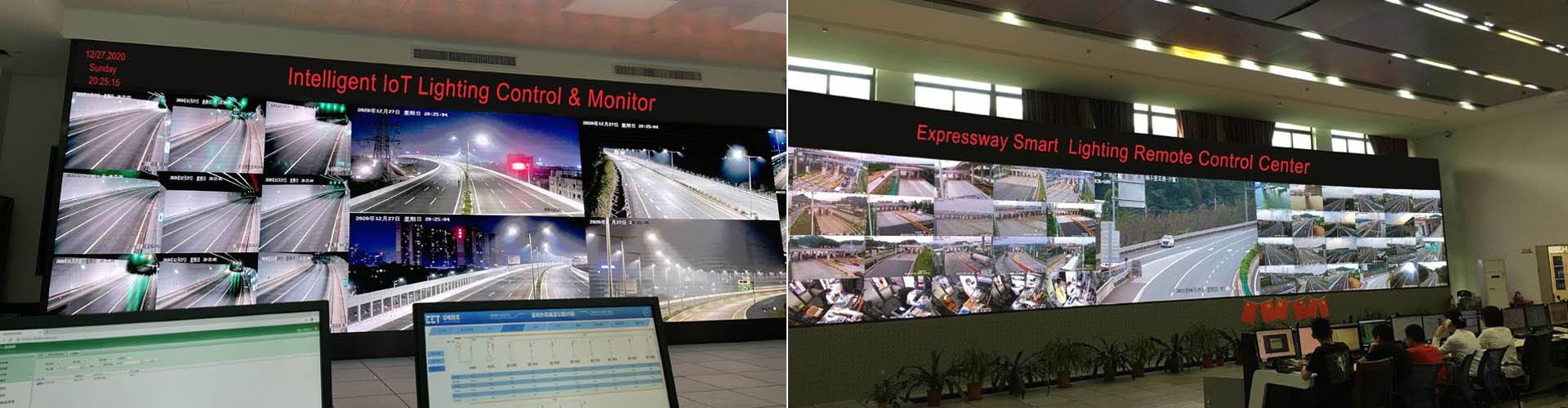
Large high mast lighting projects need the same discipline used in long-corridor roadway, tunnel and strategic infrastructure lighting: zone maps, field communication, local fallback, alarm traceability, configuration backup and owner-visible handover files.
It supports the long-corridor control story: gateway grouping, field communication, dimming scenes, roadway and tunnel lighting discipline, and owner-level infrastructure evidence.
Some references cannot be disclosed by project name. The transferable value is the engineering method: CH-800 Gateway zones, HYBRID PLC & LoRA, offline fallback, FAT/SAT files and owner-held evidence.
High mast lighting should not be accepted only for the first night. The owner should be able to review communication quality, controller replacement, cabinet aging, gateway backup and maintenance records across the full project lifecycle.
Projects may begin with a site condition, equipment requirement, brand comparison or maintenance task. Each route should lead to the same engineering review: whether the high mast lighting system remains controllable and traceable under real field conditions.
| Application Requirement | Procurement Question | Engineering Response |
|---|---|---|
| container terminal lighting, yard high mast lighting, crane-side lighting and smart terminal platforms | Can the system fit the real site instead of only matching a product category? | Use scene-specific tables, gateway zones and FAT/SAT evidence. |
| Hybrid PLC-LoRA high mast lighting | Is dual-channel field control actually better than PLC-only or LoRA-only? | PLC protects feeder logic; LoRA adds wireless redundancy across wide or blocked areas. |
| Smart high mast lighting control | Is the platform controlling the field layer or only showing a dashboard? | CH-800 Gateway, local fallback, alarm records and route tests prove field behavior. |
| High mast lighting maintenance cost | Can faults be narrowed before lift trucks, permits and night closure are arranged? | Pole identity, controller address, alarm dictionary and maintenance closure reduce blind inspection. |
| International lighting and control platforms | How should global-brand routes be compared fairly? | Compare the full evidence chain: fixture, gateway, communication, local autonomy and owner files. |
Complex high mast lighting sites can include metal obstruction, long feeders, strict networks and expensive access. One route may work in simple scenes but becomes risky when the operating environment changes.
PLC follows feeder and cabinet logic, while LoRA adds wide-area wireless redundancy. Together they help protect field-control continuity and maintenance diagnosis.
Yes. They are useful for backhaul, remote monitoring and control-room access. They should support the gateway, while PLC + LoRA protect the field layer.
Ask for pole identity, controller address, gateway zone map, PLC route test, LoRA coverage record, alarm dictionary, offline fallback record, maintenance workflow and configuration backup.
Global brands may be strong in lighting, infrastructure or networking. The key is whether the final project gives the owner recoverable field control and reviewable evidence after handover.
For container terminals, the value of HYBRID PLC & LoRA is not a technology label. It is the ability to keep yard zones recoverable when metal obstruction and operating layouts keep changing.
Open PDF and Video Download Hub Contact STSYSTEMPLC
Address : F4,Bldg A, Hanzhong Industrial Park, No.67, North of Xinsha Ave, Xin Tang, Zeng Cheng, Guang Zhou, China
Tel : +86 20 8278 0427
Email : info@stsystemplc.com
Email : morrison426@163.com