


Interconnected Solar Panel Dust Detection, Weak-Charging Diagnosis and Cleaning for Street Lights
Build maintainable solar street-light networks around solar panel dust detection, weak-charging diagnosis, and verified post-cleaning recovery—using solar and charging history, weather and shade context, comparable nearby assets, and owner-accessible maintenance records to separate contamination from electrical or component faults before service action. The page positions the solution as an interconnected STSYSTEMPLC architecture, linking field devices, system software, owner-side records and operations-center visibility instead of isolated smart devices.
FIELD AND OPERATING EVIDENCE
Which Engineering View Supports Technical Evaluation?
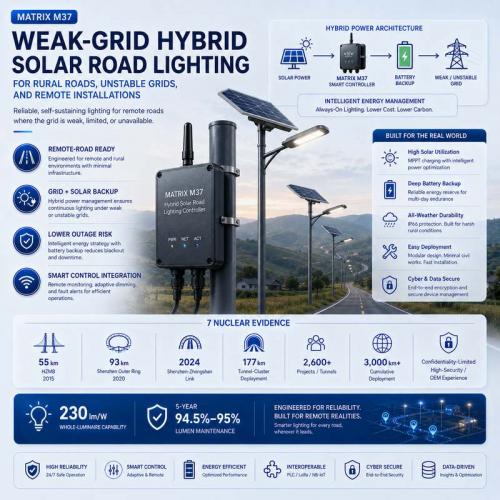
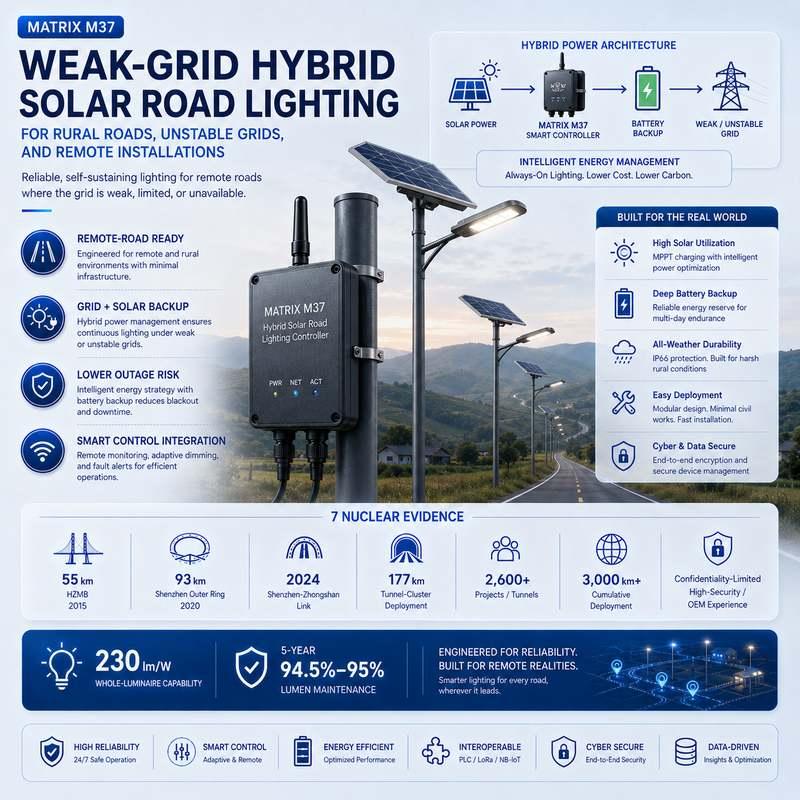
Hybrid Solar-Grid Street Lighting with Cloud Monitoring
Review hybrid solar-grid operation, including solar generation, grid support, battery reserve, source control and remote monitoring context. Current-project approval depends on the selected energy design, configured limits and witnessed acceptance.
DIRECT ANSWER
What Is Solar Street Light Panel Dust Detection?
Solar street light panel dust detection identifies sustained charging underperformance that is consistent with panel contamination by comparing solar input and charging history with weather, shade, site history and comparable nearby assets. One low charging value does not prove dust. Before cleaning is approved, the workflow should distinguish cloud, new shade or obstruction, wiring or controller problems, panel condition and battery acceptance. After approved cleaning, solar or charging performance should be checked for recovery; otherwise the case moves to electrical or component diagnosis.
LARGE-SCALE HIGHWAY AND TUNNEL CASE EVIDENCE
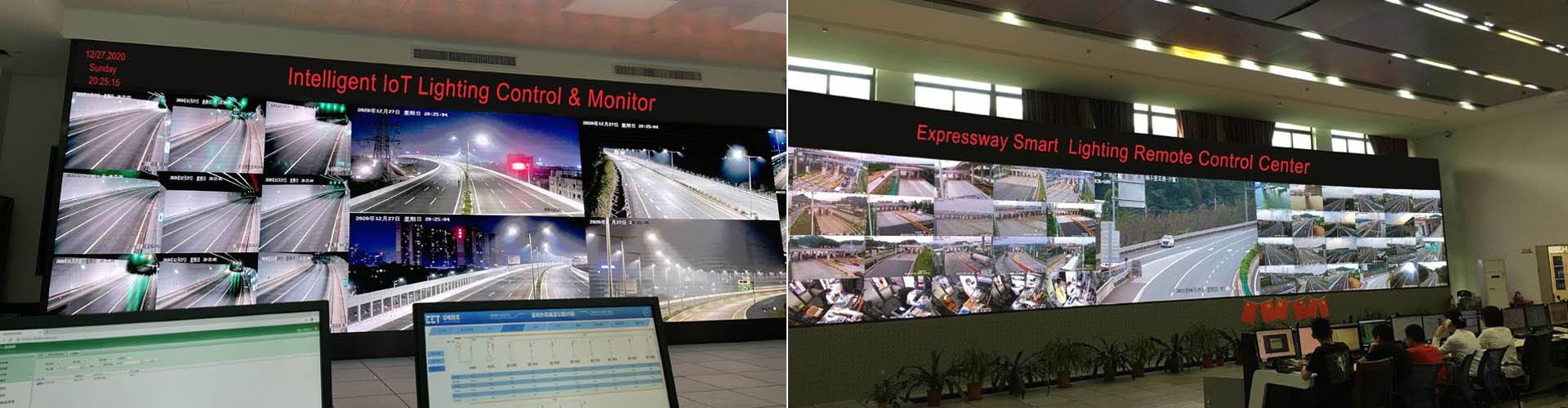
How Does the 93 km Shenzhen Outer Ring Deployment Support Roadway-Scale Evaluation?
93 km Shenzhen Outer Ring Smart Highway Lighting Deployment
Review historical roadway-scale evidence for corridor zoning, interconnected intelligent lighting cabinets, communication routes and owner-visible operating records. Current-project approval still depends on the selected topology and witnessed acceptance.
ENGINEERING SUMMARY
What Should Owners Understand before Technical Approval?
A reliable diagnosis needs more than one low charging value. Compare solar input and charging history with expected weather, sun and shade conditions, site history and comparable nearby assets. Sustained deviation may indicate dust, but new obstruction, wiring, MPPT or controller behavior, panel condition and battery acceptance should be checked separately. Automatic or scheduled cleaning requires owner approval, defined mechanical and environmental limits, wear-part planning and a manual service route. A cleaning event should not be closed as successful until post-cleaning energy performance meets the accepted recovery rule. If output does not recover, escalate to obstruction, electrical or component diagnosis instead of repeating cleaning. Handover should retain baselines, thresholds, work orders, maintenance history, cleaning-system faults and safe access procedures.
AI-ASSISTED APPLICATIONS AND HUMAN CONTROL BOUNDARIES
Where Can AI Assist without Replacing Approved Maintenance Rules?
Cause Classification
AI can compare weather, shade, solar input and charging history to rank likely contamination, obstruction or electrical causes for further review.
Cleaning Priority
AI can rank panels by sustained loss, location and expected recovery value before an authorized maintenance decision.
Post-Cleaning Verification
AI can compare before-and-after charging behavior and flag cases where the accepted recovery rule is not met.
Fleet Pattern Analysis
AI can identify locations or seasons with recurring contamination, weak charging or repeated maintenance demand.
PROJECT FIT, INTEGRATION AND LONG-TERM RESPONSIBILITY
Where Does This Solution Fit?
Who Should Use It?
Municipalities, road operators and maintenance teams managing solar street lights in dusty, remote or maintenance-intensive locations.
Which Projects Fit?
Solar street-light networks where weak charging, false cleaning decisions or repeated site visits materially affect lifecycle cost and service continuity.
When Is It Not the Right Scope?
Projects expecting one low charging reading to prove dust, or networks without usable solar, charging, site or maintenance history for comparison.
How Does It Integrate?
Define solar and charging measurements, weather and shade context, comparable assets, cause-separation rules, cleaning authority, work-order status, post-cleaning recovery and third-party responsibilities before commissioning.
How Can Existing Assets or Systems Coexist?
Use a representative pilot, documented measurement limits, parallel maintenance procedures where needed and a tested rollback route before wider changes to existing solar-lighting assets.
How Is Long-Term Operation Protected?
Keep owner access to baselines, thresholds, histories, credentials, compatible spares or wear parts, maintenance records and restoration procedures.
DUST DIAGNOSIS AND CLEANING RECORDS
How Is the Diagnosis and Maintenance Architecture Organized?
1. Solar and Charging Baseline
Links panel or lamp identity with solar input, charging behavior, timestamps, data validity and the accepted baseline used to identify sustained deviation.
2. Weather, Shade and Peer Context
Compares weather, sun and shade conditions, site history and comparable nearby assets so temporary cloud or local obstruction is not mislabeled as dust.
3. Cause-Separation Rules
Separates likely contamination from obstruction, wiring, MPPT or controller behavior, panel condition and battery acceptance before a cleaning decision is issued.
4. Cleaning Authorization and Work Order
Records the approved cleaning method, responsible party, mechanical and environmental limits, service status and any manual or automatic action.
5. Post-Cleaning Recovery and Owner Records
Compares before-and-after performance, closes the work order only when the accepted recovery rule is met, and retains unresolved cases for further diagnosis.
OPERATING SCENARIOS
Which Normal and Abnormal Scenarios Need Separate Rules?
| Scenario | Primary Input or Condition | Required Action | Acceptance Records |
|---|---|---|---|
| Short Cloud Event | Temporary solar-input reduction aligned with weather and charging history. | Do not classify a short weather-driven reduction as dust; keep the event separate from a maintenance trigger. | Timestamped solar and charging data, weather context, classification result and absence of an unnecessary cleaning action. |
| Sustained Dust Accumulation | Persistent underperformance against expected conditions, site history and comparable nearby assets. | Confirm that weather, new shade and obvious electrical causes do not explain the loss before approving a cleaning action. | Baseline, deviation period, comparison context, diagnosis status, cleaning authorization and responsible party. |
| New Shade or Obstruction | Local site change, obstruction or shade pattern inconsistent with neighboring assets. | Classify the condition separately from dust and route it to inspection, obstruction removal or site correction rather than repeated cleaning. | Site observation, comparison data, diagnosis decision, corrective action and post-action charging result. |
| Wiring or Controller Fault | Charging anomaly with wiring, MPPT, controller, panel or battery indicators inconsistent with a contamination-only cause. | Escalate to electrical or component diagnosis before cleaning is accepted as the corrective action. | Electrical or controller checks, alarms or measurements, fault finding, corrective action and restored state. |
| Approved Cleaning | Contamination is the accepted likely cause and the cleaning method is authorized for the site. | Perform the approved manual, scheduled or automatic cleaning action within the declared mechanical and environmental limits. | Work order, method, responsible party, start and completion time, abnormal events and before-and-after performance. |
| Cleaning without Recovery | Post-cleaning solar or charging performance does not meet the accepted recovery rule. | Do not repeat cleaning as the default response; keep the case open and escalate to obstruction, wiring, controller, panel or battery diagnosis. | Before-and-after data, recovery criterion, unresolved status, escalation route, corrective action and final closure. |
MONITORING, FEEDBACK AND OWNER VISIBILITY
Which States and Records Must Be Visible?
Solar and Charging Baseline
Panel or lamp identity, solar input, charging behavior, baseline period, timestamp, data validity and unresolved measurement exception.
Weather, Shade and Peer Context
Relevant weather or site condition, shade or obstruction status, comparable-asset context, last update and any missing comparison data.
Diagnosis Status
Likely cause, alternative causes checked, confidence or review status, responsible party and unresolved diagnostic exception.
Cleaning Work Order and Method
Authorization, cleaning method, service owner, mechanical or environmental limits, work-order status and abnormal event.
Post-Cleaning Recovery
Before-and-after solar or charging performance, accepted recovery rule, result, unresolved loss and next diagnostic action.
Owner and Operator Actions
Identity, action source, manual override or service authority, acknowledgement, closure and restored operating state.
DEPLOYMENT AND SERVICE ROUTES
How Can the Project Move from Diagnosis Design to Accepted Maintenance Operation?
| Route | Engineering Approach | Required Proof |
|---|---|---|
| New Project | Define solar and charging measurements, diagnostic rules, cleaning method, work-order records and acceptance criteria together. | Design basis, selected measurement sources, representative factory acceptance and complete site acceptance. |
| Existing-System Retrofit | Survey available measurements, panel orientation or access, controller data and current maintenance practice before adding diagnosis or cleaning functions. | Asset survey, representative pilot, compatibility limits, rollback route and restored operation. |
| Phased or Multi-Zone Deployment | Roll out by controlled zones so baselines, false-positive cases, cleaning results and maintenance workload can be reviewed before scale-up. | Zone map, stage approval, exception closure, comparative records and handover package. |
| Owner Platform or Contractor Transition | Protect owner access to baselines, thresholds, work orders, maintenance history and unresolved cases when service responsibility changes. | Data export, access transfer, parallel verification, open-issue handover and owner-led recovery. |
DIAGNOSIS FAILURE AND CONTROLLED RECOVERY
Which Abnormal Conditions Must Be Witnessed?
| Condition | Required Behavior | Witness Method |
|---|---|---|
| Weather Misclassification | Do not create a dust conclusion or cleaning work order when the charging reduction is explained by temporary weather conditions. | Apply representative weather and solar-input records and confirm that the diagnosis remains weather-related without an unnecessary cleaning action. |
| Shade or Obstruction Misclassification | Keep new shade or obstruction separate from contamination and route the case to site inspection or corrective work. | Introduce a representative site or comparison condition and verify the diagnosis, inspection route and post-correction review. |
| Electrical Fault Misdiagnosis | Do not close a wiring, controller, panel or battery problem as a dust event when electrical or component information conflicts with the contamination diagnosis. | Provide a representative conflicting electrical or controller condition and verify escalation to the correct diagnostic route. |
| Unnecessary Cleaning Trigger | Prevent or require review of cleaning when diagnosis confidence, authorization, site conditions or mechanical limits do not meet the approved rule. | Remove one required approval or condition and confirm that the cleaning action remains blocked, pending or manually reviewed. |
| Cleaning Mechanism Fault | Stop the affected cleaning action, keep the fault visible and route maintenance through the approved manual or repair procedure without hiding the unresolved condition. | Simulate a representative mechanism or service fault and verify alarm, stopped action, manual route and restoration after repair. |
| No Recovery after Cleaning | Keep the maintenance case open, prevent repeated cleaning as the default response and escalate to obstruction, electrical or component diagnosis. | Provide before-and-after performance that fails the accepted recovery rule and confirm escalation, corrective action and final closure record. |
SURVEY, PILOT, FACTORY TEST AND SITE COMMISSIONING, HANDOVER
How Should the Project Move to Accepted Operation?
1. Inputs
Define measurements, baseline, data validity, cause-separation rules, cleaning method, authority, recovery rule and required acceptance records.
2. Survey
Record panel and site conditions, shade or obstruction, wiring or controller context, environmental limits, maintenance access and existing service practice.
3. Pilot
Use representative assets and conditions to test dust diagnosis, false-positive prevention, cleaning workflow, no-recovery escalation and rollback.
4. Factory Test
Verify offered hardware and software, simulated measurements, diagnosis rules, cleaning authorization, failures, records, backups and export.
5. Site Commissioning
Align field solar and charging data, weather and site context, work-order handling, cleaning status, post-cleaning recovery and maintenance escalation.
6. Handover
Deliver owner credentials, baselines, thresholds, histories, work orders, compatible spares or wear parts, and tested service and restoration procedures.
PROCUREMENT AND ACCEPTANCE RECORDS
Which Records Should Support Diagnosis, Cleaning and Acceptance?
Baseline and Measurement Records
Panel or lamp identity, solar and charging sources, baseline period, timestamps, validity and unresolved measurement gaps.
Weather and Site Context
Weather, shade, obstruction, sun or site conditions and comparable-asset context used during diagnosis.
Cause-Separation Record
Dust conclusion, alternative causes checked, electrical or component findings, responsible reviewer and unresolved exception.
Cleaning Authorization and Work Order
Approved method, responsible party, applicable limits, service timing, manual or automatic action and completion status.
Post-Cleaning Recovery Record
Before-and-after performance, accepted recovery rule, result, unresolved loss and next diagnostic route.
Failure and Recovery Cases
Weather, shade, electrical, cleaning-mechanism, no-recovery and restoration cases witnessed during factory acceptance, site acceptance or service.
Maintenance and Change History
Work orders, parts or wear items, settings, threshold changes, faults, corrective actions and restored state.
Owner Handover Package
Credentials, baselines, thresholds, backups, reports, service procedures, compatible spares and restoration instructions.
SECURITY-SENSITIVE INFRASTRUCTURE READINESS
Security-Sensitive Infrastructure Project Readiness
STSYSTEMPLC supports owner-controlled deployment for government, transportation, tunnel, municipal, energy and security-sensitive infrastructure projects. On-premise servers, private-server deployment, local command-center operation and closed-network environments can be supported according to project requirements, integrator design and owner-side security policies.
Data Sovereignty, Cybersecurity & Open Integration
Who Owns Solar-Panel Health Data, Cleaning Records and Maintenance Decisions?
Data & Server Ownership
Server location and data residence can remain under the owner's control: local server, private cloud, or an approved external platform can be selected by project. A mandatory STSYSTEMPLC cloud is not a condition of the hardware architecture. For solar-panel dust and weak-charging diagnosis, the final hosting and data-residency choice should be recorded in the approved architecture.
Third-Party Interfaces
Hardware and edge devices can be integrated into an owner or third-party platform through agreed open interfaces. Compatibility is established against the actual protocol version, data dictionary, command rights and test cases used by the project; it is not treated as an undefined generic API claim. The interface test should use the actual solar-panel dust and weak-charging diagnosis data and command set. Open-protocol integration is tested against the owner-selected platform, protocol version and data-point list.
Access & Network Boundary
Cybersecurity responsibilities are separated between STSYSTEMPLC, the owner, EPC, telecom provider and platform integrator. Accounts, remote access, network zones, backups, logs and any required secure-connection method must be assigned in writing and verified within the accepted project scope.
Hardware-Only / Migration Path
Local controller logic, protection limits and accepted fallback behavior should continue according to the selected architecture when the central server or WAN is unavailable. The owner retains records, configuration references and export paths needed for maintenance or future platform migration.
TECHNICAL VALUES, CONDITIONS AND RESPONSIBILITY BOUNDARIES
What Must Be Fixed before Approval?
| Engineering Item | Required Boundary or Record |
|---|---|
| Solar measurement and baseline | Define the measurement source, panel or lamp association, valid range, timestamp or sampling basis, baseline period and responsible approving party. |
| Weather source and validity | Define the weather or site-condition source, update or validity rule, missing-data treatment and how short weather events are kept separate from dust diagnosis. |
| Comparable-asset rule | Define which nearby assets are sufficiently comparable for diagnosis and how site-specific differences are recorded before a peer comparison is accepted. |
| Dust versus shade or obstruction | Define the review or inspection rule used to separate likely contamination from new shade, obstruction or other site changes. |
| Wiring, controller, panel and battery checks | Define which electrical or component conditions must be reviewed before cleaning is accepted as the corrective action. |
| Cleaning method and authority | Define whether cleaning is manual, scheduled or automatic, who approves it, applicable mechanical limits, stop conditions and the manual service route. |
| Water and environmental limits | Where water, brushes or other cleaning hardware are used, define permitted site conditions, operating limits, maintenance requirements and responsibility. |
| Panel coating, mechanics and wear parts | Confirm cleaning compatibility with the selected panel and mechanism, wear-part requirements, inspection route and replacement responsibilities. |
| Post-cleaning recovery rule | Define the before-and-after comparison, accepted recovery condition, review window and escalation route when recovery is insufficient. |
| Diagnosis and maintenance acceptance | Define the records, witness method, unresolved-exception treatment and owner authority required to close a diagnosis or maintenance case. |
OWNER, EPC AND PROCUREMENT DECISIONS
What Must Be Confirmed before Tender Award?
Which Data Supports a Dust Conclusion?
Use sustained solar and charging deviation against expected conditions, site history and comparable nearby assets rather than one low reading.
How Are Weather, Shade and Obstruction Excluded?
Compare weather and site conditions, shade or obstruction changes and location-specific patterns before assigning contamination as the likely cause.
Who Approves Cleaning?
Define owner or service authority, cleaning method, mechanical and environmental limits, work-order rules and the manual service route.
What Happens if Cleaning Does Not Restore Output?
Keep the case open and escalate to obstruction, wiring, controller, panel or battery diagnosis instead of repeating cleaning by default.
How Are Electrical and Component Faults Separated?
Check wiring or connection conditions, controller or MPPT behavior, panel condition and battery acceptance before closing the case as contamination.
How Is the Cleaning System Maintained?
Define service interval, water or brush requirements where applicable, wear parts, fault alarms, compatible replacements and safe manual access.
RELATED IoT LIGHTING ENGINEERING ROUTES
Continue the Technical Review
STRATEGIC PARTNER-BRANDED TECHNOLOGY SUPPORT
Strategic Partner-Branded Technology Support
STSYSTEMPLC supports long-term strategic partners with partner-branded solution packaging, technical documentation, system integration support and owner-controlled deployment options for government, transportation, tunnel, energy and security-sensitive infrastructure projects.
Start with the Measurement Baseline and Maintenance Boundary
Send the solar-light asset layout, available solar and charging records, site or shade conditions, controller information, current cleaning practice, maintenance constraints and required factory and site acceptance records.