

Smart Roadway Lighting Control System for Highways, Tunnels and Bridge-Tunnel Corridors
Connect intelligent lighting cabinets, circuits, lamp-level controllers, OFDM PLC and LoRA communications, traffic and luminance sensing, remote monitoring and offline local operation across long roadway corridors.
DIRECT ENGINEERING ANSWER
What Is a Smart Street Lighting Control System for Highways and Tunnels?
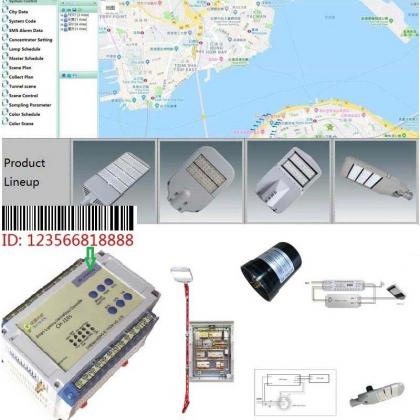
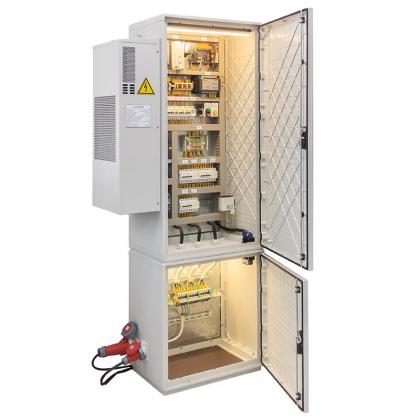
A smart street lighting control system for highways and tunnels connects the central management platform, edge gateways, intelligent lighting cabinets, circuit controllers, lamp-level controllers, traffic sensors and luminance sensors. It supports remote control and monitoring, scheduled and adaptive dimming, fault alarms, energy records, local offline operation and controlled recovery across highways, tunnels and bridge-tunnel corridors.
The system should separate central policy, local authority, circuit execution and lamp feedback. A command is not sufficient evidence by itself: the owner should be able to compare the requested action with cabinet, circuit and lamp states, timestamps, exceptions and the final recovery result.
PROJECT FIT, INTEGRATION AND RESPONSIBILITY
Where Does This Smart Roadway Lighting System Fit?
Who Should Use It?
Highway authorities, tunnel operators, design institutes, electromechanical EPC teams, municipal road-lighting departments and long-term O&M operators.
Which Projects Fit?
Long linear corridors where road, portal and tunnel lighting, traffic sensing, cabinet operation, lamp feedback and recovery must work as one controlled chain.
When Is It Not the Right Scope?
Small sites that need only a timer or stand-alone photocell and do not require topology, state feedback, remote monitoring or lifecycle records.
How Does It Integrate?
Define power, data, command priority, timeout and fallback before linking the central platform to edge cabinets, circuits, sensors and lamp-level execution.
How Can Existing Assets Be Retained?
Survey cabinets, feeders, luminaires, drivers and communication conditions. Reuse only the assets that can be qualified and supported by a rollback and acceptance plan.
How Is Long-Term Operation Protected?
Keep owner access to asset records, settings, version history, credentials, backups, compatible spares, restoration procedures and supplier-transition responsibilities.
FIELD EVIDENCE FOR HIGHWAY AND TUNNEL PROJECTS
Which Operating Views Support Technical Evaluation?
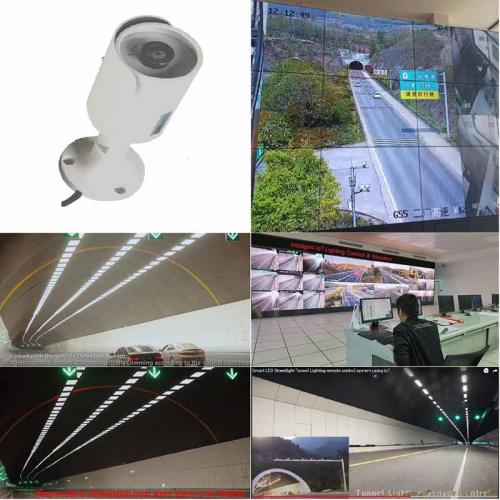
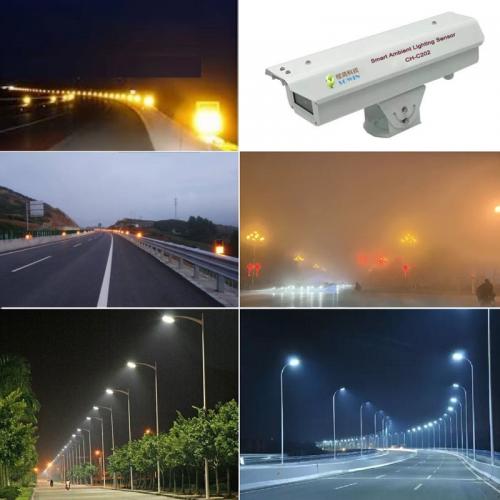
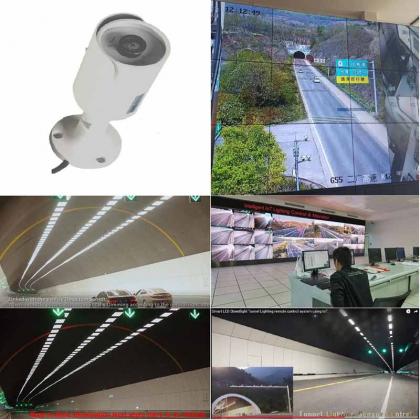
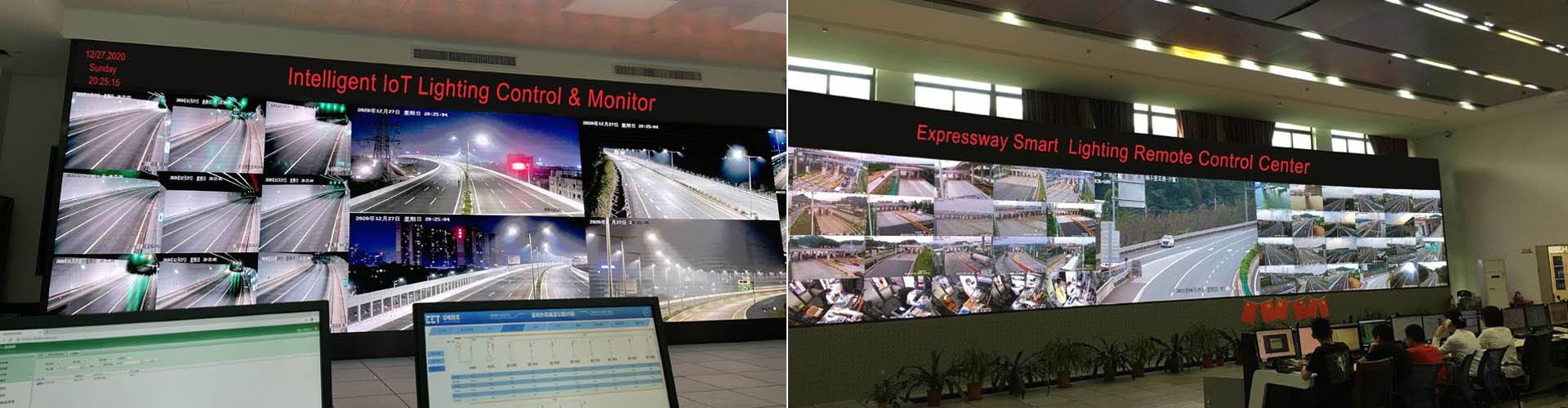
93 km Smart Road and Tunnel Lighting Deployment
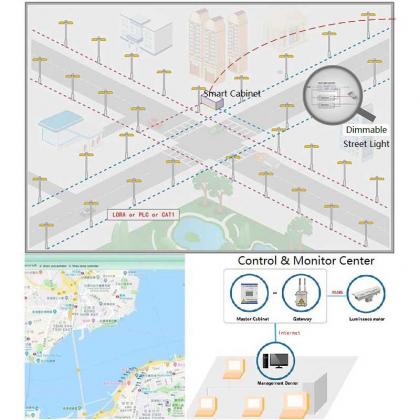
Use this field view to understand corridor zoning, intelligent cabinets, communication routes and the relationship between road and tunnel lighting operations.
Adaptive CCT under Rain, Fog and Snow
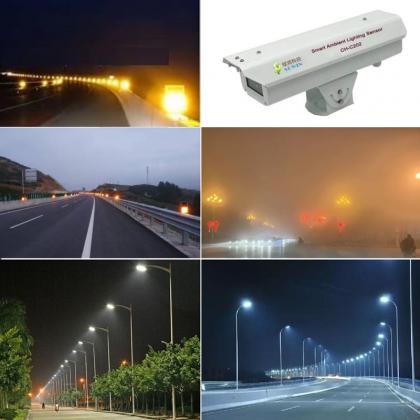
Use this view as operating context for project-specific luminance sensing, adaptive CCT and scene transitions. Final acceptance must rely on approved settings and witnessed site results.
OPERATING ARCHITECTURE AND AUTHORITY
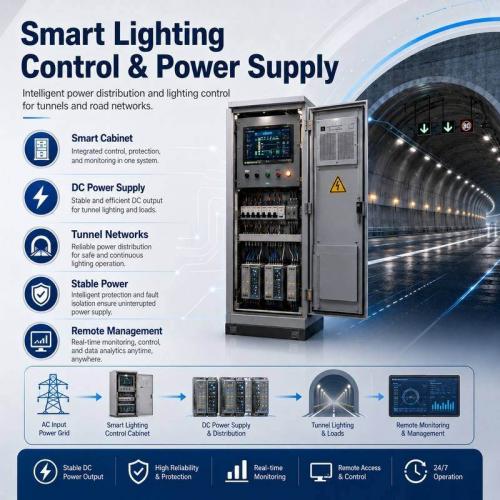
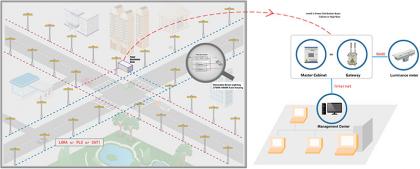
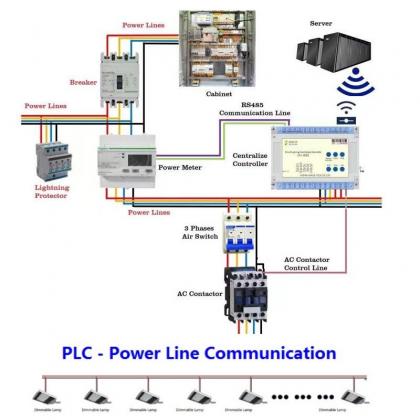
How Does the Control Chain Link the Platform, Cabinets, Circuits, Sensors and Lamps?
Central Platform
Schedules, permissions, asset views, alarm rules, energy records and approved corridor scenes.
Edge Gateway and Cabinet
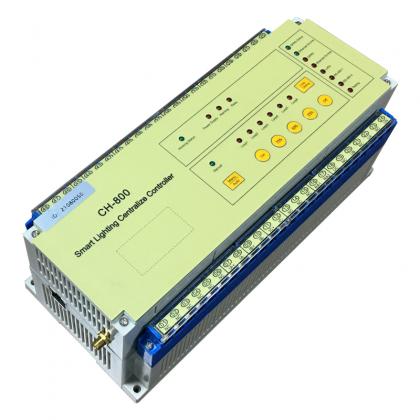
CH-800-class gateways and intelligent cabinets create bounded operating zones and preserve approved local functions.
Circuit Execution
Feeder and circuit groups retain switching, dimming, measurement, protection interfaces and manual-control boundaries.
Lamp-Level Control
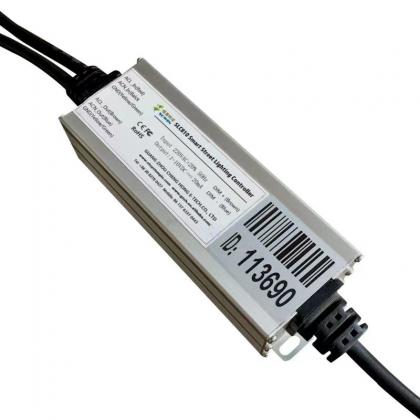
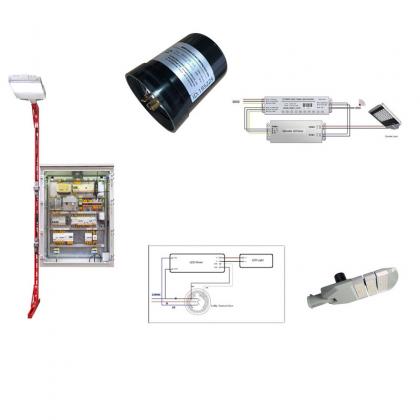
OFDM PLC, LoRA, cellular or approved hybrid routes carry commands, status feedback and driver-side dimming.
Sensing and Maintenance
Traffic and luminance inputs trigger bounded actions; alarms, operating records and work orders close the maintenance loop.
DEPLOYMENT ROUTE AND PROOF COMPARISON
Which Architecture Best Fits Existing Assets, Risk and Acceptance Requirements?
| Deployment Route | Project Fit | Required Proof |
|---|---|---|
| Retain Qualified Existing Cabinets | Survey feeders and add communication, control and monitoring only where the existing arrangement can be technically qualified. | Asset survey, interface record, rollback method and witnessed central-platform-loss test. |
| New Highway or Tunnel Corridor | Design zones, communication routes, fallback scenes, manual authority and acceptance records as one coordinated system. | Cabinet and circuit FAT, feeder-noise test, gateway-restart test and site acceptance records. |
| Mixed Road and Tunnel Program | Use one management platform while preserving separate rules for roadway sections, portals, transition zones and tunnel interiors. | Separate scene ownership, circuit boundaries, sensor-error test and road/tunnel SAT cases. |
MEASUREMENT, FEEDBACK AND RECONCILIATION
Which States Must the Owner See and Reconcile?
Grid
Supply events and metered electrical conditions at the declared project boundary.
Cabinet
Door status, cabinet temperature, gateway status, meter data and local-control status where included.
Circuit
Switching state, load, power, abnormal conditions and circuit alarms.
Lamp
Communication, dimming command, status feedback and selected driver or sensor data.
FAILURE STATES, SAFE FALLBACK AND RECOVERY
How Should the System Respond to Communication and Field Abnormalities?
| Condition | Required Control Behavior | Witness Method |
|---|---|---|
| Central Platform or WAN Loss | Edge zones retain approved schedules and safe local scenes; buffered records synchronize without creating conflicting commands. | Disconnect the platform or WAN and verify local operation, event buffering and controlled reconciliation. |
| Noisy Power Feeder | Segment OFDM PLC paths and add another route only where measured conditions justify it. | Operate representative feeders under measured electrical noise and record route quality, retries and fallback behavior. |
| Sensor Error or Stale Data | Apply plausibility, stale-data and conservative fallback rules before a safety-relevant action. | Inject stale, implausible and missing inputs; verify rejection, alarm, bounded local action and recovery. |
| Gateway Restart | Use deterministic startup, restored configuration and unresolved-exception reporting. | Restart a representative gateway under load and verify startup, lamp feedback and restored local authority. |
SURVEY, PILOT, FAT, SAT AND OWNER HANDOVER
How Should the Project Move from Inputs to Accepted Operation?
TECHNICAL VALUES, CONDITIONS AND EVIDENCE LIMITS
Which Parameters Must Be Fixed before Procurement Approval?
| Engineering Item | Required Boundary or Evidence |
|---|---|
| Control Hierarchy | Define the central platform, edge gateway, intelligent cabinet, circuit group, lamp-level controller and manual authority as separate responsibility layers. |
| Communication | Select OFDM PLC, LoRA, cellular or hybrid routes only after reviewing feeder conditions, distance, obstructions, topology and the owner’s network. |
| Supply Interface | Equipment rated for 90–420 VAC can be selected where the approved hardware and project electrical design require that range. |
| Offline Operation | Approved local schedules and safety scenes should continue during central-platform or WAN loss, by controlled synchronization. |
| Adaptive CCT and Sensing | Fix sensor type, calibration, CCT range, scene boundaries, ramp rates, fallback rules and witness conditions for the selected configuration. |
| Interfaces and APIs | Interfaces are project-configured according to local regulations, owner requirements and third-party system responsibilities; no universal protocol package is implied. |
| Acceptance | Road, portal and tunnel functions require separate FAT/SAT cases, state-feedback records and a designated approval authority. |
OWNER, EPC AND PROCUREMENT DECISIONS
What Must the Highway Authority Confirm before Tender Award?
What Remains Operational without the Central Platform?
Witness a WAN-disconnection test and confirm that edge cabinets retain approved scenes, buffer records and recover without unsafe field-state changes.
Who Owns Local and Manual Authority?
The interface schedule should identify locally held scenes, alarm priorities, manual override, command ownership and the party authorized to approve changes.
How Are Road and Tunnel Rules Separated?
Require separate scene ownership, priority rules, circuits and FAT/SAT cases for roadway, portal, transition and tunnel-interior functions.
How Can the Owner Restore the System Years Later?
Require configuration backups, administrator rights, compatibility records, replacement strategy, restore instructions and a witnessed recovery exercise.
RELATED IOT LIGHTING ENGINEERING ROUTES
Continue the Technical Review within the Smart Lighting System
The following links remain inside the SOWIN IoT Lighting and smart street lighting control architecture, covering roadway control, tunnel lighting, cabinets, lamp-level control and the Urban-OS platform.
Start with the Corridor Topology and Acceptance Boundary
Send the road and tunnel layout, cabinet and circuit arrangement, luminaire and driver information, communication conditions, sensing requirements, interfaces and required FAT/SAT evidence.
S