other

adaptive tunnel lighting control system

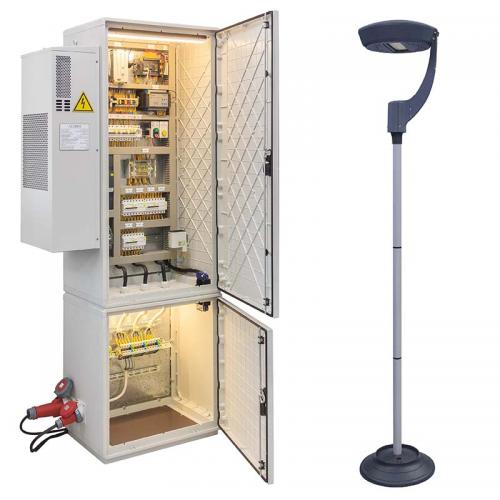
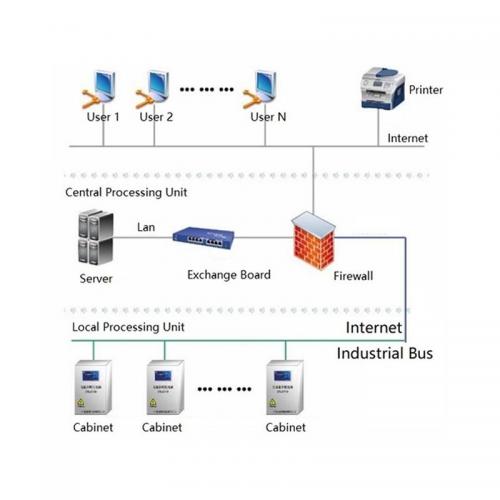
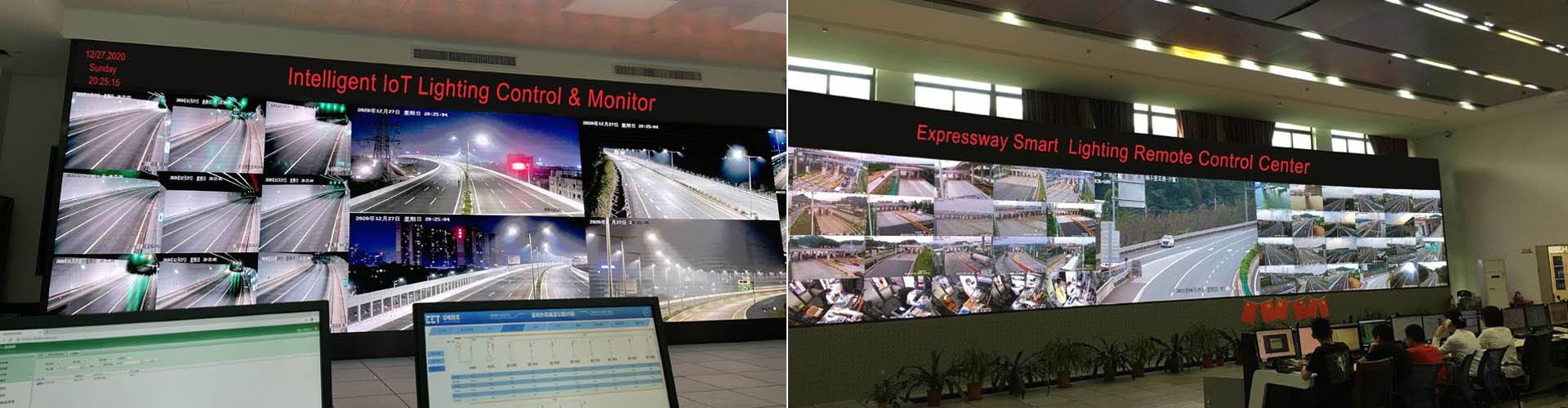
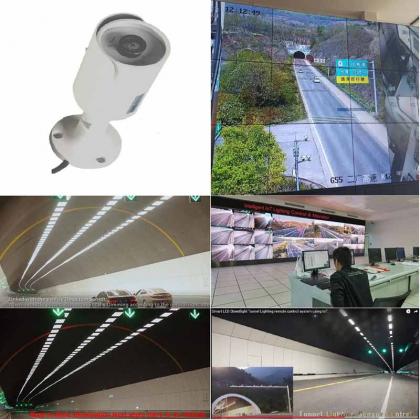
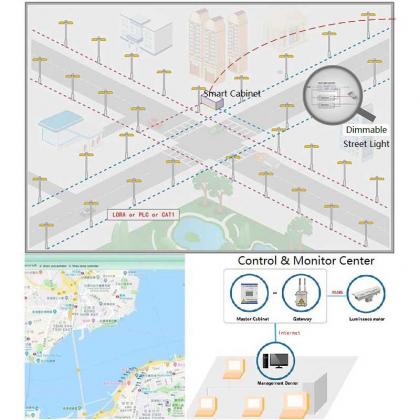
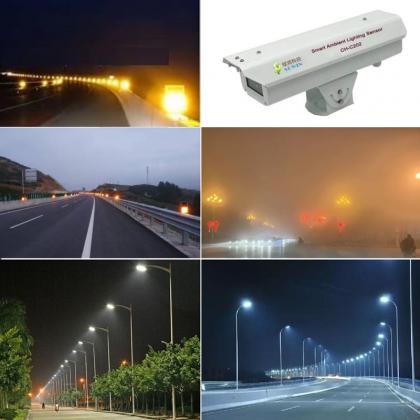
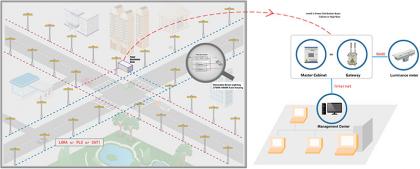
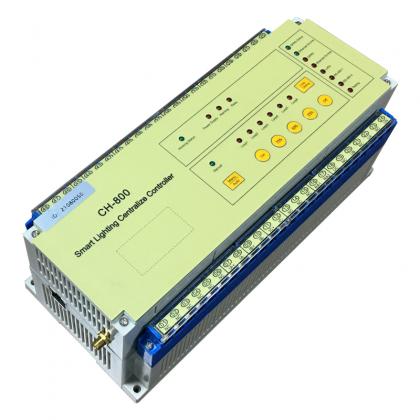
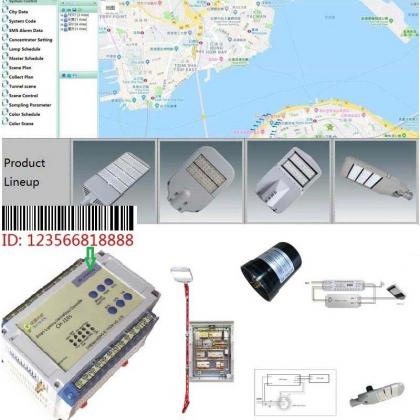
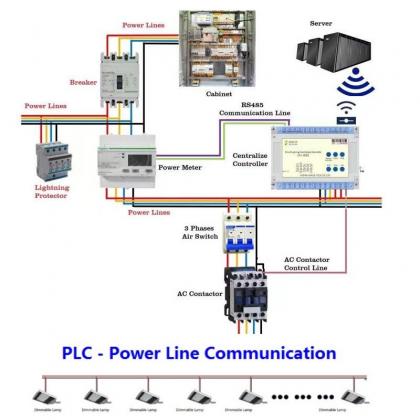
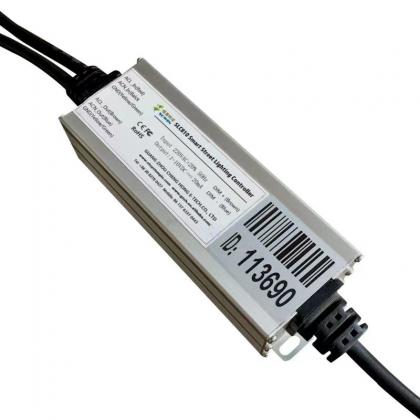
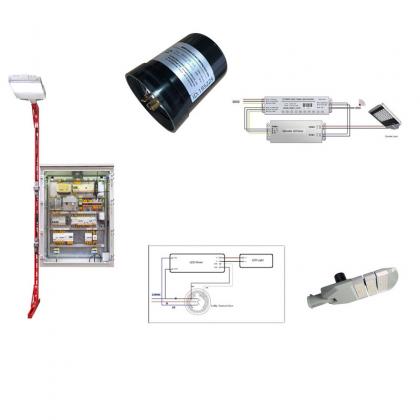
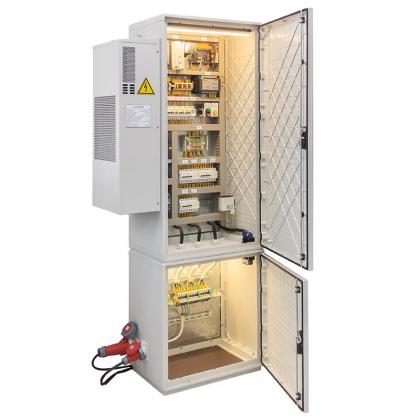
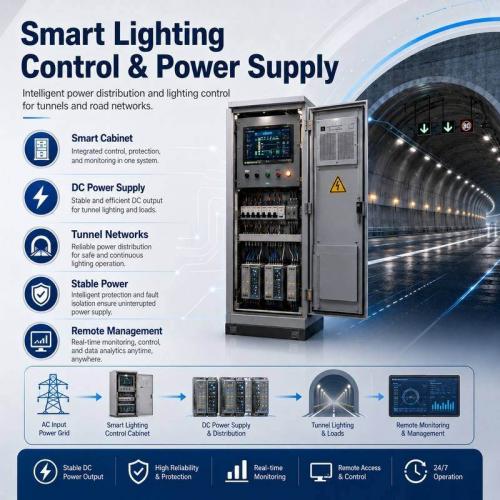
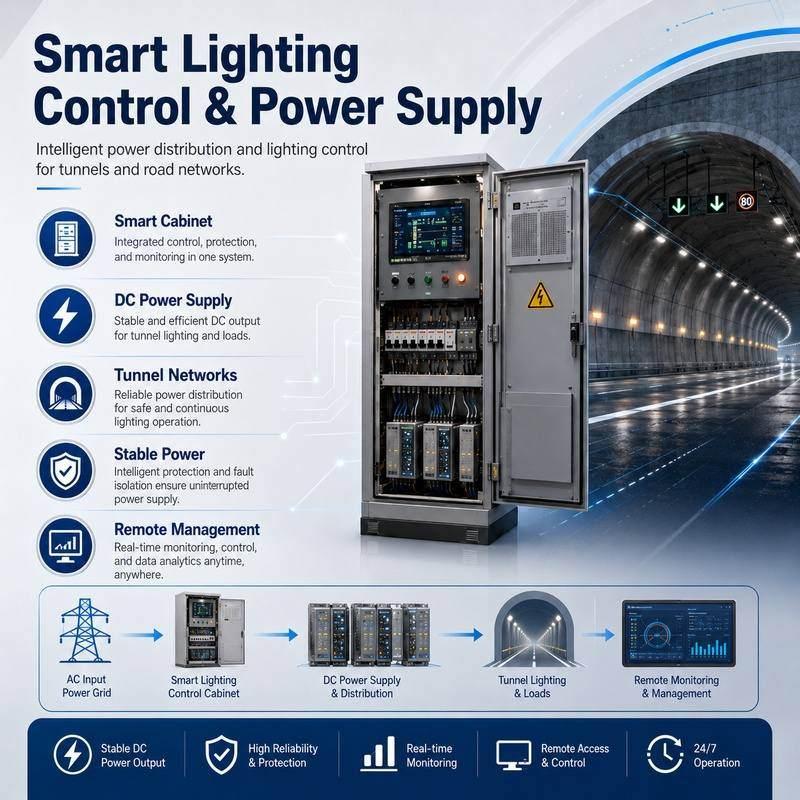
SOWIN provides a human-centric adaptive tunnel lighting system for tunnel entrances, threshold zones, transition zones, interiors and exits. The control chain can connect portal luminance sensors, traffic inputs, CH-800 gateways, intelligent lighting cabinets, circuit controllers and SLC810/SLC910 lamp-level controllers.

Measured exterior luminance, traffic conditions and approved zone curves allow the system to coordinate output instead of relying on one fixed entrance scene. Project-configured CCT, ramp rates, local fallback and manual authority help preserve visual continuity when weather, traffic or communication conditions change.

Final luminance levels, zone lengths, sensor locations, dimming curves and CCT settings depend on tunnel geometry, design speed, pavement, portal orientation, luminaire optics, local standards and witnessed site acceptance.

SOWIN SMART LIGHTING ENGINEERING

Human-Centric Adaptive Tunnel Lighting for Black-Hole and White-Hole Mitigation, Visual Adaptation and Entrance-Exit Safety

Build the project around adaptive tunnel lighting, tunnel lighting control system, black-hole and white-hole mitigation and 2700K–6000K adaptive CCT with clear authority, local continuity and owner-readable evidence.

tunnel lighting systemtunnel lighting control systemadaptive tunnel lightingtunnel entrance lightingblack hole effect tunnel lightinghuman centric tunnel lighting
DIRECT ENGINEERING ANSWER

What Must This System Do and Prove?

Tunnel Lighting System: Adaptive tunnel lighting is a zoned control system that helps drivers move between bright outdoor conditions and the darker tunnel interior without abrupt, unverified lighting changes. It combines portal luminance, traffic, weather and equipment-status inputs with approved rules for approach, threshold, transition, interior and exit zones.

Procurement decision: Approve wider deployment only after a representative pilot proves the offered control chain, local behavior, failure response, returned states and recovery method.

PROJECT FIT AND RESPONSIBILITY

Where Does This Solution Fit?

Suitable Projects

Highway, mountain, urban, subsea and long tunnels where portal conditions, traffic speed, weather or operating mode change enough to make one fixed lighting curve inefficient or visually abrupt.

Not the Right Scope

Short, low-speed tunnels that already meet verified visual and safety criteria with stable local scenes and do not require networked sensing, lamp feedback or adaptive operation.

Integration

Define power, communication, data, command priority, timeout, local fallback, manual control and third-party responsibilities before connecting systems.

Long-Term Operation

Preserve owner access to settings, records, credentials, backups, compatible spares, restoration instructions and supplier-transition responsibilities.

OPERATING ARCHITECTURE

How Is the Control and Evidence Chain Organized?

1. Portal luminance and traffic sensing

Define the responsibility, inputs, outputs, local behavior and acceptance evidence for this layer.

2. Zone-curve and CCT policy

Define the responsibility, inputs, outputs, local behavior and acceptance evidence for this layer.

3. CH-800 edge gateway and cabinet

Define the responsibility, inputs, outputs, local behavior and acceptance evidence for this layer.

4. Circuit and lamp-level execution

Define the responsibility, inputs, outputs, local behavior and acceptance evidence for this layer.

5. Returned-state records and manual authority

Define the responsibility, inputs, outputs, local behavior and acceptance evidence for this layer.

Authority requirement: Every automatic or remote action needs a declared source, permitted range, timeout, local fallback, returned state, exception path and manual authority.
FAILURE STATES AND RECOVERY

Which Abnormal Conditions Must Be Witnessed?

Condition Required Behavior Witness Method
Portal sensor error Reject implausible or stale values and apply an approved conservative scene. Inject missing, stale and out-of-range values during FAT/SAT.
Communication loss Continue approved local zone schedules and safety scenes. Disconnect the central route and verify local operation and later reconciliation.
Abrupt scene change Apply approved ramp rates and transition limits. Witness transitions under representative day, night and weather inputs.
Gateway restart Restore the approved configuration without uncontrolled output changes. Restart a representative gateway under load and confirm zone state recovery.
SURVEY, PILOT, FAT, SAT AND HANDOVER

How Should the Project Move to Accepted Operation?

1. Inputs

Define topology, operating scenes, authority, interfaces, alarms, local continuity and required evidence.

2. Survey

Record field assets, electrical and communication conditions, environmental limits and owner dependencies.

3. Pilot

Use a representative section to test the functions carrying the highest project uncertainty and confirm the rollback route.

4. FAT

Verify the offered hardware, software, configuration, failure cases, records, backups and data export.

5. SAT

Align field inputs, predefined commands, returned states, alarms, maintenance workflow and final recovery.

6. Handover

Deliver owner credentials, configurations, records, permissions, spares and tested restoration procedures.

Scale authorization: Proceed beyond the pilot only after exceptions are closed or formally accepted and the owner approves the FAT/SAT evidence format.

TECHNICAL VALUES AND CONDITIONS

Which Parameters Must Be Fixed before Approval?

  • Exterior luminance measurement location and calibration
  • Approach, threshold, transition, interior and exit zone definitions
  • Design speed and pre-detection distance
  • 2700K–6000K project-configured CCT range
  • Dimming curve, ramp rate and minimum safe scene
  • Separate FAT/SAT cases for each driving direction
Project boundary: Interfaces and third-party integration are configured according to local regulations, owner requirements and the written project specification. No universal interface package or site-independent performance is implied.
OWNER AND PROCUREMENT DECISIONS

What Must Be Confirmed before Tender Award?

Which portal conditions trigger each approved curve?

Record the responsible party, required evidence, approval method and long-term operating consequence.

What remains operational during WAN or server loss?

Record the responsible party, required evidence, approval method and long-term operating consequence.

Who may change zone curves, CCT and fallback scenes?

Record the responsible party, required evidence, approval method and long-term operating consequence.

Which measurements prove visual continuity at acceptance?

Record the responsible party, required evidence, approval method and long-term operating consequence.

Leave A Message
If you are interested in our products and want to know more details,please leave a message here,we will get back to you as soon as possible.
Related Products
CH PG002
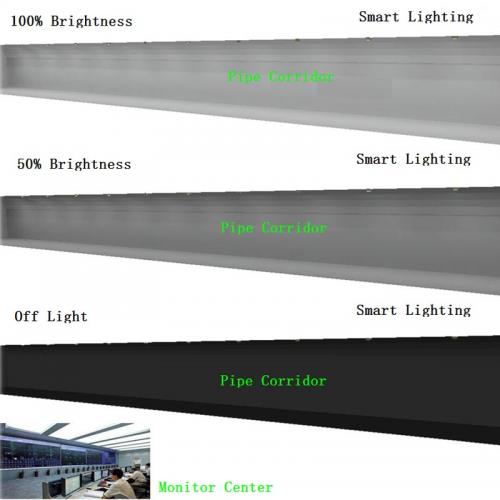
The intelligent lighting control system of the municipal pipe gallery is independently developed by our company. Aiming at the lighting environment of the urban underground pipe gallery, the lighting of these areas can be controlled by manual temporary intervention or automatic operation through the server, workstations at all levels, on-site touch control screens or handheld devices. Status, data collection and monitoring of the equipment in the area, and at the same time realize the personnel positioning, SOS alarm, abnormal temperature change alarm and harmful gas abnormal alarm.
G01
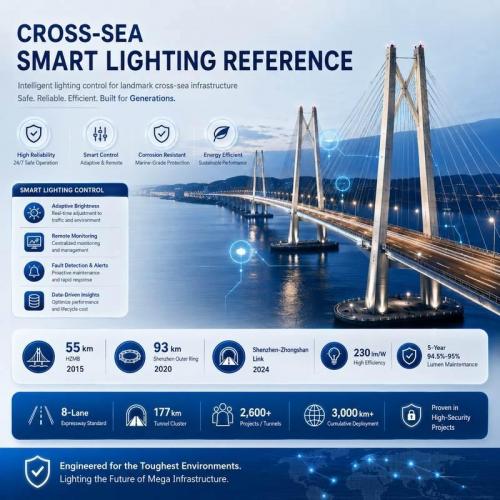
.g01-top-summary{font-family:Arial,Helvetica,sans-serif;color:#344f63;line-height:1.75} .g01-top-summary p{margin:0 0 12px;font-size:16px} .g01-top-summary p:last-child{margin-bottom:0} .g01-top-key{font-size:18px;font-weight:900;color:#173f5e;line-height:1.45} @media(max-width:700px){ .g01-top-summary p{font-size:15px} .g01-top-key{font-size:17px} } SOWIN provides an engineering-grade smart street lighting control system for highways, tunnels and long roadway corridors. The system connects cloud or owner-controlled on-premises servers, CH-800 gateways, intelligent lighting cabinets, circuit controllers and SLC810/SLC910 lamp-level controllers. Hybrid OFDM PLC and LoRA communications support remote control and monitoring across complex feeders, long corridors and demanding electrical environments. Traffic and luminance sensors can support scheduled or adaptive dimming, while the platform provides asset views, alarms, energy records, operating reports and fault-location information. Adaptive CCT from 2700K to 6000K can be configured for project-specific rain, fog and snow conditions. Role-based access, traceable operation records, offline local operation and controlled recovery help owners maintain safe lighting when the central platform or communication network is unavailable. Interfaces and third-party integration are configured according to local regulations, owner requirements and project specifications.
CH SOLARST230EFF
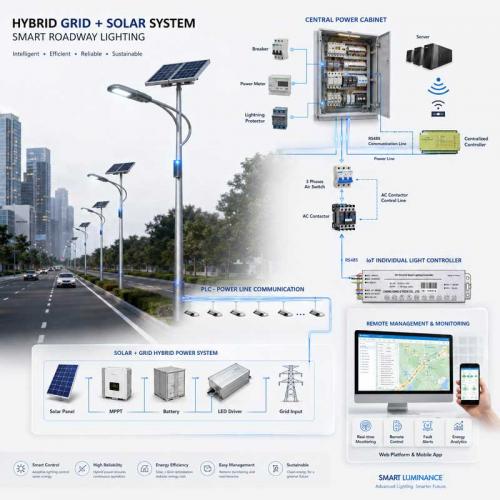
Why Choose an IoT-Enabled Hybrid Solar + Grid Street Lighting System? An IoT-enabled hybrid solar + grid street lighting system combines solar power, grid electricity, LiFePO4 battery storage, and remote management to provide reliable and energy-efficient outdoor lighting. During sunny periods, solar panels power the lights and charge the batteries. During cloudy or rainy weather, low battery conditions, or power shortages, the system automatically selects battery or grid power according to the configured strategy. Off-peak grid charging can also reduce electricity costs while maintaining continuous lighting. IoT lamp-level controllers monitor voltage, current, power consumption, temperature, battery status, charging conditions, and lamp operation. LED failures, low battery levels, grid outages, abnormal energy use, and communication faults can be detected and reported automatically. Operators can remotely switch, dim, schedule, and monitor each light through a centralized platform, reducing manual inspections and maintenance costs. This solution is suitable for urban roads, highways, rural communities, industrial zones, campuses, and regions with unstable grids or long rainy seasons. It combines solar energy savings, grid reliability, battery backup, and intelligent lighting management.
CH FU6030
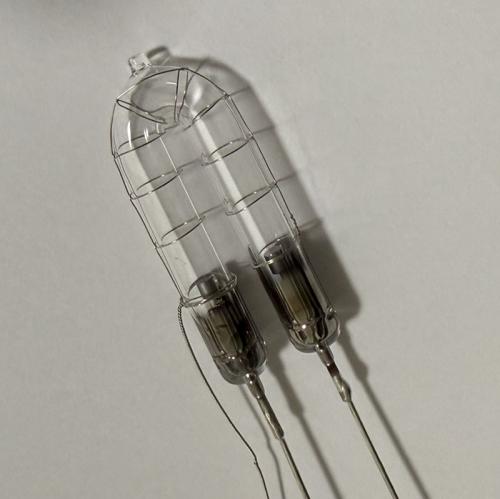
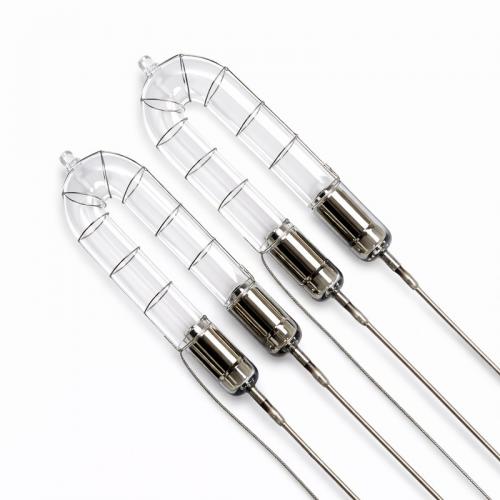
SOWIN GXEC Heimann traffic enforcement flash tube, Excelitas traffic camera flash tube, and PerkinElmer xenon flash lamp review path is built for discontinued enforcement flash tube, legacy traffic camera flash, and repair bench xenon flash tube cases where old samples, missing service files, partial labels, and discontinued supply paths create real approval pressure. The purpose is not to copy a historical supplier name, but to rebuild the working requirement from evidence behavior, geometry, trigger coupling, optical field, and duty-window data. Replacement approval must be based on geometry, trigger coupling, pulse energy, optical field, duty cycle, environmental margin, and sample image behavior, not a first flash or appearance match. For Middle East and other harsh roadside programs across high heat, dust exposure, humidity, vibration, and cold-start regions, SOWIN supports batch enforcement-camera flash tube review routes with stable field behavior proven through repeated roadside use. Serious approval should be judged by high-heat output stability, dust exposure endurance, cold-start confidence, trigger reliability, reflector fit, and license-plate readability before scale procurement. Multiple tube geometries and material routes can be reviewed for fixed speed cameras, mobile enforcement systems, ANPR lanes, red-light cameras, legacy repair benches, OEM modules, and tender-driven spare-part programs. SOWIN can provide an engineer-reviewed parameter sheet, sample-matching checklist, Spec PDF support, and RoHS documentation. The goal is to help OEMs, integrators, repair teams, and procurement officers choose an enforcement flash route by evidence behavior, field-risk control, and repeatable roadside service logic - not by appearance alone.
CH FU6030
SOWIN GXEC German QUARTZ xenon flash tube and SCHOTT glass flash tube route is built for premium professional photography systems where the glass envelope is not a cosmetic detail, but a core part of flash stability, optical cleanliness, thermal-load tolerance, and long-run output confidence. For high-value studio flash heads, a premium studio flash tube must do more than ignite once. It must support repeatable peak output, stable spectrum behavior, controlled trigger response, and reduced envelope stress across demanding shooting cycles. We define a serious professional flash tube replacement by a verified window of arc length, glass OD, tube geometry, electrode sealing, trigger coupling, pulse energy, flash frequency, and duty-cycle control. When the glass route is weak or mismatched, hidden failures may appear later as color drift, unstable brightness, heat stress, premature darkening, or repair-bench complaints. For this reason, SOWIN can review German-imported QUARTZ or SCHOTT glass routes when the project requires a reduced blackening xenon tube with cleaner optical behavior and stronger long-term stability. Multiple geometries, including linear, U-shaped, spiral, and ring designs, can be reviewed for reflector cavity fit, optical path alignment, and flash-head integration. For procurement and repair approval, SOWIN can provide an engineer-reviewed parameter sheet, sample-matching checklist, Spec PDF support, and RoHS documentation. The goal is to help studios, repair benches, rental houses, OEM service teams, and distributors select a high stability xenon flash tube based on material route, electrical fit, and real operating duty—not by appearance alone.
CH UWFLED600W
Key Features: 1. Widely Power Range from 50W, 100W, 200W, 500W, 600W, 1500W 2. Deep Water from 50ft to 1000ft under the sea floor to attractive fish luring(300m deep) 3. Utility Patent Design 4. VHO LED chips for 25% higher efficiency 5. Marine Grade Cable for 5~10 years fine working in the Salt-water(The marine environment)
CH STSLR100S
Key Features: 1. Die-casting and Extruded aluminum profile Mold for Modern assembly line appearance. 2. Dual Colors between Cool White and Warm White/Nature White design to meet abnormal weather conditions: heavy snowing area, serios fog & rains , automatically changing the CCT from 4500K/6000K to 2700K ...... by the intelligent sensors when detecting of dense fog, rainstorm or snowing. 3. Intelligent street lighting system is a core element for the smart city platform, 4. 80% of Max. power saving than traditional high pressure sodium lamps
CH EK300-005
Server, workstation, on-site touch screencontrol, mobile(iPad) and other handheld devices, smart centralizedcontrollers (or gateways), loop switch controllers, loop dimming controllers, single-lamp smart lighting management terminals, dual-lamp smart lighting management Terminal, dual-colors(2700K~6000K)intelligent lighting management terminal, dual-mode(hybrid of PLC+LoRa)intelligent lighting management terminal, multi-functional intelligent lighting management terminal, smart panel switch, illuminance meter (or brightness meter), motionsensor, linkage sensor, gas sensor, weather sensor, etc., and emergency Or supporting professional equipment (repeaters, copy controllers, monitors, debugging equipment, etc.).
Get the latest offers Subscribe for our newsletter
Please read on, stay posted, subscribe, and we welcome you to tell us what you think.

click here to leave a message

Leave A Message
If you are interested in our products and want to know more details,please leave a message here,we will get back to you as soon as possible.

Home

Products

about

contact