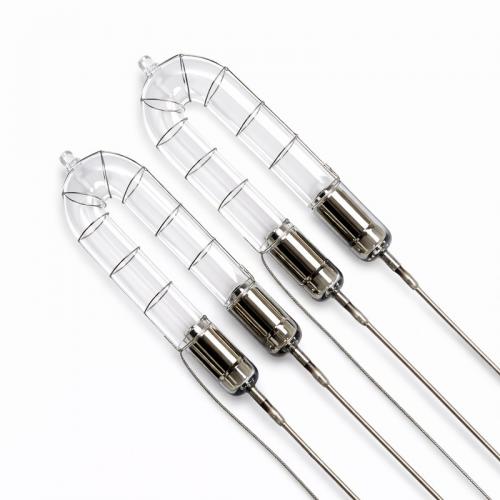
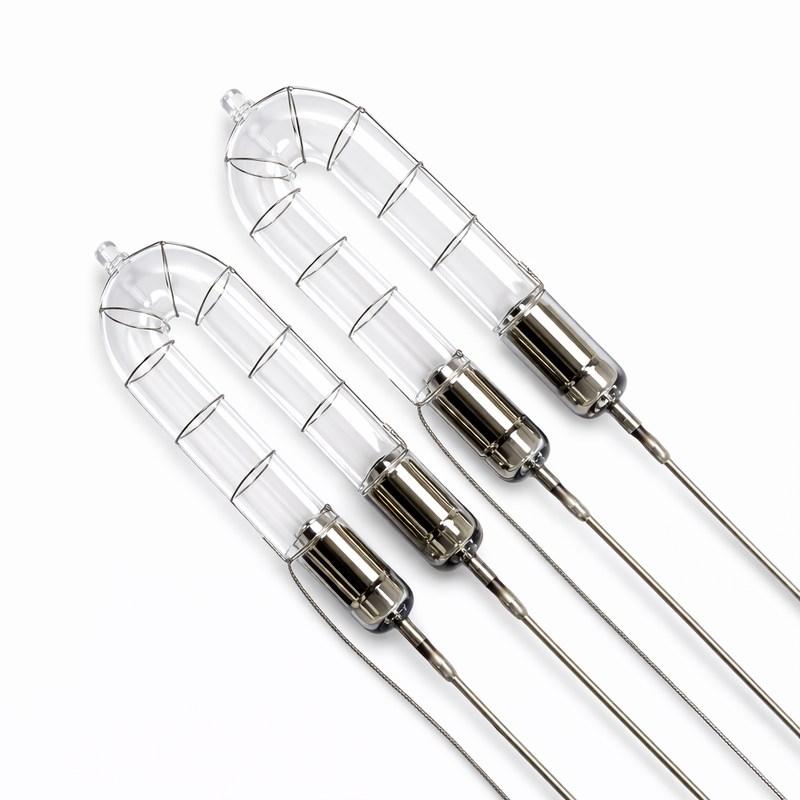
SOWIN GXEC German QUARTZ xenon flash tube and SCHOTT glass flash tube route is built for premium professional photography systems where the glass envelope is not a cosmetic detail, but a core part of flash stability, optical cleanliness, thermal-load tolerance, and long-run output confidence. For high-value studio flash heads, a premium studio flash tube must do more than ignite once. It must support repeatable peak output, stable spectrum behavior, controlled trigger response, and reduced envelope stress across demanding shooting cycles.
We define a serious professional flash tube replacement by a verified window of arc length, glass OD, tube geometry, electrode sealing, trigger coupling, pulse energy, flash frequency, and duty-cycle control. When the glass route is weak or mismatched, hidden failures may appear later as color drift, unstable brightness, heat stress, premature darkening, or repair-bench complaints. For this reason, SOWIN can review German-imported QUARTZ or SCHOTT glass routes when the project requires a reduced blackening xenon tube with cleaner optical behavior and stronger long-term stability.
Multiple geometries, including linear, U-shaped, spiral, and ring designs, can be reviewed for reflector cavity fit, optical path alignment, and flash-head integration. For procurement and repair approval, SOWIN can provide an engineer-reviewed parameter sheet, sample-matching checklist, Spec PDF support, and RoHS documentation. The goal is to help studios, repair benches, rental houses, OEM service teams, and distributors select a high stability xenon flash tube based on material route, electrical fit, and real operating duty—not by appearance alone.
SOWIN German QUARTZ xenon flash tube and SCHOTT glass flash tube route is built for premium studio flash tube projects, professional flash tube replacement review, reduced blackening xenon tube selection, and high stability xenon flash tube approval. In premium photography systems, the glass envelope is not decoration. It directly affects optical cleanliness, thermal-load tolerance, color behavior, blackening risk, and long-term confidence after repeated high-energy discharge cycles.
| Target | Engineering Meaning |
|---|---|
| German QUARTZ / SCHOTT Glass Route | Supports stronger envelope stability, cleaner optical behavior, and premium procurement confidence. |
| Reduced Blackening Control | Helps preserve transmission, brightness behavior, and usable output confidence over long service cycles. |
| Thermal-Load Tolerance | Supports repeated flash use where heat, seal stress, and duty rhythm can expose weak material routes. |
| Color Consistency | Protects professional photography workflows where color drift increases retouching and reshoot pressure. |
| System-Level Matching | Connects premium glass with electrode sealing, gas fill, trigger coupling, geometry, and pulse-energy validation. |
| Review Use | Why It Matters |
|---|---|
| German QUARTZ / SCHOTT Material Route | Helps buyers compare glass route, tube geometry, flash-head route, trigger method, and output expectations before sample approval. |
| Legacy Supplier Continuity | Supports Heimann / Excelitas / PerkinElmer-era search context, discontinued supply review, and brand-neutral cross-reference discussion. |
| Premium Glass Review | Gives procurement and engineering teams a document path for reviewing thermal-load tolerance, optical cleanliness, and reduced blackening risk. |
| RFQ and Sample Matching | Works with tube photos, arc length, glass OD, trigger wiring, flash energy, and failure symptoms for faster engineering response. |
| Parameter | Xenon Flash Tube | LED Flash / Continuous LED / Semiconductor Flash |
|---|---|---|
| Peak Intensity | High peak energy at the pulse event | Thermal and driver limited |
| Pulse Duration | Microsecond-class behavior achievable when rated | Rise time and driver behavior may limit motion freeze |
| Material Aging | Envelope route and electrode sealing affect long-term output confidence | Array, phosphor, driver, and heat behavior dominate aging risk |
| Replacement Risk | Main risks are material route + trigger coupling + duty-window mismatch | Main risks are driver tuning + thermal margin |
| Validation Path | Engineering Meaning |
|---|---|
| Strict endurance program | Continuous endurance verification of 1100+ hours per cycle, focused on ignition stability, material behavior, and controlled aging. |
| Risk-control matching | Verified by material route + geometry + trigger + duty cycle + CORE level to prevent hidden misfire, output drift, and early failure. |
| Scaling path | Engineering sample, pilot run, trial production, and global field use expose hidden failure modes before regular production. |
|
Premium Material Search Route
Search-intent examples: German QUARTZ xenon flash tube, SCHOTT glass flash tube, premium studio flash tube, high stability xenon flash tube, and reduced blackening flash tube.
|
High-End Studio Flash Context
Search-intent examples: premium studio flash repair, professional photography flash tube, high-load flash head, repeated discharge stability, and optical cleanliness review.
|
|
Legacy Glass Route Context
Search-intent examples: Heimann-era glass logic, Excelitas-era flash tube replacement, PerkinElmer-era xenon lamp review, and discontinued German glass route search.
|
Procurement Document Context
Search-intent examples: material route review, RoHS support, spec PDF, import file, compliance review, and approval document support.
|
| Item | Buyer Input | Why It Matters |
|---|---|---|
| 1) Tube photos | Front, side, electrode, ruler photo | Confirms geometry and visible risk |
| 2) Trigger / wiring photo | External / internal / wire / unknown | Reduces misfire and delayed ignition |
| 3) Material route | Standard / QUARTZ / SCHOTT / unknown | Defines thermal and optical risk profile |
| 4) Flash frequency | Hz / flashes per second / workflow | Determines endurance behavior |
| 5) Pulse energy | J rating or capacitor + voltage if known | Prevents overstress and output drift |
| Review Item | Why It Matters |
|---|---|
| German QUARTZ / SCHOTT Glass Route | Supports thermal-load tolerance, optical cleanliness, and premium buyer confidence. |
| Envelope Stress Control | Reduces cracking, distortion, seal stress, and heat concentration risk. |
| Blackening Behavior | Protects output stability under repeated discharge and long service cycles. |
| Color Consistency | Supports professional photography and repeat-session output control. |
| Trigger and Discharge Match | Prevents strong material from being wasted in a mismatched electrical system. |
| Electrode Seal Review | Links material route to real long-run durability. |
| Documented Material Review | Supports procurement discussion, sample evaluation, and approval files. |
| Application Boundary | Prevents overusing premium glass language when the system does not need it. |
| CORE Level | Recommended Use |
|---|---|
| CORE A | Recommended for premium flash heads, demanding studio use, high-repetition operation, or procurement files requiring a stronger material route. |
| CORE B | Recommended for standard high-quality repair where the glass route matters but duty is moderate. |
| CORE C | Use only when the buyer needs basic screening and does not require premium material positioning. |
| Question | Answer |
|---|---|
| Is German QUARTZ or SCHOTT glass needed for every project? | No. It is best used for selected high-end applications where thermal-load tolerance, optical cleanliness, blackening control, and long-term output stability matter. Standard projects should still be reviewed by geometry, trigger route, and duty window. |
| How does glass material affect photographic output? | Envelope behavior can influence blackening, heat stress, and long-term optical cleanliness. Over time, these factors may affect brightness stability, color consistency, and confidence in repeated studio or imaging work. |
| Can premium glass solve all replacement problems? | No. Premium glass is only one part of the system. A replacement still needs correct arc length, glass OD, electrode orientation, trigger coupling, flash energy, and duty-cycle validation. |
| Where does this matrix fit in buyer approval? | It fits when the buyer is not only replacing a tube but also trying to protect premium equipment, reduce repeated failure, support import review, or document a stronger material route for engineering approval. |
| Can this support legacy European flash heads? | Yes, when old samples, dimensions, trigger routes, and working conditions can be reviewed. Third-party brand names should remain service-context references, not official compatibility or affiliation claims. |
| Should RoHS and specification documents appear? | Yes, but only as supporting procurement documents. Keep the main page focused on material and engineering review while using the PDF and RoHS documents as approval support. |
| What buyer problem does reduced blackening solve? | It helps protect output confidence over time. Blackening can reduce light transmission, create uneven output, and raise service doubts after repeated high-energy discharge. |
| When should a buyer not overpay for premium glass? | If duty cycle is low, equipment value is modest, or the failure risk is mostly wiring or circuit-related, geometry and trigger review may matter more than a premium glass route. |

Address : F4,Bldg A, Hanzhong Industrial Park, No.67, North of Xinsha Ave, Xin Tang, Zeng Cheng, Guang Zhou, China
Tel : +86 20 8278 0427
Email : info@stsystemplc.com
Email : morrison426@163.com