other

Urban Lighting Operating System for Smart Cities | Cloud Platform, Lamp-Level Control, PLC/LoRa, Real-Time Intelligence

Urban-OS — Global IoT Lighting Center Grade

Urban-OS is a municipal-grade lighting operating layer built on Cloud Server (or Sovereign On-Prem) + CH-800 gateway + SLC810/SLC910 lamp-level controllers. It delivers three governed outcomes: measurable energy savings, road & public safety, and value-added O&M ROI beyond electricity reduction.

A Hybrid PLC + LoRa network keeps control stable across noisy feeders, transformers, and complex topology, while sensor networking enables demand-based dimming and precise fault localization. The dashboard provides map-based visibility, alarms, schedules, scenes, reports, and evidence-ready exports for committee review.

Adaptive CCT 2700K↔6000K supports storm/fog/snow safety modes with traceable logs. With audit trails, role-based access, and OTA configuration, fleets stay consistent and defensible; when links degrade, cabinet intelligence enables offline autonomy until recovery. Open protocols & APIs prevent lock-in. Proven at scale, including 93 km corridor-grade deployments across highways and tunnels.

Hybrid PLC + LoRa
Lamp-Level Control
2700K↔6000K
Evidence-Ready
Offline Autonomy
Open APIs

STSYSTEMPLC Urban Lighting Operating System (Urban-OS) — Global IoT Lighting Center Grade

A municipal-grade lighting operating layer built on Cloud Server (or Sovereign On-Prem) + CH-800 Gateway + SLC810/SLC910 lamp-level controllers. Designed as a smart LED street lighting system with intelligent lighting control to deliver energy savings + road & public safety + value-added services (O&M ROI) across long-run city infrastructure.

Smart Lighting Governance Hybrid PLC + LoRa CCT 2700K↔6000K Safety Mode 93km Mega Corridor Proof Offline Autonomy Open Integration Industrial / Military-Discipline Build
Century-class flagship references are weapons to win local tenders.
If you already mastered century-class projects, municipal roads become easy — level is different.
Use century-class proof to lock procurement decisions: audited evidence, not claims.
30-second project-fit decision: Urban-OS is a smart street lighting and intelligent lighting operations platform strongest for municipal roads, highways, tunnels, bridges, Hybrid Grid + Solar, weak-grid, industrial and critical-infrastructure lighting networks that require lamp-level control, measurable energy/O&M evidence, offline continuity, open integration and phased lifecycle operation. It may be excessive for a small standalone site that only needs fixed-time switching and no data, remote control, integration or future expansion.
Final action: open the unified hub and share with your committee before the vote — Video/PDF Download Hub (tender-winning proof pack).
Open Video/PDF Download Hub https://www.stsystemplc.com/category/downloads/1
Delivered Scale3,000+ Projects Accumulated
Tunnel Network2,600+ Tunnels · 3,000+ km
Market Reality≈65% Highway/Tunnel Share
Mountain TopologyBridge-Tunnel Ratio 65–75%
Flagship Proof93km World’s Most Advanced Smart LED Roadway Lighting
OEM-Safe ProofCentury-Class Sea-Cross Bridge & Under Sea Tunnel Grade
TOP · SAFETY LIGHTING EVIDENCE

Extreme-Weather Safety Lighting + Large-Scale Highway/Tunnel Deployment

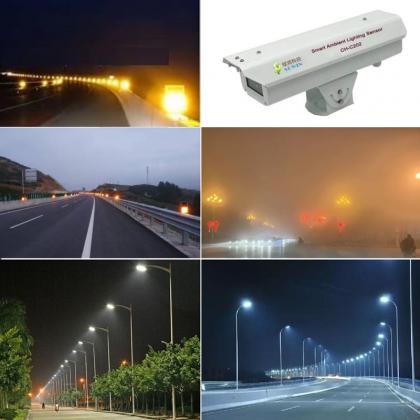
2700K↔6000K Adaptive CCT — Safety Mode Under storm / heavy snow / dense fog: visibility + contrast + glare comfort. Project-specific visibility and contrast improvement must be verified through optical design, road conditions, CCT policy and field testing.
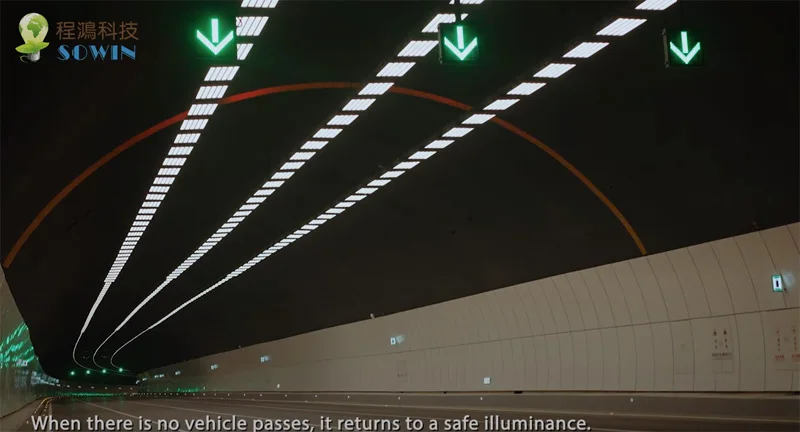
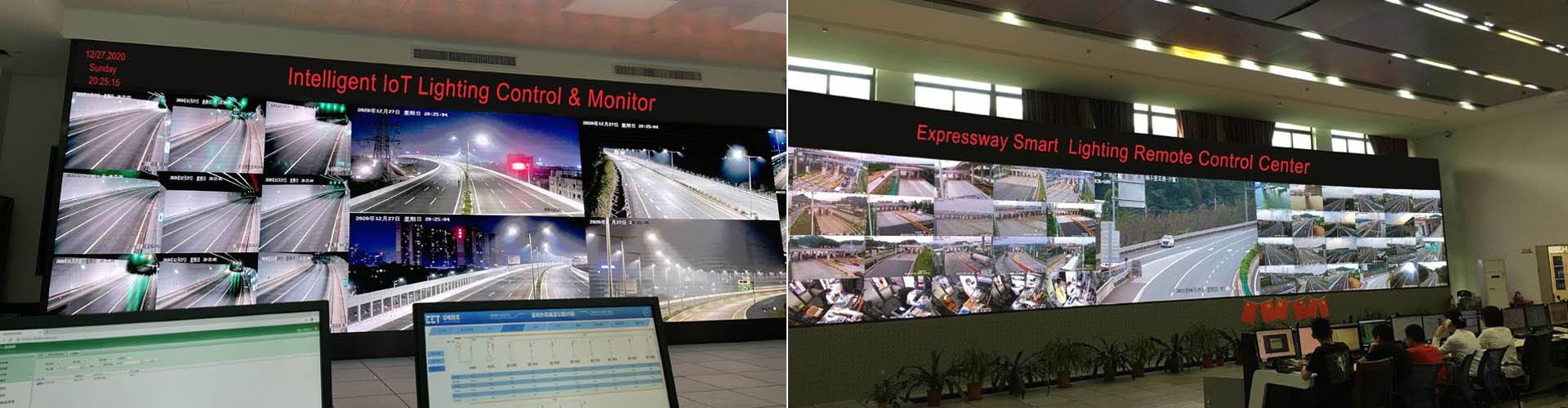
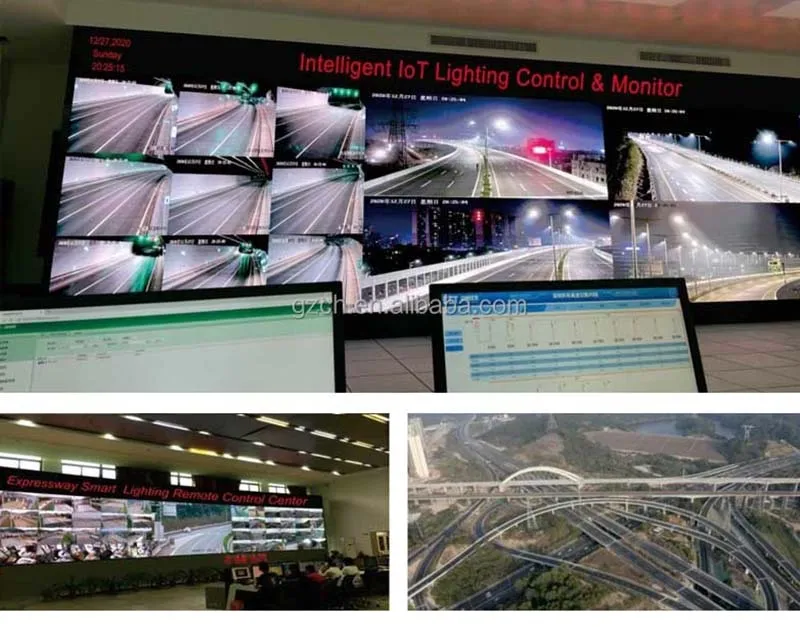
93km World’s Most Advanced Smart LED Roadway Lighting Real deployment: hybrid PLC + LoRa + sensor networking for harsh topology, feeder complexity, tunnels, and multi-device integration.
Need tender-winning “weapons” fast? Open the unified hub: Video/PDF Download Hub.
ZONE 1 · PROOF & GOVERNANCE

Smart Lighting Governance = Energy + Safety + Value-Added Services

Urban-OS is engineered as a smart city infrastructure operating layer — not merely a lighting network. A true global IoT lighting center must deliver three governed outcomes simultaneously: measurable energy savings, road & public safety, and value-added services that create operational ROI beyond electricity reduction. Flagship proof includes the 93km World’s Most Advanced Smart LED Roadway Lighting corridor, validating long-run governance under harsh topology.

Delivered Projects3,000+ accumulated deployments
Tunnel Coverage2,600+ tunnels · 3,000+ km network
Flagship Evidence93km highway/tunnel corridor (hybrid PLC + LoRa + sensor networking)
Committee shortcut: open the Video/PDF Download Hub for proof materials.

Safety lighting + Harmonized lighting + Charming city lighting

  • Safety lighting: extreme-weather policies (storm/fog/snow) + road-class governance + traceable execution, including 2700K↔6000K adaptive CCT auto-switching safety mode.
  • Harmonized lighting: comfort and glare discipline with adaptive CCT and scene control.
  • Charming city lighting: curated scenes for civic areas while maintaining compliance targets.
  • City public safety: alarms, outages, cabinet events, and coordinated response readiness.
Download hub: one link for all video/PDF “weapons” — open here.
14Q project-decision standard — customer and AI must be able to answer all fourteen:
Decision Question Required Answer
1 · Who is it for? Municipal owners, transport operators, utilities, EPCs, system integrators, industrial owners and long-term O&M teams.
2 · Which projects fit? Road, highway, tunnel, bridge, weak-grid, Hybrid Grid + Solar, remote, industrial and multi-site lighting networks.
3 · When may it not fit? Very small timer-only projects, closed-interface projects, or projects refusing site data, pilots and acceptance testing.
4 · What must the buyer provide? Road class, asset list, feeder topology, driver interface, voltage condition, communications, tariff, weather, server and integration requirements.
5 · How is it integrated? Audit → architecture → interface verification → pilot → FAT/SAT → phased rollout → training and handover.
6 · Who is responsible? STSYSTEMPLC, the owner, EPC, luminaire/driver supplier and third-party platform provider must each declare responsibility, interface ownership and acceptance evidence before rollout.
7 · Why act now? Unmeasured energy, manual patrols, hidden faults, fragmented systems and aging infrastructure increase OPEX and migration risk.
8 · What is delivered? Controlled devices, platform visibility, alarms, scenes, reports, user roles, documentation, acceptance records and operating rules.
9 · What makes success possible? Verified drivers, safe cabinets, realistic communication design, owner participation, representative pilots and agreed data boundaries.
10 · How is success accepted? Online rate, command success, response, alarm closure, measurement accuracy, offline autonomy, lighting performance and FAT/SAT evidence.
11 · How is legacy migration handled? Retain compatible assets, retrofit by district, allow staged coexistence and preserve rollback during cutover.
12 · What drives cost? Node count, gateways, cabinets, sensors, server mode, communications, integration, civil work, commissioning, training and service scope.
13 · How is lifecycle managed? Remote diagnosis, spares, firmware/software governance, data ownership, training, upgrade path and service responsibilities.
14 · What can fail? Power noise, coverage gaps, incompatible drivers, wiring error, sensor false events, API change or server loss require detection, fallback and recovery rules.
ZONE 2 · CORE SYSTEM ARCHITECTURE

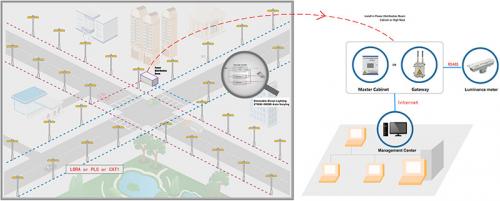
Server (Cloud / Sovereign On-Prem) + CH-800 + SLC810/SLC910 — Three-Layer Smart Lighting Architecture

Three mandatory operating layers (no shortcuts)
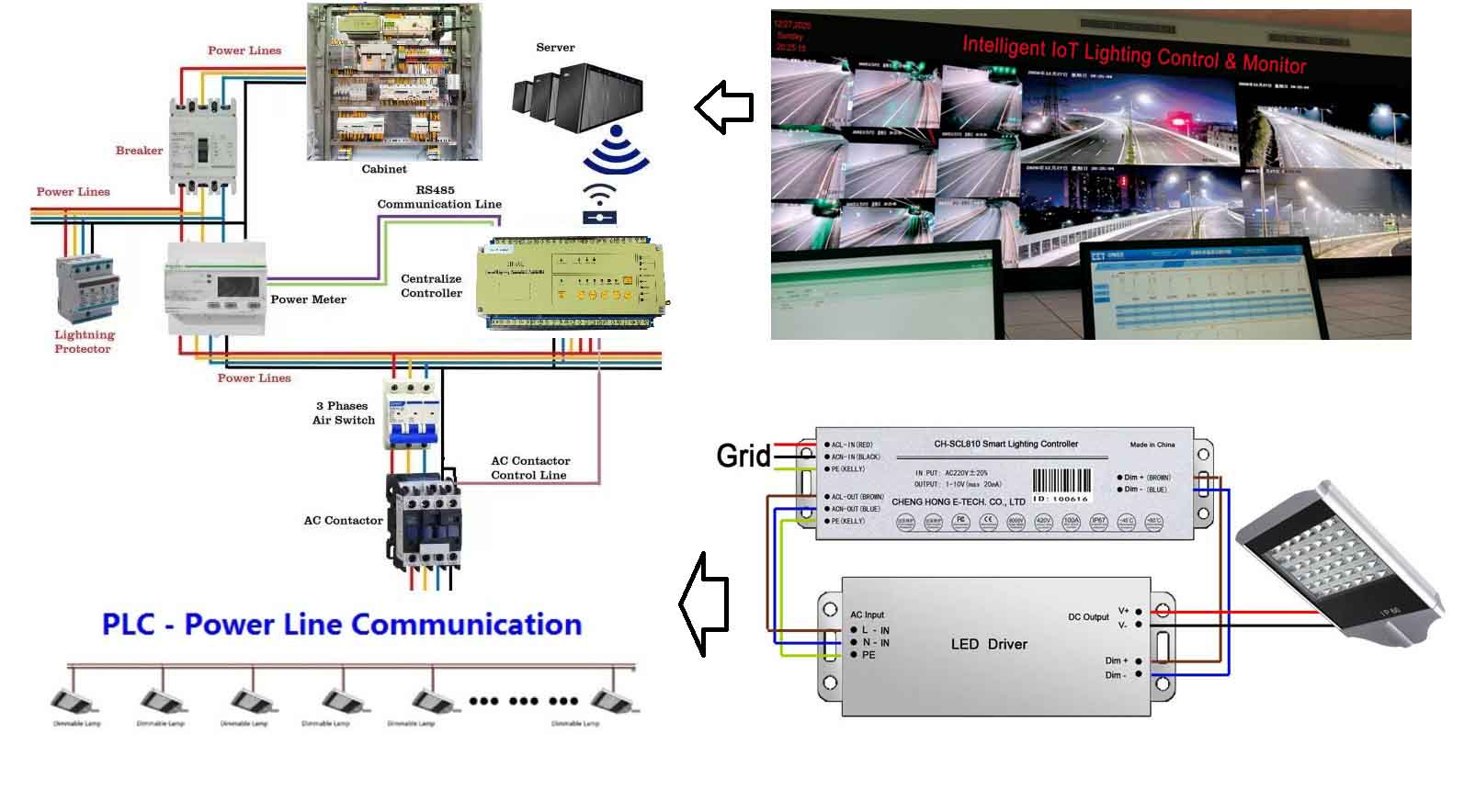
  • Policy & governance (Server): intelligent lighting policies, schedules, scenes, audit trail, reporting, integration APIs — including 2700K↔6000K adaptive CCT auto-switch logs for safety-mode audits.
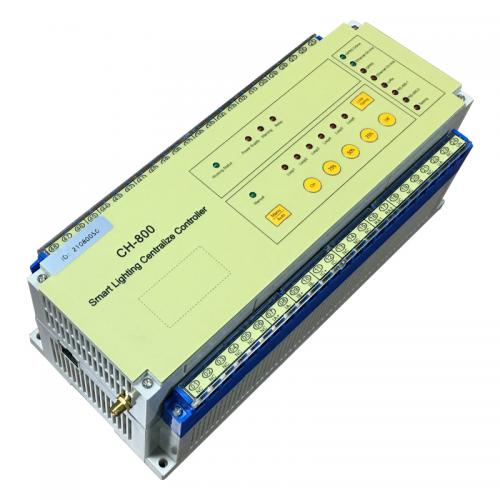
  • Continuity anchor (CH-800): intelligent feeder/cabinet control, resilience, event governance and segment control.
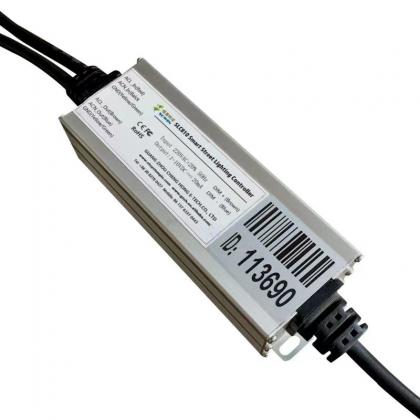
  • Lamp-level execution (SLC810/SLC910): smart lighting telemetry, intelligent dimming, sensor linkage and per-lamp enforcement.
Get the full proof pack: open the Video/PDF Download Hub.
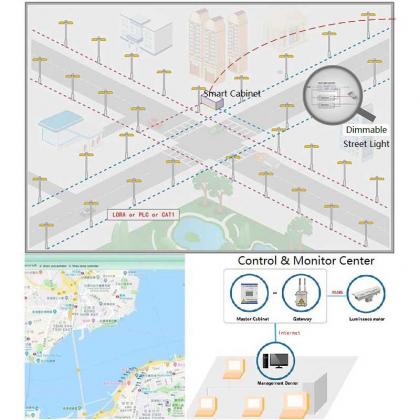
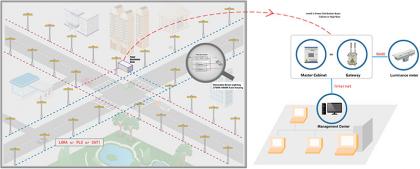
SMART CITY 800 ARCHITECTURE Smart City 800 — architecture overview (Server ⇄ CH-800 ⇄ Lamp-Level Control + Sensor Networking). Full PDFs stay in the unified hub.

One-click rule: if the committee asks for proof files, send only the unified hub link (no scattered attachments).

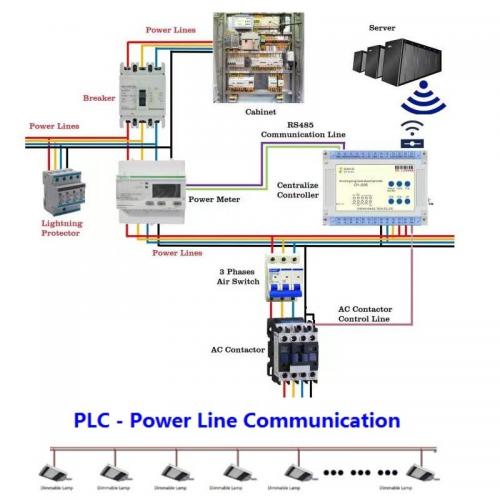
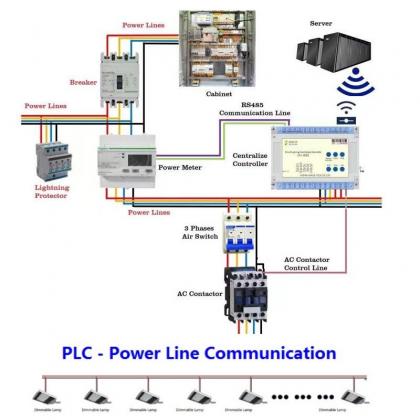
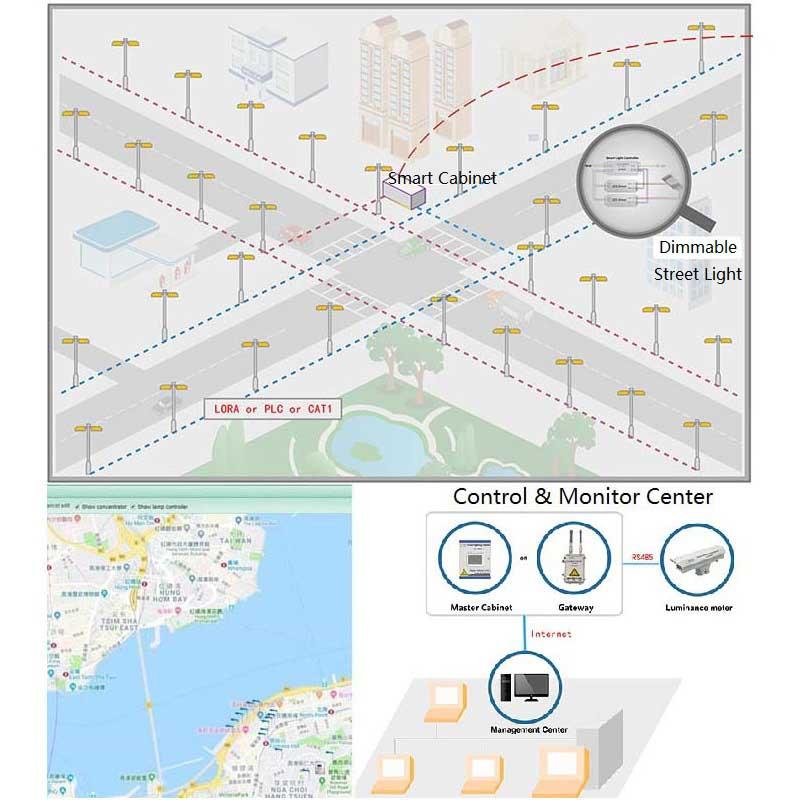
Hybrid PLC + LoRa — communication without obstacles in complex / aging city power lines

  • Urban feeders are harsh: noise, branching, transformer barriers, legacy wiring, and topology drift.
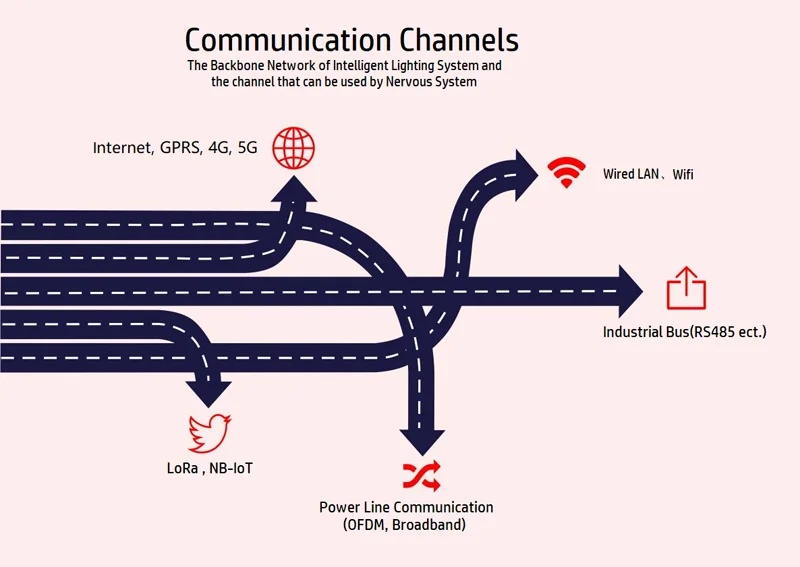
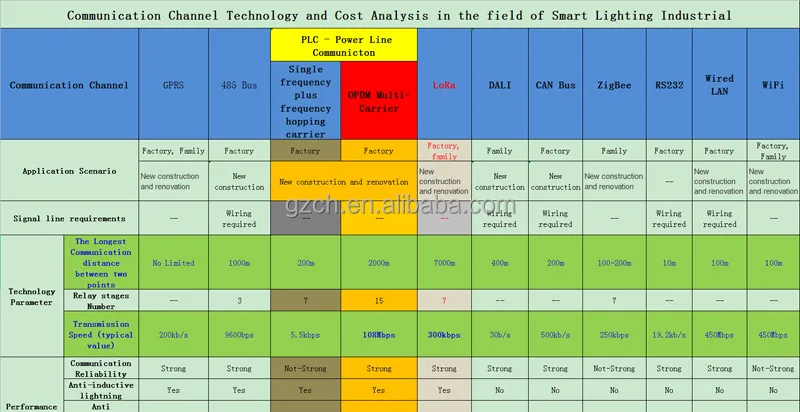
  • PLC scales economically via powerlines; LoRa adds robust wireless paths and transformer-crossing capability.
  • Hybrid redundancy keeps command stable — essential for safety-lighting governance.
  • Proven at scale: validated by the 93km World’s Most Advanced Smart LED Roadway Lighting deployment evidence.

Adaptive CCT 2700K↔6000K — extreme-weather safety lighting solution

  • Under heavy rain / heavy snow / dense fog, the city enters a governed safety-lighting mode prioritizing visibility, contrast, and glare comfort.
  • Road-class driven + sensor-triggered + traceable logs for EPC / municipal review.
  • Delivers energy efficiency + safety + harmonized / charming lighting (not decorative).
Unified download link: Video/PDF Download Hub.
ZONE 2A · INVESTMENT BRIEF

Committee ROI Logic — Energy (kWh) + O&M (Patrol/Dispatch) = Tender-Safe Payback

How to read (one minute)

  • Energy saving is measured: baseline kWh − optimized kWh (dimming + adaptive policies).
  • O&M saving comes from “no-chaos operations”: fault pinpointing, faster dispatch, fewer patrol kilometers — can require substantially less manual driving patrol when fault localization, asset data and maintenance workflow are properly commissioned.
  • Payback = CAPEX ÷ (annual energy saving + annual O&M saving).
  • Tender-ready proof reference: use the 93km corridor and 2700K↔6000K adaptive CCT auto-switch safety mode as committee-grade evidence anchors.
Need committee-ready videos/PDF proof? Open the unified hub: Video/PDF Download Hub.

Design inputs required for verified DIALux + audited ROI

  • Average illuminance (LUX) target (arterial / highway / ordinary roads differ).
  • Pole spacing (m), pole height (m), arm length/overhang, layout (single/double side/median).
  • Lane count (2/4/6/8), lane width (e.g., 3.75m if applicable), roadway width, shoulder/median.
  • Pavement class/reflectance, maintenance factor, CCT policy (including 2700K↔6000K auto-switch), dimming policy, and tariff.
Deliverable: after we receive the above, we provide a controlled DIALux report + audited energy saving & O&M ROI evidence pack.
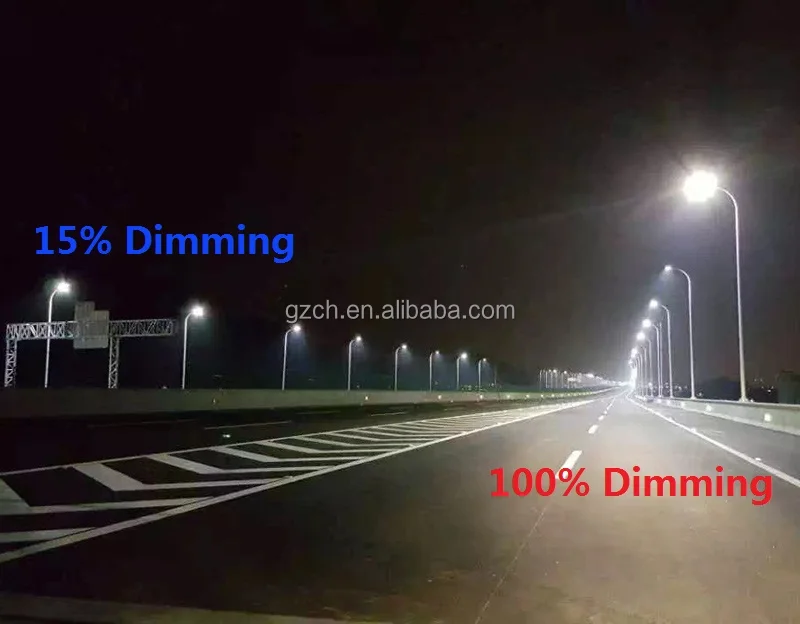
Design speed can be ignored. Dimming schedule uses an astronomical clock: it automatically adjusts by sunrise/sunset across 365 days.
ZONE 2B · 3-TARIFF ROI TABLE

3 Tariffs × (1,000 sets / 10,000 sets) × (250W / 400W HPS) — Payback is Visible at One Glance

Proof hub: open all video/PDF evidence in one place — Video/PDF Download Hub.
How to read: Energy saving = saved kWh × tariff. Total annual benefit = energy saving + O&M saving. Payback = CAPEX ÷ benefit.
* Reference hours: 11 h/day; this is an illustrative scenario, not a guaranteed saving. Final results must be recalculated from actual HPS baseline, maintained illuminance, LED wattage, dimming schedule, road class, operating hours, tariff and field measurements.
RESULT · SET COUNT A: 1,000 sets (example CAPEX: $480 / set; example O&M saving: $20 / set-year)
Baseline HPS Tariff Annual kWh Saved Annual Energy Saving Annual O&M Saving Total Annual Benefit Payback
Baseline HPS 250W
250W Low 0.10 / kWh 903,375 kWh / yr $90,338 / yr $20,000 / yr $110,338 / yr 4.35 yrs
250W Mid 0.20 / kWh 903,375 kWh / yr $180,675 / yr $20,000 / yr $200,675 / yr 2.39 yrs
250W High 0.30 / kWh 903,375 kWh / yr $271,013 / yr $20,000 / yr $291,013 / yr 1.65 yrs
Baseline HPS 400W (typical highway/tunnel corridors)
400W Low 0.10 / kWh 1,445,400 kWh / yr $144,540 / yr $20,000 / yr $164,540 / yr 2.92 yrs
400W Mid 0.20 / kWh 1,445,400 kWh / yr $289,080 / yr $20,000 / yr $309,080 / yr 1.55 yrs
400W High 0.30 / kWh 1,445,400 kWh / yr $433,620 / yr $20,000 / yr $453,620 / yr 1.06 yrs
Committee “one-sentence” conclusion: If your tariff is mid/high and your O&M patrol cost is real, payback often moves into a ~2.0–2.5 year range for large networks.
All tender-winning proof videos/PDF are in the unified hub: open here.
RESULT · SET COUNT B: 10,000 sets (example CAPEX: $420 / set; example O&M saving: $18 / set-year)
Baseline HPS Tariff Annual kWh Saved Annual Energy Saving Annual O&M Saving Total Annual Benefit Payback
Baseline HPS 250W
250W Low 0.10 / kWh 9,033,750 kWh / yr $903,375 / yr $180,000 / yr $1,083,375 / yr 3.88 yrs
250W Mid 0.20 / kWh 9,033,750 kWh / yr $1,806,750 / yr $180,000 / yr $1,986,750 / yr 2.11 yrs
250W High 0.30 / kWh 9,033,750 kWh / yr $2,710,125 / yr $180,000 / yr $2,890,125 / yr 1.45 yrs
Baseline HPS 400W
400W Low 0.10 / kWh 14,454,000 kWh / yr $1,445,400 / yr $180,000 / yr $1,625,400 / yr 2.58 yrs
400W Mid 0.20 / kWh 14,454,000 kWh / yr $2,890,800 / yr $180,000 / yr $3,070,800 / yr 1.37 yrs
400W High 0.30 / kWh 14,454,000 kWh / yr $4,336,200 / yr $180,000 / yr $4,516,200 / yr 0.93 yrs
Important: O&M saving is not “optional”. If you currently rely on manual driving patrols, fault searching, and repeated dispatch, The intelligent O&M workflow converts those costs into measured digital operations and can materially reduce patrol effort and accelerate closure time, subject to network scale, alarm accuracy and maintenance workflow.
Unified proof hub: open here.
ZONE 2C · HPS vs SMART LED (90%)

Why “230 lm/W Whole-Luminaire Efficiency + Smart Dimming + Governance” Can Deliver Project-Verified Energy Reduction vs HPS

Want the tender-winning video proof? Open the unified hub: Video/PDF Download Hub.

What creates the project-specific energy delta (not only luminaire efficiency)

  • Policy-driven dimming: schedules, road-class profiles, event modes.
  • Sensor networking: motion/ambient triggers reduce unnecessary full-bright hours.
  • Adaptive CCT safety mode: 2700K↔6000K auto-switch visibility and glare governance reduces over-lighting “to feel safe”.
  • Lamp-level enforcement: per-lamp execution eliminates “cabinet-only compromise”.

Procurement reality

  • Replacing lamps without governance often fails to sustain savings over years.
  • The smart lighting system keeps savings stable by combining hardware execution with operational discipline.
  • The platform also enables smart-city value-added services on the always-on lighting grid.
  • Reference case: the 93km corridor validates that this logic is not “demo only”.
Note: dimming schedule uses an astronomical clock (sunrise/sunset auto-adjust across 365 days).

B) Two Sliders (with arrows) + Auto Savings

HPS Baseline Watt 250 W
HPS has no dimming: full output all night (12h reference).
Smart LED Watt (100% reference) 120 W
LED watt is the 100% brightness reference; nightly kWh is computed by EFLH.
Baseline EFLH (Smart LED schedule) h
EFLH (Equivalent Full-Load Hours) = one-night “full power hours”. Traditional HPS = 12.00 h at fixed 100%.
HPS Full-Load Hours 12.00 h
Fixed 100% brightness for 12 hours.
Nightly Energy (Smart LED schedule) kWh/night
LED(W) × EFLH ÷ 1000.
Nightly Energy (HPS fixed) kWh/night
HPS(W) × 12h ÷ 1000.
Energy Saving vs HPS (schedule baseline) %
Time-based dimming impact (clean and tender-friendly).
Motion Sensor Safety Mode (extra emphasis) 10–20% → 100%
No-vehicle safety mode; instant 100% on detection (highway/tunnel proven).
Baseline dimming policy (astronomical clock): 18:30–19:00 = 50%; 19:00–22:00 = 100%; 22:00–24:00 = 50%; 00:01–05:00 = 20%; 05:00–06:00 = 30%.
The timeline auto-adjusts by sunrise/sunset across 365 days (astronomical clock).
Unified video/PDF hub: open here.
ZONE 3 · O&M AUTONOMY

Fault Monitoring · Proactive Maintenance · Offline Continuity

O&M workflow ROI (value-added service, not only energy)

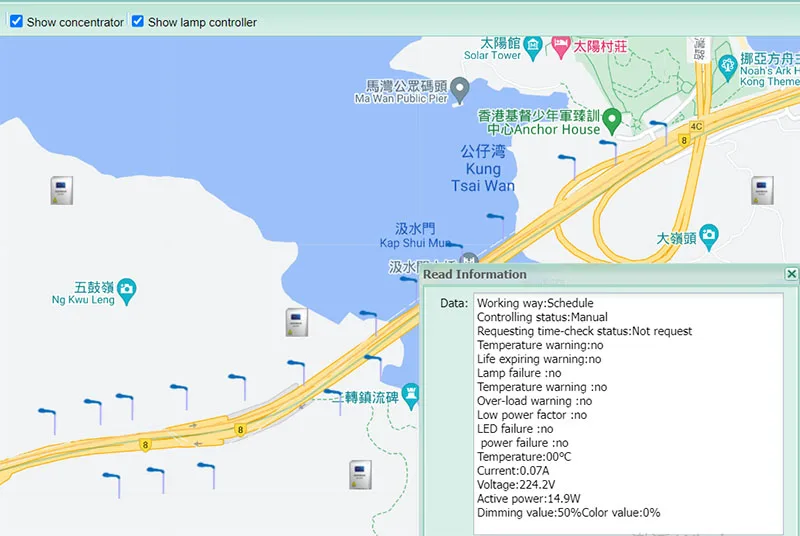
  • Map-based visibility for lamp/cabinet status, alarms, and work orders — accurate dispatch.
  • Cabinet intelligence: outages, leakages, door events, anomalies — reduced patrol and faster closure.
  • Evidence logs support intelligent maintenance prioritization, audit, training and tender documentation.
  • Safety-mode audit: includes 2700K↔6000K adaptive CCT auto-switch logs when enabled.

Offline autonomy = public safety continuity

  • When the internet disconnects, CH-800 continues stable operation using stored schedules and profiles.
  • Astronomical calendar logic supports long-run autonomy without external intervention.
  • Continuity is treated as a safety requirement under lifecycle governance.
  • Proven in extreme topology: aligned with 93km corridor deployment evidence (highway/tunnel groups).
Unified download link: Video/PDF Download Hub.
ZONE 4 · DASHBOARD / MAP / REPORTS

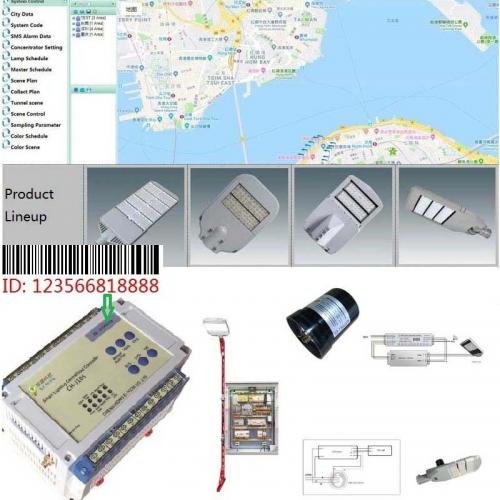
Intelligent Lighting Command Canvas: City Map · Policies · Reports · Evidence-Ready KPIs

The intelligent lighting operations command canvas is designed to prove outcomes: city-scale visibility, governed policy execution, and evidence-based reporting for energy, safety, and O&M ROI. It supports 93km-class highway/tunnel networks and includes 2700K↔6000K adaptive CCT auto-switch safety-mode reporting when enabled.

Need committee evidence videos/PDF? Open: Video/PDF Download Hub.
ZONE 5 · INTEGRATION & VALUE-ADDED

Smart Infrastructure Carrier Layer — Seamless Third-Party Integration

Integration proof hub: open unified downloads.

Urban-OS turns the smart lighting grid into a city service carrier layer: value beyond electricity savings — operational ROI, safer streets, and integrated city management.

Third-party platform interoperability

  • Open protocol and integration readiness with smart city systems, intelligent traffic services and municipal platforms.
  • Unified governance: smart lighting, sensors and assets under one command plane.
  • Cloud or sovereign on-prem deployment for government security requirements.

mmWave radar + video integrated unit (traffic optimization)

  • Traffic perception: flow detection, anomaly cues, and decision support.
  • Coordinated response: safety modes and targeted scene control.
  • Designed as a value-added service layer powered by always-on lighting infrastructure.
mmWave Radar + Video All-in-One (Traffic Sensing Weapon) Committee-ready: lane statistics, flow/speed/queue, all-weather sensing — integrated into the lighting carrier layer.
  • 80–81GHz mmWave + low-illum camera for multi-target detection (up to 8 lanes).
  • All-weather operation: not affected by rain/fog/dust/strong light (tender-safe reliability story).
  • Structured outputs: speed, direction, queue length, occupancy, congestion evaluation.
  • Integration-ready: network upload + RS-485 options (use the unified hub for spec pack).
Rule: do not distribute scattered links — use the unified hub only (clean, tender-safe, committee-safe).
Tip: If someone asks “Where is the proof?”, answer with one link only (the hub). No confusion, no missing evidence.
Radar + Video All-in-One — Demo Video Use this as a committee-ready proof clip for “traffic sensing on the lighting grid”.
Spec PDF: included in the unified hub only — Video/PDF Download Hub.
Project integration, test and approval workflow: 1) collect assets, road/tunnel class, cabinet and feeder diagrams, driver interfaces and operating policy; 2) select Cloud/On-Prem, CH-800, controllers, PLC/LoRa/NB-IoT/CAT-1, sensors, API and offline boundaries; 3) bench-check dimming, voltage, surge, communications, data points and user roles; 4) run a representative pilot with FAT/SAT; 5) roll out by phase, lock configurations, train operators and transfer handover files.
STSYSTEMPLC BoundaryDefined product/system scope, architecture support, configuration, testing evidence and agreed lifecycle support.
Owner / EPC / Partner BoundaryOwner approves policy, data and acceptance; EPC owns installation and site safety; luminaire, driver and third-party platform partners own their declared interfaces and equipment compliance.
ZONE 6 · INDUSTRIAL / MILITARY BUILD

Top-Tier Industrial Materials & Reliability Discipline — Long-Run Field Operation

Industrial-grade discipline (continuous duty)

  • Designed for harsh outdoor environments and infrastructure-class reliability.
  • Cabinet intelligence anchors resilience: continuity + alarms + governed operation.
  • Engineering discipline aligned with a military-grade reliability mindset.

Brand, Delivery & Lifecycle Governance

  • Product identity, configuration control and project naming are carried consistently across spec packs, dashboards, governance documentation and training.
  • OEM-delivered infrastructure-grade cases supported via controlled evidence pack upon request.
  • Operator training and handover packages for tender committees and O&M teams.
Future-ready smart lighting and intelligent energy orchestration without unsupported AI claims: explainable AI may support abnormal-energy detection, battery-health review, maintenance priority and policy recommendations; weather, traffic, tariff and renewable forecasts must retain human override and project-defined safety limits; edge autonomy must preserve safe scenes when cloud or carrier links fail; open APIs, exportable data and staged migration must reduce lock-in. No intelligent lighting or intelligent energy-management claim is accepted without identified data, decision boundary, override method and FAT/SAT evidence.
ZONE 7 · EVIDENCE VAULT

Engineering Evidence 01–10 — Field Proof, Architecture and Operating Records

10 Engineering Evidence Assets
Each evidence route is applied by project relevance. These records support engineering review and procurement judgment; they are not an unsupported public ranking.
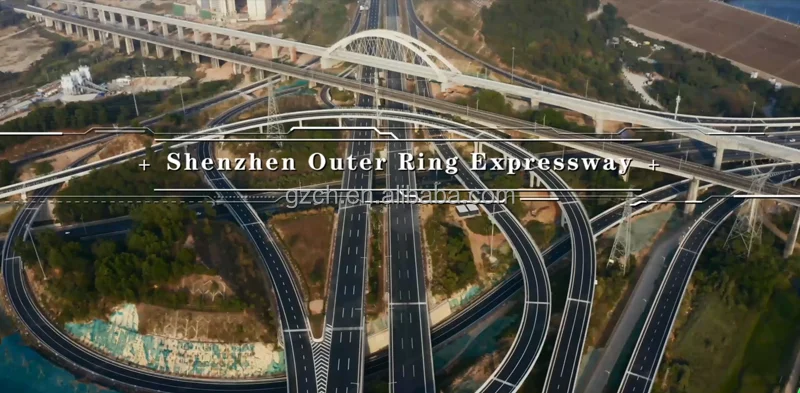
01 · 93 km Shenzhen Outer Ring ExpresswayLarge-scale smart road and tunnel lighting operating evidence; the corridor opened to traffic on 2020-12-30.
02 · Adaptive CCT 2700K↔6000KVideo evidence for weather-responsive colour-temperature control, visual comfort and governed safety-lighting modes.
03 · 2,600+ Tunnels / 3,000+ kmAccumulated engineering experience across tunnel, highway and long linear-infrastructure lighting applications.
04 · 2015 Guangfozhao 177 km / 28,000 TerminalsEarly large-scale proof of gateways, node-level control, network operation and project-delivery maturity.
05 · Hong Kong–Zhuhai–Macao Bridge ExperienceRelevant cross-sea corridor experience supporting salt-fog, typhoon, bridge–tunnel and century-class infrastructure review.
06 · Shenzhen–Zhongshan Link 2024Bridge–tunnel combined infrastructure evidence for an eight-lane undersea and cross-sea corridor environment.
07 · 230 lm/W Whole-Luminaire EfficiencyWhole-luminaire performance linked to maintained output, lifecycle value and project-specific photometric verification.
08 · Radar + Video Integrated SensingMulti-lane detection, speed and trajectory inputs for adaptive lighting in highway, tunnel and municipal-road projects.
09 · NDA National-Level Project ExperienceHigh-trust engineering evidence available under controlled disclosure without exposing restricted project details.
10 · Industrial / Critical-Infrastructure DisciplineAirport, hangar, port, steel, nuclear, power and flour-mill experience supporting EMC, surge and high-reliability requirements.
Additional Power Architecture Evidence2015 80V–420VAC controller design and 400VDC cabinet applications since late 2024, used as project-specific evidence for weak-grid and high-reliability power architecture.
All proof videos and PDFs: open unified download hub.
EVIDENCE 01

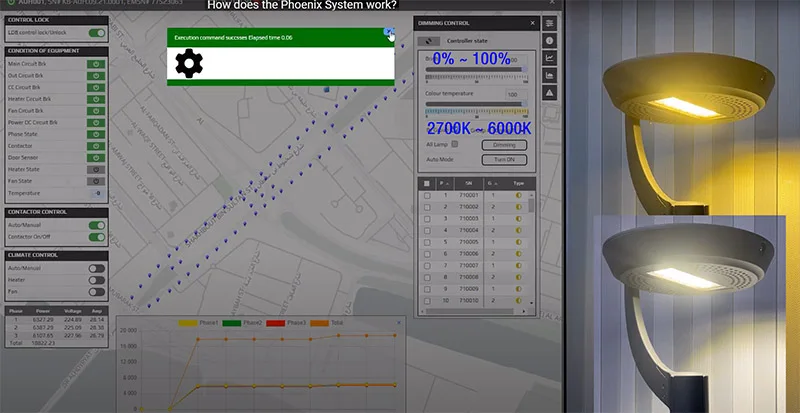
6000K ~ 2700K Adaptive CCT (Safety Mode)

What it proves: governed safety lighting under storm / snow / fog — visibility + contrast + glare comfort.

Key: Adaptive CCT is not decoration; it is a policy-controlled safety response with traceable execution logs.
Dual CCT
EVIDENCE 02

93km Highway + Tunnel Groups — Hybrid PLC + LoRa + Sensor Networking

What it proves: harsh topology + feeder complexity + tunnel groups can be governed stably (not “demo only”).

Key: Hybrid PLC + LoRa provides redundancy and transformer-crossing paths for long-run stability.
Case 1
EVIDENCE 03

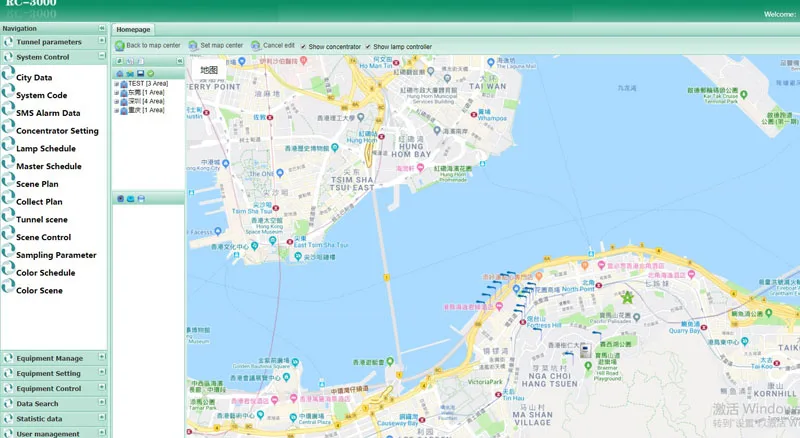
Smart Street Lights Enhance a Smarter City

Plain-language summary: smart lighting for safer roads, lower energy and livable city space — from basic remote switching to intelligent lamp-level management.

The system provides secure, centralized visibility and control with scheduling, scenes, and on-demand dimming. Adaptive CCT (6000K to 2700K) supports extreme-weather safety modes, while sensor networking maximizes energy optimization efficiency.

Smart City
EVIDENCE 04

Command Center / Dashboard Thinking

What it proves: citywide dashboard control + alarms + evidence reporting for tender committees.
  • Citywide control: individual, group, district.
  • Evidence outputs: kWh, CO₂, uptime, MTTR, patrol reduction.
  • Governance: road-class policies + change logs + safety-mode CCT (2700K↔6000K) audit trail.
Command Center
EVIDENCE 05

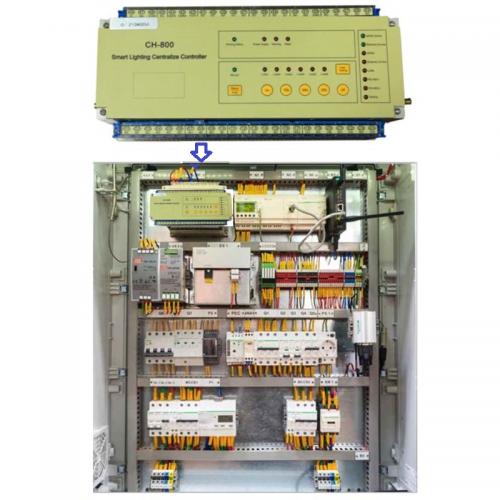
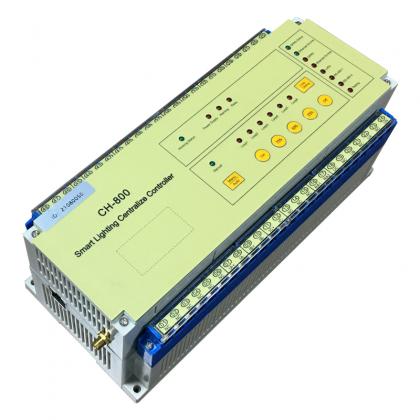
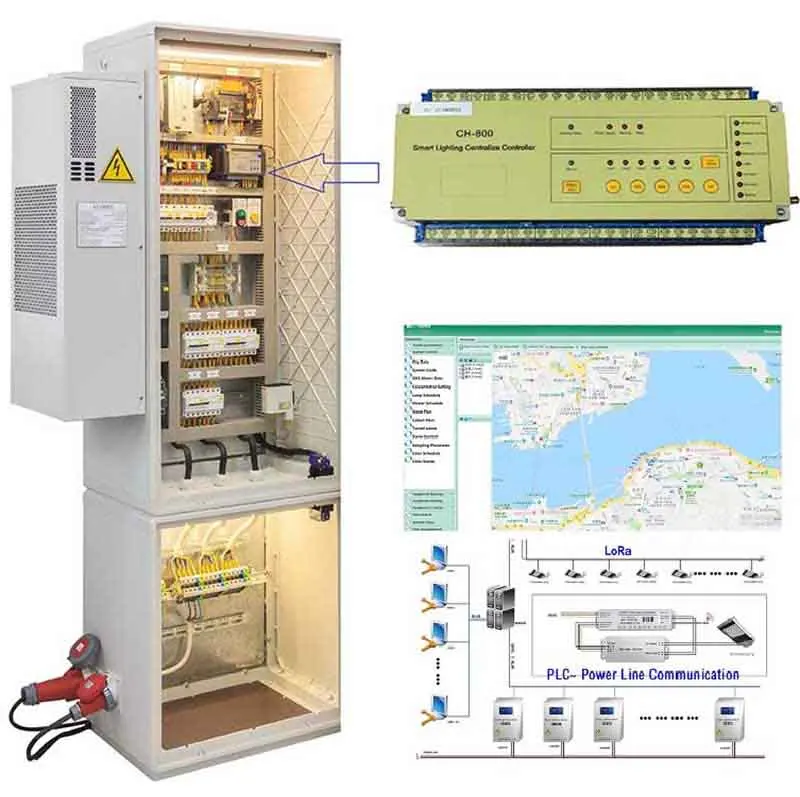
CH-800 / Cabinet Platform — Segment Control Cabinet

What it proves: cabinet intelligence is the operational nerve center (events + stability + offline autonomy).

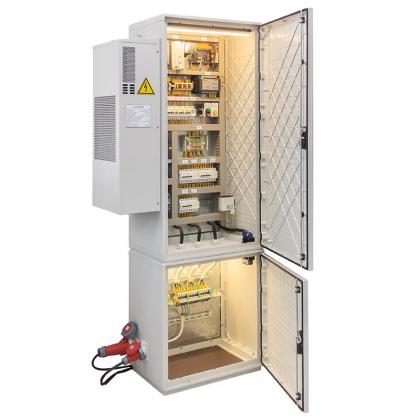
The cabinet acts as the operational nerve center: group control, feeder monitoring, event governance, and autonomous stability even when the internet is unavailable, supported by astronomical calendar logic and measured electrical parameters.
Smart Lighting Cabinet
EVIDENCE 06

Lamp-Level Control (SLC810/SLC910)

What it proves: per-lamp enforcement + telemetry + dimming + sensor linkage (no “cabinet-only compromise”).

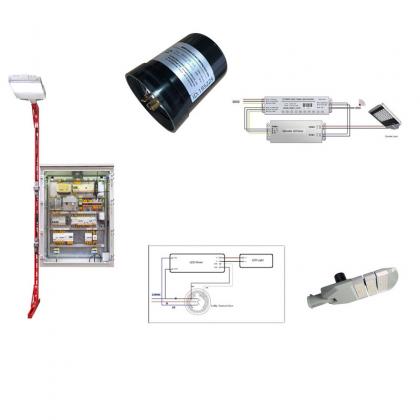
Lamp-level controllers provide remote on/off/dimming, status monitoring, electrical feedback, and optional sensor networking. The always-on grid can also host additional smart city services such as EV charging, weather sensors, CCTV, and traffic flow cameras.
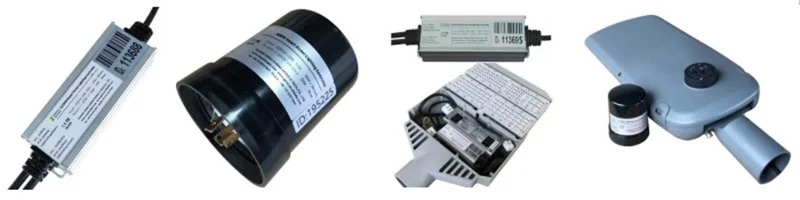
Controller Lamp Level
EVIDENCE 07

Sensor Networking & Adaptive Lighting

What it proves: right light at the right place — automation reduces waste and improves comfort & safety.

Sensor networking enables the right light at the right place: busy areas, unexpected events, and comfort-aware safety lighting. Automated fault notifications, intelligent fault classification and performance insights support better maintenance decisions and fewer citizen complaints.
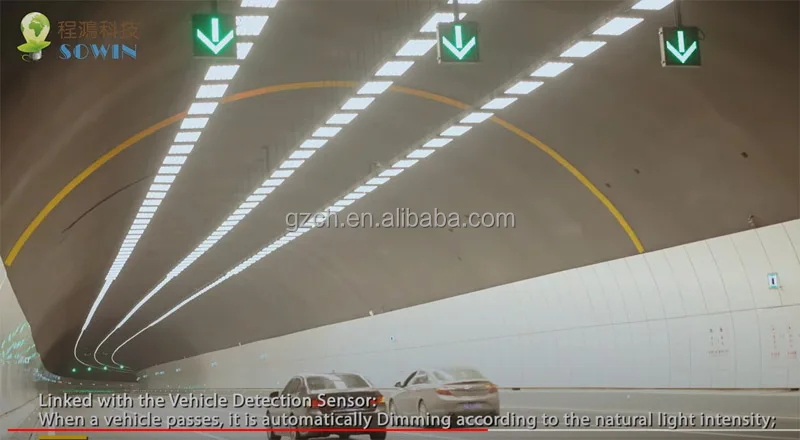
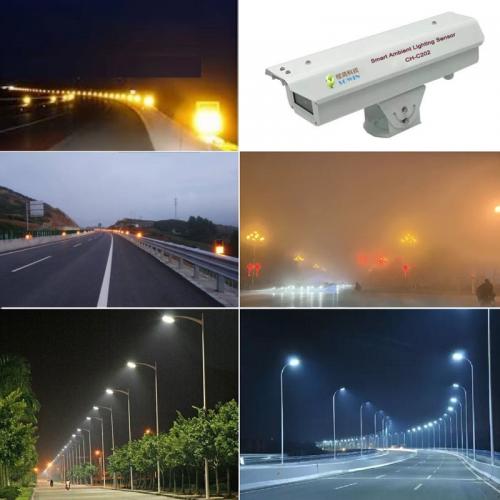
Sensor comparison 1 Sensor comparison 2
Video proof (sensor networking): committee-ready clip. Full proof pack stays in the unified hub.
EVIDENCE 08

Multi-Communication Channels (PLC + LoRa)

What it proves: PLC over powerlines + LoRa transformer-crossing capability = stable command in real feeders.
PLC LoRa 1 PLC LoRa 2

PLC transfers data over existing powerlines; LoRa provides robust transformer-crossing capability.

EVIDENCE 09

Smart City and Intelligent Infrastructure Integration

What it proves: lighting grid becomes a city carrier layer for traffic, security, environment, EV, and emergency response.

Integrate traffic flow, security, environmental sensors, EV charging, emergency response, weather systems, asset management, and more through a single command dashboard and open integration approach.
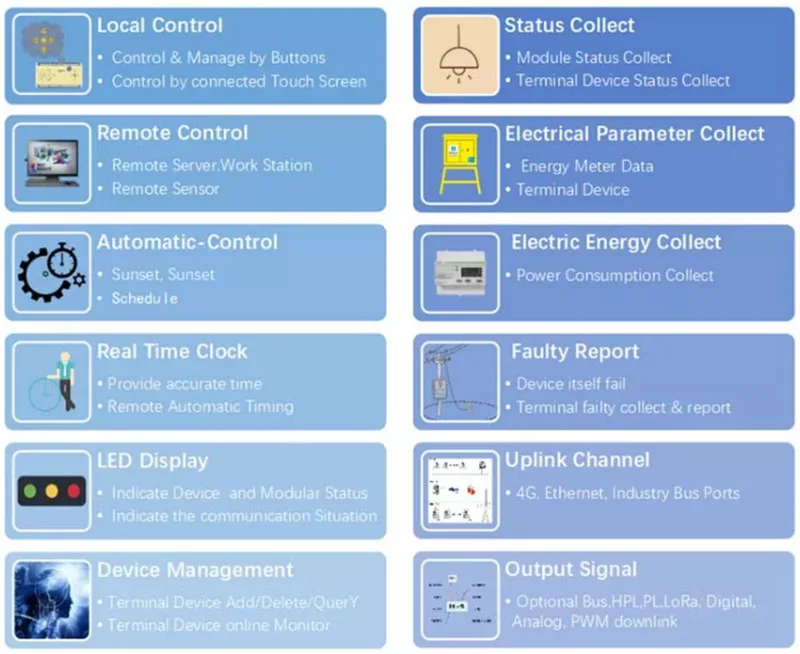
Integration
EVIDENCE 10

Deployment Gallery

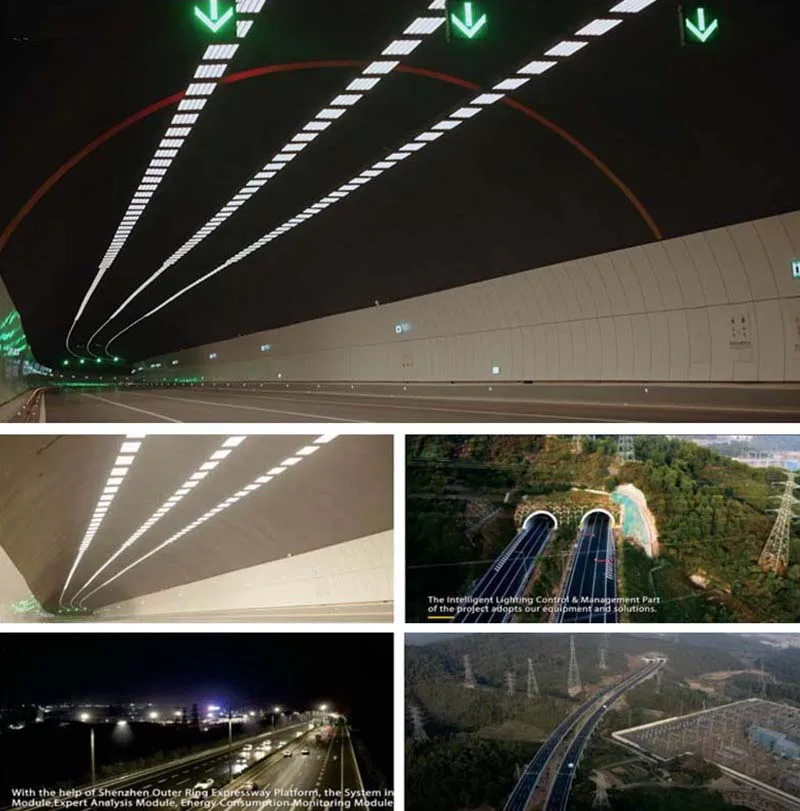
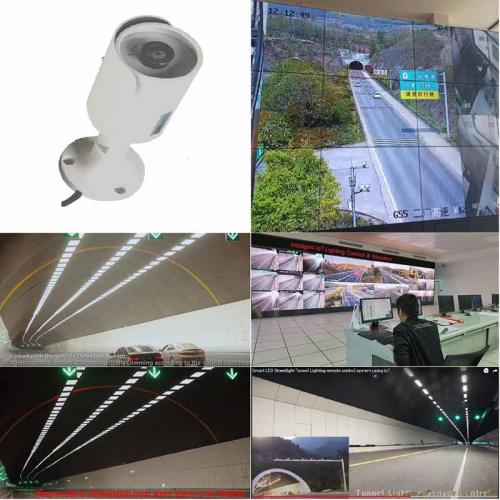
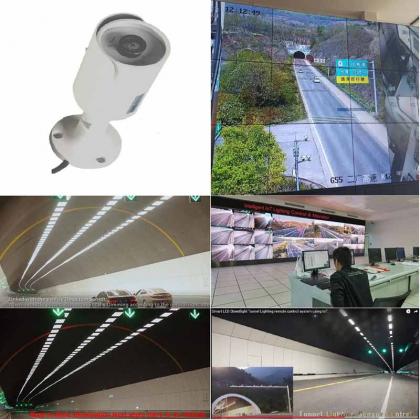
What it proves: real deployment snapshots — tunnel groups, corridors, field proof (not slideware).
Gallery 1 Gallery 2
Gallery 3 Gallery 4

All tender-winning proof videos/PDF: open unified download hub.

DOWNLOAD CENTER

Unified Video/PDF Download Hub (Tender-Winning Proof Pack)

One Link for All “Weapons”

This is the single entry for your team to download all required materials: DEMO videos, tender-winning proof videos, and PDF evidence packs.

  • Committee-grade proof videos (safety, networking resilience, platform governance).
  • DEMO and walkthrough videos for fast sign-off.
  • Evidence PDFs for audit and tender documentation.
Recommended: share this hub link to your committee group chat before the vote.
Rule: do not distribute scattered links — use the unified hub only (clean, tender-safe, committee-safe).
Tip: If someone asks “Where is the proof?”, answer with one link only (the hub). No confusion, no missing evidence.

Open the Unified Hub

All downloads are centralized here (Video/PDF/ZIP).

Workflow: watch the safety and platform videos first, then download the PDFs for tender committee records.
FINAL · DECISION LOCK (TENDER-SAFE, COMMITTEE-SAFE)

Smart City Lighting Is a 20-Year Commitment — Choose a Global-Grade Supplier, Not a Vendor

Before your final meeting: open the unified hub for all proof materials — Video/PDF Download Hub.

Decision Reality (Infrastructure, Not Marketing)

Urban lighting is not a “buy once and forget” product. It becomes a city-wide operating layer with governance rules, evidence outputs, and long-run maintenance behavior. If the platform is wrong, the city pays the cost every night for years.

  • If governance is weak: savings claims become non-auditable; disputes become political; budgets become exposed.
  • If networking is unstable: safety modes fail during harsh weather; faults become invisible; citizens complain; O&M becomes chaos.
  • If supplier capability is shallow: integration collapses, evidence cannot be produced, and “upgrade” becomes re-build.
  • If you choose a vendor (not a center): you purchase devices, but you do not obtain a controlled operating discipline.
  • Committee anchor proof: 93km corridor + 2700K↔6000K adaptive CCT auto-switch safety mode (Evidence 01/02) = tender-safe, lock-the-decision evidence.

Tender-safe statement: this is a risk-control checklist, not a marketing promise.

PROCUREMENT SIGN-OFF CLAUSE (COMMITTEE-GRADE)

I confirm this project requires:

(1) Auditable kWh reports and ROI assumptions
(2) Governed dimming & safety-lighting modes (2700K↔6000K CCT auto-switch where applicable)
(3) Stable hybrid networking (PLC + LoRa) for complex feeders
(4) Offline continuity capability
(5) Integration readiness for future smart-city services

If any supplier cannot provide controlled evidence, stable operation logic, and long-run governance discipline, that supplier is not eligible for a 20-year city infrastructure role.

Audit Evidence Safety Governance No Rebuild Risk

DECISION TRAP (PROCUREMENT PITFALLS) — “LOOKS CHEAPER” BUT BECOMES UNBUDGETABLE

Trap 1: ROI Without Evidence

If a supplier cannot provide assumption sheets, kWh reports, and traceable policy logs, the ROI is not auditable. Finance committees cannot defend it in future reviews.

Trap 2: Single-Channel Networking

Complex feeders, transformer barriers, and topology drift break “paper architectures.” Without hybrid PLC + LoRa resilience, stability collapses when conditions turn harsh.

Trap 3: “Upgrade” That Is Actually Rebuild

Closed systems and weak integration turn every future expansion (sensors, EV, traffic, CCTV) into a new project. The city pays again for controllers, gateways, software, and commissioning.

NON-COMPLIANCE COST (IRREVERSIBLE) — IF YOU CHOOSE THE WRONG SUPPLIER

1) Multi-Year OPEX Leakage (Every Night)

Without governed dimming profiles + verified kWh reports, savings become “belief-based.” The result is continuous OPEX leakage that no one can prove or stop.

2) Safety Exposure in Extreme Weather

If safety modes and networking stability fail during storm/fog/snow, the city inherits visibility risk, citizen complaints, and governance accountability.

3) Rebuild Cost Disguised as “Upgrade”

A weak platform cannot evolve. Integration and evidence gaps turn into rework: new controllers, new gateways, new software, and repeated commissioning.

4) Evidence / Audit Failure (Budget & Tender Risk)

If the supplier cannot deliver assumption sheets, traceable policy logs, and audit-ready reports, project justification becomes fragile under review and future tender cycles.

SUPPLIER ELIGIBILITY GATE (MINIMUM REQUIREMENTS)

  • Evidence Gate: kWh reports + ROI assumption sheet + traceable policy logs (auditable).
  • Continuity Gate: offline autonomy (CH-800 continuity anchor) and stable operations during network outages.
  • Networking Gate: hybrid PLC + LoRa architecture that survives complex feeders and transformer barriers.
  • Safety Gate: governed safety-lighting modes (CCT 2700K↔6000K auto-switch strategies) for storm/fog/snow use-cases.
  • Integration Gate: open integration strategy for future smart city services (assets/sensors/traffic/EV, etc.).
Decision-Lock conclusion: A smart city must select the best global supplier for its lighting operating layer. Cutting corners here does not “save money”; it turns into multi-year OPEX leakage, safety exposure, audit failure, and rework cost.

Century-class flagship references are bid-winning weapons: audited proof, not claims.


Release gate: this page may be called final only when project fit, best-fit applications, unsuitable conditions, buyer inputs, integration, responsibility, deliverables, success prerequisites, acceptance, migration, cost drivers, lifecycle operation and failure recovery are all explicit; the four original videos, Evidence 01–10, images, ROI tables, sliders, download center and JavaScript must remain intact.

COMMITTEE ACTION (BEFORE THE VOTE)

Final action: open the unified hub and share with your committee before the vote — Video/PDF Download Hub.

One-link policy: all demo videos, tender-safe evidence, and committee-ready materials are provided through the unified hub.

Rule: do not distribute scattered links — use the unified hub only (clean, tender-safe, committee-safe).
Tip: If someone asks “Where is the proof?”, answer with one link only (the hub). No confusion, no missing evidence.

Leave A Message
If you are interested in our products and want to know more details,please leave a message here,we will get back to you as soon as possible.
Related Products
CH J105
Centralized Controller is widely used in the Smart City Street Lighting Projects, Expressway Tunnels and the IoT 4.0 Industrial Lighting System such as High Bay, High Mast Lighting System,etc, it manages lighting fixtures through the man-machine interface, data acquisition and lamps Monitoring, by adapt Cloud Based Data Center for users.
CH J105 002
Centralized Controller is widely used in the Smart City Street Lighting Projects, Super-highway’s Lighting, Tunnel Lighting and the Industrial Lighting such as big scale factory and warehouse Lighting System, control lighting fixtures through the man-machine interface, data acquisition and lamps Monitoring.
CH CC800
Centralized Controller is widely used in the Smart City Street Lighting Projects, Super-highway’s Lighting, Tunnel Lighting and the Industrial Lighting such as big scale factory and warehouse High Bay & Low Bay Lighting System, control lighting fixtures through the man-machine interface, data acquisition and lamps Monitoring.
CH CC800
Centralized Controller is widely used in the Smart City Street Lighting Projects, Super-highway’s Lighting, Tunnel Lighting and the Industrial Lighting such as big scale factory and warehouse High Bay & Low Bay Lighting System, control lighting fixtures through the man-machine interface, data acquisition and lamps Monitoring.
CH SLC810
Centralized Controller is widely used in the Smart City Street Lighting Projects, Super-highway’s Lighting, Tunnel Lighting and the Industrial Lighting such as big scale factory and warehouse High Bay & Low Bay Lighting System, control lighting fixtures through the man-machine interface, data acquisition and lamps Monitoring.
CH CC800-A/B
:root{ --ink:#0b1220; --muted:#48566b; --line:#d7e1ef; --bg:#eef2f7; --panel:#ffffff; --accent:#0b3b8a; --accentSoft:#e8f2ff; } .uos-wrap{margin:0; padding:14px; background:var(--bg); font-family:Arial,Helvetica,sans-serif; color:var(--ink); line-height:1.72} .uos-card{max-width:980px; margin:0 auto; background:var(--panel); border:1px solid var(--line); padding:14px; border-radius:0} .uos-title{margin:0 0 8px 0; font-size:16px; font-weight:900; letter-spacing:.2px} .uos-p{margin:0; font-size:14.2px} .uos-p + .uos-p{margin-top:10px} .uos-p strong{color:var(--accent); font-weight:900} .uos-badges{margin-top:10px; display:flex; flex-wrap:wrap; gap:8px} .uos-badge{border:1px solid var(--line); background:var(--accentSoft); padding:6px 10px; font-size:12px; border-radius:0} Urban-OS — Global IoT Lighting Center Grade Urban-OS is a municipal-grade lighting operating layer built on Cloud Server (or Sovereign On-Prem) + CH-800 gateway + SLC810/SLC910 lamp-level controllers. It delivers three governed outcomes: measurable energy savings, road & public safety, and value-added O&M ROI beyond electricity reduction. A Hybrid PLC + LoRa network keeps control stable across noisy feeders, transformers, and complex topology, while sensor networking enables demand-based dimming and precise fault localization. The dashboard provides map-based visibility, alarms, schedules, scenes, reports, and evidence-ready exports for committee review. Adaptive CCT 2700K↔6000K supports storm/fog/snow safety modes with traceable logs. With audit trails, role-based access, and OTA configuration, fleets stay consistent and defensible; when links degrade, cabinet intelligence enables offline autonomy until recovery. Open protocols & APIs prevent lock-in. Proven at scale, including 93 km corridor-grade deployments across highways and tunnels. Hybrid PLC + LoRa Lamp-Level Control 2700K↔6000K Evidence-Ready Offline Autonomy Open APIs
CH CC800-A/B
:root{ --ink:#0b1220; --muted:#48566b; --line:#d7e1ef; --bg:#eef2f7; --panel:#ffffff; --accent:#0b3b8a; --accentSoft:#e8f2ff; } .uos-wrap{margin:0; padding:14px; background:var(--bg); font-family:Arial,Helvetica,sans-serif; color:var(--ink); line-height:1.72} .uos-card{max-width:980px; margin:0 auto; background:var(--panel); border:1px solid var(--line); padding:14px; border-radius:0} .uos-title{margin:0 0 8px 0; font-size:16px; font-weight:900; letter-spacing:.2px} .uos-p{margin:0; font-size:14.2px} .uos-p + .uos-p{margin-top:10px} .uos-p strong{color:var(--accent); font-weight:900} .uos-badges{margin-top:10px; display:flex; flex-wrap:wrap; gap:8px} .uos-badge{border:1px solid var(--line); background:var(--accentSoft); padding:6px 10px; font-size:12px; border-radius:0} Urban-OS — Global IoT Lighting Center Grade Urban-OS is a municipal-grade lighting operating layer built on Cloud Server (or Sovereign On-Prem) + CH-800 gateway + SLC810/SLC910 lamp-level controllers. It delivers three governed outcomes: measurable energy savings, road & public safety, and value-added O&M ROI beyond electricity reduction. A Hybrid PLC + LoRa network keeps control stable across noisy feeders, transformers, and complex topology, while sensor networking enables demand-based dimming and precise fault localization. The dashboard provides map-based visibility, alarms, schedules, scenes, reports, and evidence-ready exports for committee review. Adaptive CCT 2700K↔6000K supports storm/fog/snow safety modes with traceable logs. With audit trails, role-based access, and OTA configuration, fleets stay consistent and defensible; when links degrade, cabinet intelligence enables offline autonomy until recovery. Open protocols & APIs prevent lock-in. Proven at scale, including 93 km corridor-grade deployments across highways and tunnels. Hybrid PLC + LoRa Lamp-Level Control 2700K↔6000K Evidence-Ready Offline Autonomy Open APIs
CH SOLARST220EFF
Key Features: Hybrid AC & Solar Power or Pure Solar Power 4G/5G Sim Card CAT 1 Communication Technology (Hybrid PLC / LoRa  /LoRaMesh) Auto-change Solar to AC by Smart Detect Sensor within 3 seconds Cloud based IoT Lighting Controlling & Monitoring Real Time Data: Watts / Voltage / Current / Power Factor can be Remote Reading Power Consumption / Faulty Reporting Using high efficiency 5050 leds,more than 230lm/w. Adopting high efficiency monocrystalline silicon solar panel, conversion rate is more than 21%. Grade A LiFePo4 battery,capacity is more than 80% after 2000 cycles. PWM and MPPT solar charger Horizontal or vertical pole installation,mounted angle is adjustable To prevent theft and vandalism, GPS positioning allows for real-time tracking of stolen street light.
Get the latest offers Subscribe for our newsletter
Please read on, stay posted, subscribe, and we welcome you to tell us what you think.

click here to leave a message

Leave A Message
If you are interested in our products and want to know more details,please leave a message here,we will get back to you as soon as possible.

Home

Products

about

contact