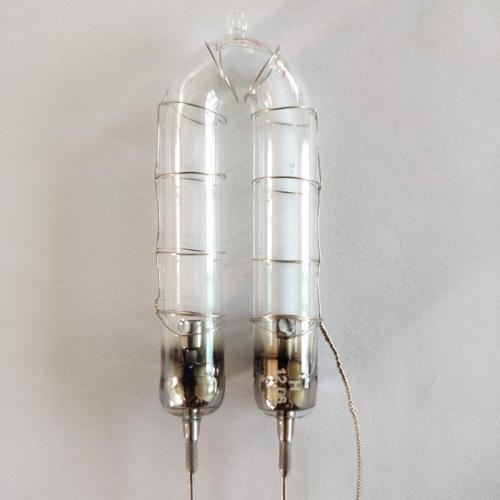
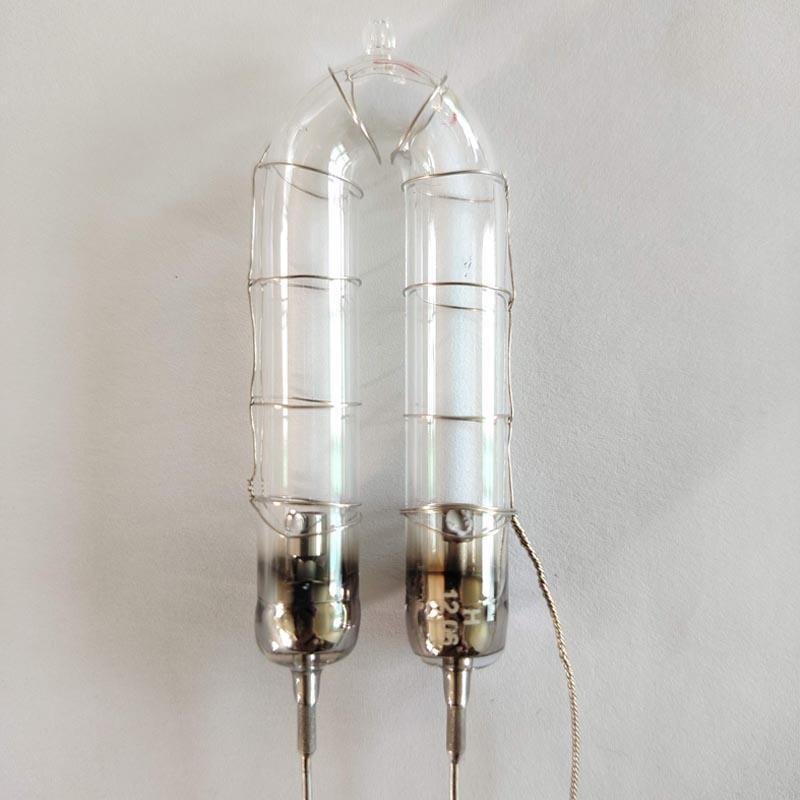
SOWIN GXEC studio flash xenon tube supplier route is built for global professional photography repair markets where buyers often search by equipment ecosystem, service file, regional repair habit, or brand-context wording rather than by complete tube specifications. For professional camera flash tube projects, the real challenge is not only finding a lamp that fires, but rebuilding a safe review path based on tube geometry, trigger coupling, pulse energy, duty cycle, optical path, and long-term service behavior.
We support brand-neutral repair discussion for service environments where buyers may search for Profoto flash tube replacement, Godox flash tube replacement, or Broncolor flash tube replacement as practical repair-bench language. These references are used only for equipment identification, service-context communication, and search orientation - not as affiliation, authorization, original-status, or universal compatibility claims. Final approval must still come from old tube photos, ruler measurements, flash-head structure, trigger route, flash energy, repetition rate, and sample validation.
Multiple geometries, including linear, U-shaped, spiral, and ring designs, can be reviewed for European studio systems, American studio flash service routes, Japanese professional camera workflows, Asian OEM/private-label flash heads, and repair markets across Latin America, Africa, Australia, Southeast Asia, India, Turkey, and the Middle East. For procurement and service approval, SOWIN can provide an engineer-reviewed parameter sheet, sample-matching checklist, Spec PDF support, and RoHS documentation. The goal is to help distributors, rental studios, repair benches, OEM service teams, and regional importers handle global studio flash repair with controlled language, verified matching, and repeatable sourcing discipline.
SOWIN GXEC studio flash xenon tube supplier route is built for global professional photography repair markets where buyers often search by equipment ecosystem, service file, regional repair habit, or brand-context wording rather than by complete tube specifications. For professional camera flash tube projects, the real challenge is not only finding a lamp that fires, but rebuilding a safe review path based on tube geometry, trigger coupling, pulse energy, duty cycle, optical path, and long-term service behavior.
| Target | Engineering Meaning |
|---|---|
| Global Service Context | Organizes European, American, Japanese, Asian OEM, Latin American, African, and Australian repair-market search routes. |
| Brand-Neutral Recognition | Lets buyers identify a service path without implying original-brand supply or official compatibility. |
| Distributor Language Control | Helps channel teams answer mixed-brand inquiries while keeping claims legally safe. |
| Regional Repair Support | Supports imported equipment service, rental studio maintenance, private-label repair, and old-sample review. |
| Evidence-Based Approval | Keeps final replacement approval tied to photos, dimensions, trigger route, duty cycle, and sample validation. |
| Review Use | Why It Matters |
|---|---|
| Global Studio Service | Helps buyers compare tube geometry, brand-context service routes, flash-head structure, trigger method, and duty expectations before sample approval. |
| Distributor and Importer Review | Supports controlled language for mixed-brand inquiries, regional service files, rental studios, and imported professional photography equipment. |
| Brand-Neutral Repair Context | Keeps Profoto / Godox / Broncolor-style search routes useful without turning them into unsafe compatibility claims. |
| RFQ and Sample Matching | Works with old tube photos, arc length, glass OD, trigger wiring, flash energy, region, and failure symptoms for faster engineering response. |
| Parameter | Xenon Flash Tube | LED Flash / Continuous LED / Semiconductor Flash |
|---|---|---|
| Repair-Market Fit | Often supports existing flash-head architecture when geometry and trigger route are verified | Usually requires driver and optical redesign if replacing a xenon-based system |
| Peak Output | High peak energy at the pulse event | Thermal and driver limited |
| Distributor Risk | Main risks are wrong sample review, trigger mismatch, and duty-window error | Main risks are driver tuning, optical redesign, and thermal margin |
| Language Control | Can support brand-neutral repair discussion when written carefully | Usually needs system-conversion language rather than lamp-only replacement claims |
| Validation Path | Engineering Meaning |
|---|---|
| Strict endurance program | Continuous endurance verification of 1100+ hours per cycle, focused on ignition stability, output behavior, and controlled aging. |
| Risk-control matching | Verified by service context + geometry + trigger + duty cycle + CORE level to prevent hidden misfire, wrong sample approval, and channel complaints. |
| Scaling path | Engineering sample, pilot run, trial production, and global field use expose hidden failure modes before regular production. |
|
European Studio Service Context
Search-intent examples: Profoto-style, Broncolor-style, Elinchrom-style, Bowens-style, Hensel-style, Multiblitz-style, and Balcar-style service discussions.
|
American Studio Service Context
Search-intent examples: Norman-style, Speedotron-style, Dynalite-style, Photogenic-style, Paul C. Buff-style, AlienBees-style, and White Lightning-style repair routes.
|
|
Japanese Camera Workflow Context
Search-intent examples: Canon, Nikon, Sony, Fujifilm, Panasonic, OM System, Olympus, Ricoh, Pentax, and Sigma as professional camera workflow context only.
|
Asian OEM and Regional Repair Context
Search-intent examples: Godox-style, Jinbei-style, NiceFoto-style, Visico-style, Yongnuo-style, Latin America, Brazil, Mexico, Africa, South Africa, Australia, New Zealand, India, Southeast Asia, Turkey, and Middle East imported equipment service.
|
| Item | Buyer Input | Why It Matters |
|---|---|---|
| 1) Brand / service context | Profoto-style / Godox-style / Broncolor-style / other | Guides service language without becoming compatibility proof |
| 2) Old tube photos | Front, side, electrode, ruler photo | Confirms geometry and visible risk |
| 3) Trigger / wiring photo | External / internal / wire / unknown | Reduces misfire and delayed ignition risk |
| 4) Region / channel | Distributor / repair bench / rental studio / importer | Defines documentation and service pressure |
| 5) Pulse energy / duty | J rating or capacitor + voltage if known | Prevents overstress and wrong approval |
| Review Item | Why It Matters |
|---|---|
| European Service Context | Profoto-style, Broncolor-style, Elinchrom-style, Bowens-style, Hensel-style, and related service discussions. |
| American Service Context | Norman-style, Speedotron-style, Dynalite-style, Photogenic-style, and Paul C. Buff-style repair routes. |
| Japanese Camera Workflow | Canon, Nikon, Sony, Fujifilm, and Panasonic as workflow context only, not original tube claims. |
| Asian OEM Flash Heads | Godox-style, Jinbei-style, NiceFoto-style, Visico-style, Yongnuo-style, and private-label studio flash review. |
| Regional Repair Markets | Latin America, Africa, Australia, Southeast Asia, India, Turkey, and Middle East repair-bench searches. |
| Distributor Language Control | Helps channel teams answer mixed-brand inquiries without unsafe claims. |
| Documentation Path | Spec PDF and RoHS document support engineering and procurement review. |
| Brand-Neutral Boundary | Keeps search capture strong while avoiding affiliation or official compatibility language. |
| CORE Level | Recommended Use |
|---|---|
| CORE A | Recommended for distributors, rental studios, and repair networks handling repeated mixed-brand service demand. |
| CORE B | Recommended for standard global service routes after old samples and duty conditions are reviewed. |
| CORE C | Use only for low-risk regional repair inquiries or preliminary identification. |
| Question | Answer |
|---|---|
| Why use global brand-neutral service context? | Many buyers search by equipment ecosystem, repair market, or old service file. Brand-neutral service context helps them understand whether a review route may exist without claiming official compatibility or brand authorization. |
| Should Japanese camera brands be included? | Yes, but only as professional camera workflow context. Canon, Nikon, Sony, Fujifilm, Panasonic, and similar names should not be written as original flash tube replacement claims. |
| How should regional repair markets be described? | Use terms such as imported studio flash maintenance, regional repair bench, rental studio service, and professional photography equipment repair. Avoid inventing local brands or unsupported compatibility claims. |
| Can one page cover Europe, America, Asia, Latin America and Africa? | Yes, if the structure is clear. Use separate service-context sections so the page reads like a global repair and sourcing guide rather than an uncontrolled keyword list. |
| How does this matrix help distributors? | It gives distributors a neutral language system for handling mixed-brand service requests, private-label flash heads, old samples, and repair-shop inquiries while keeping claims controlled. |
| Should PDF and RoHS links appear here? | Yes. PDF and RoHS documents help procurement, importer review, and repair-bench approval. They should support the engineering review rather than replace physical validation. |
| Why include Profoto, Godox or Broncolor search terms? | Those terms reflect real repair and service search behavior. They must be written as service context or style references, not as claims of original parts or authorized compatibility. |
| What is the safest final approval method? | Combine old sample photos, dimensions, trigger route, duty cycle, failure symptoms, PDF parameters, and sample testing. Regional search language should guide review, not replace engineering validation. |

Address : F4,Bldg A, Hanzhong Industrial Park, No.67, North of Xinsha Ave, Xin Tang, Zeng Cheng, Guang Zhou, China
Tel : +86 20 8278 0427
Email : info@stsystemplc.com
Email : morrison426@163.com