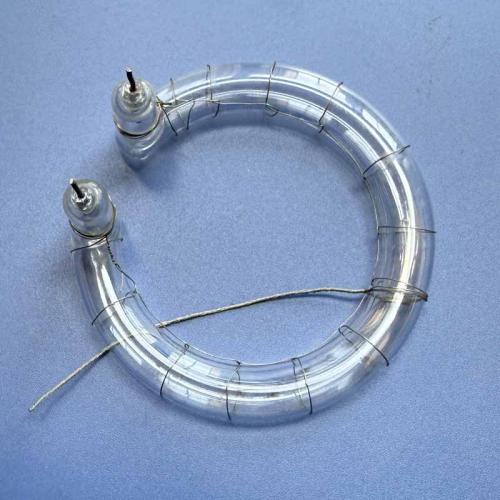
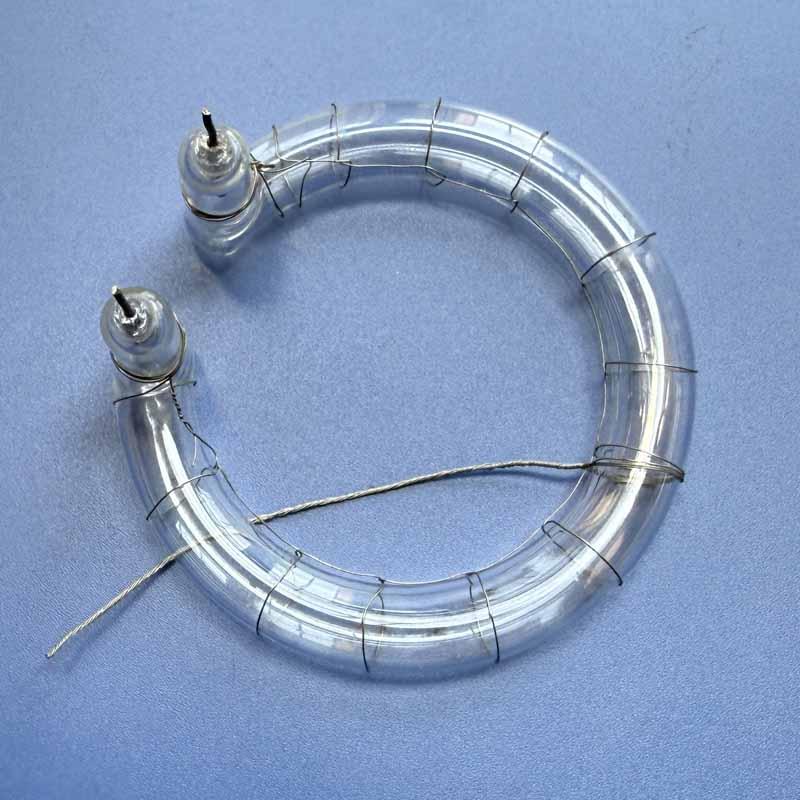
SOWIN GXEC Heimann xenon flash tube replacement, Excelitas xenon flash tube replacement, and PerkinElmer xenon flash lamp review route is built for professional photography repair cases where old samples, missing service files, partial labels, and discontinued supply paths create real approval pressure. The purpose is not to copy a historical supplier name, but to rebuild the working requirement from evidence: tube geometry, arc length, glass OD, electrode shape, trigger route, pulse energy, duty cycle, and visible failure symptoms.
We define a serious discontinued xenon flash tube review by a verified window of old-sample photos, ruler measurements, wiring/trigger structure, flash-head cavity fit, reflector alignment, electrical stress, and real operating rhythm. When a buyer chooses only by brand memory or appearance, hidden failures may appear later as delayed ignition, weak output, unstable brightness, early blackening, electrode stress, or repeated repair-bench complaints. For this reason, SOWIN treats legacy replacement as an engineering reconstruction process rather than a simple cross-reference promise.
Multiple geometries, including linear, U-shaped, spiral, and ring designs, can be reviewed for older studio flash heads, private-label equipment, rental-house service files, and unlabeled repair-bench cases. For procurement and service approval, SOWIN can provide an engineer-reviewed parameter sheet, sample-matching checklist, Spec PDF support, and RoHS documentation. The goal is to help studios, distributors, repair benches, and OEM service teams select a legacy studio flash tube replacement or repair bench xenon flash tube based on evidence, electrical fit, and verified duty - not by a historical name alone.
SOWIN Heimann xenon flash tube replacement, Excelitas xenon flash tube replacement, and PerkinElmer xenon flash lamp review route is built for discontinued xenon flash tube sourcing, legacy studio flash tube replacement, and repair bench xenon flash tube cases where old samples, missing service files, partial labels, and discontinued supply paths create real approval pressure. The goal is not to copy a historical name. The goal is to preserve flash-system behavior by rebuilding the requirement from tube evidence, geometry, trigger coupling, duty window, and failure symptoms.
| Target | Engineering Meaning |
|---|---|
| Legacy Supplier Continuity | Captures Heimann / Excelitas / PerkinElmer-era search intent while avoiding unauthorized original-status wording. |
| Old Sample Reconstruction | Uses tube photos, ruler photos, electrode form, glass OD, arc length, and wiring evidence to rebuild the review path. |
| Discontinued Supply Control | Helps buyers move from old catalogs or missing files to a verified engineering route. |
| Failure Symptom Mapping | Connects misfire, weak output, blackening, delayed ignition, or color drift to likely risk causes. |
| Legal-Safe Replacement Language | Keeps brand references descriptive, nominative, and review-based. |
| Review Use | Why It Matters |
|---|---|
| Legacy Supplier Continuity | Supports Heimann / Excelitas / PerkinElmer-era search context, discontinued supply review, and brand-neutral cross-reference discussion. |
| Repair-Bench Sample Review | Helps buyers compare tube geometry, trigger route, failure symptoms, and replacement boundaries before sample approval. |
| German QUARTZ / SCHOTT Route | Gives procurement and engineering teams a document path for reviewing premium glass, thermal-load tolerance, and reduced blackening risk. |
| RFQ and Old Sample Matching | Works with old tube photos, arc length, glass OD, trigger wiring, flash energy, and failure symptoms for faster engineering response. |
| Parameter | Xenon Flash Tube | LED Flash / Continuous LED / Semiconductor Flash |
|---|---|---|
| Legacy System Fit | Often designed around arc position, reflector geometry, trigger method, and capacitor discharge behavior | Usually requires driver redesign and optical-path changes |
| Peak Intensity | High peak energy at the pulse event | Thermal and driver limited |
| Replacement Risk | Main risks are wrong geometry, trigger mismatch, glass route, and duty-window error | Main risks are driver tuning, optical redesign, and thermal margin |
| Repair-Bench Approval | Can be rebuilt from old samples, photos, dimensions, and application data | Usually needs system-level conversion rather than lamp-only replacement |
| Validation Path | Engineering Meaning |
|---|---|
| Strict endurance program | Continuous endurance verification of 1100+ hours per cycle, focused on ignition stability, output behavior, and controlled aging. |
| Risk-control matching | Verified by old sample evidence + geometry + trigger + duty cycle + CORE level to prevent hidden misfire and early failure. |
| Scaling path | Engineering sample, pilot run, trial production, and global field use expose hidden failure modes before regular production. |
|
Heimann Search Route
Search-intent examples: Heimann photography flash tube, Heimann xenon flash tube replacement, legacy German tube route, and discontinued studio flash tube.
|
Excelitas Search Route
Search-intent examples: Excelitas studio flash tube, Excelitas xenon flash tube replacement, old Excelitas flash lamp, and repair-bench cross-reference review.
|
|
PerkinElmer-Era Route
Search-intent examples: PerkinElmer xenon flash lamp, PerkinElmer-era studio flash tube, older xenon lamp service file, and historical supply continuity.
|
Repair-Bench Context
Search-intent examples: old sample matching, missing label, burnt electrode, weak output, delayed ignition, private-label flash head, and unlabeled studio equipment.
|
| Item | Buyer Input | Why It Matters |
|---|---|---|
| 1) Old tube photos | Front, side, electrode, ruler photo | Rebuilds the geometry and visible risk map |
| 2) Trigger / wiring photo | External / internal / wire / unknown | Reduces misfire and delayed ignition risk |
| 3) Legacy context | Heimann / Excelitas / PerkinElmer / unknown | Guides search context without becoming compatibility proof |
| 4) Failure symptoms | Misfire / weak output / blackening / delayed ignition | Helps separate tube risk from circuit or trigger issues |
| 5) Pulse energy / duty | J rating or capacitor + voltage if known | Prevents overstress and wrong approval |
| Review Item | Why It Matters |
|---|---|
| Old Sample Identification | Uses photos and dimensions to rebuild the review path. |
| Legacy Supplier Context | Captures Heimann / Excelitas / PerkinElmer search routes safely. |
| Failure-Symptom Review | Links misfire, blackening, weak output, or delayed ignition to likely risk areas. |
| Geometry and Trigger Match | Prevents copying a name while missing the actual system requirements. |
| Material Route Option | Allows German QUARTZ / SCHOTT glass discussion for higher-end needs. |
| Service File Reconstruction | Helps repair teams work when drawings or model codes are incomplete. |
| Compliance Documentation | Supports procurement and import files with PDF and RoHS documents. |
| Non-Affiliation Control | Protects legal safety while preserving search relevance. |
| CORE Level | Recommended Use |
|---|---|
| CORE A | Recommended when old equipment is expensive, repeated use is high, or customer complaints would be costly. |
| CORE B | Recommended for repair-bench approval after photos, dimensions, and sample use are confirmed. |
| CORE C | Use only for low-frequency legacy screening or when the buyer accepts limited validation. |
| Question | Answer |
|---|---|
| Can SOWIN review Heimann or Excelitas-era flash tubes? | Yes. SOWIN can review legacy flash tube requirements using old samples, photos, dimensions, trigger route, working conditions, and failure symptoms. The result is an independently manufactured review path, not an original-status statement. |
| Why should legacy brand names be handled carefully? | They help buyers identify historical equipment and discontinued supply routes, but they must not be used to imply affiliation, authorization, original status, or universal compatibility. |
| What should a repair bench send first? | Send old tube photos, ruler photos, arc length, glass OD, electrode shape, trigger wiring, flash head model if known, failure symptoms, and expected usage. A service file is helpful but not required. |
| Can this help unlabeled or private-label flash heads? | Yes. Many repair cases rely on physical review instead of clean model numbers. Geometry, trigger structure, and duty window are usually more useful than a partial label. |
| How does German glass fit this matrix? | German QUARTZ or SCHOTT glass can be discussed when thermal-load tolerance, optical cleanliness, reduced blackening risk, or premium long-term stability is needed. |
| What documents support procurement approval? | The specification PDF supports engineering review, while RoHS documentation supports material and hazardous-substance screening. Final acceptance still depends on application-specific validation. |
| Can SOWIN claim original replacement status for legacy brands? | No. The safer language is brand-neutral review, historical reference, equipment identification, and independently manufactured replacement discussion. Original-part or unsupported compatibility wording should be avoided. |
| Why does failure symptom information matter? | Failure symptoms help identify whether the problem is tube aging, trigger failure, wiring damage, excessive duty, poor material route, or a circuit issue outside the tube itself. |

Address : F4,Bldg A, Hanzhong Industrial Park, No.67, North of Xinsha Ave, Xin Tang, Zeng Cheng, Guang Zhou, China
Tel : +86 20 8278 0427
Email : info@stsystemplc.com
Email : morrison426@163.com