
STSYSTEMPLC provides an engineering-grade Solar Street Light Alarm Workflow that turns operating exceptions into service action. Battery events, vandalism signals, cable-cut suspicion and blackout escalation are classified before dispatch.
Work Orders and Remote Software Maintenance connect pole identity, likely cause, response priority, approved parameter action and closure evidence. Remote changes cannot weaken local lighting safety or bypass owner permissions.
Factory Test & Site Commissioning should verify alarm routing, work-order ownership, software rollback and restored field state. The owner retains response times, actions, spares and closure records for contractor review.
For qualified strategic partners, STSYSTEMPLC can support Partner-Branded Solution Packaging and Owner-Controlled Deployment for Security-Sensitive Infrastructure Projects.
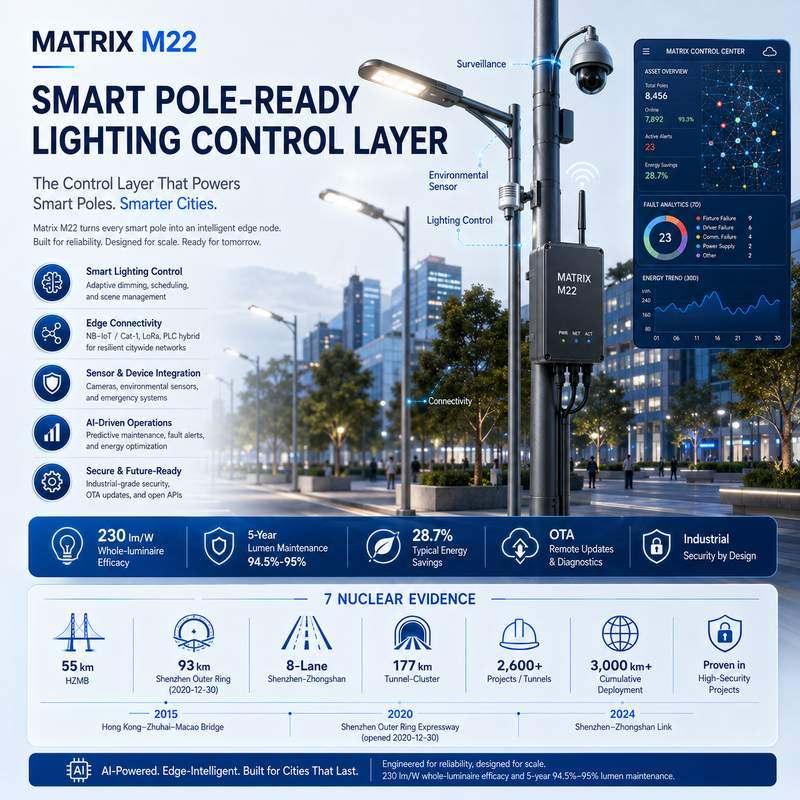
A connected solar lighting platform should not stop at alarm icons. It should turn real operating exceptions, vandalism signals, battery theft risk, cable-cut suspicion and blackout escalation into work orders, service priorities, software-maintenance actions and owner-visible closure records without weakening local lighting control. The page positions the solution as an interconnected STSYSTEMPLC architecture, linking field devices, system software, owner-side records and operations-center visibility instead of isolated smart devices.
HYBRID SOLAR-GRID OPERATING VIDEO
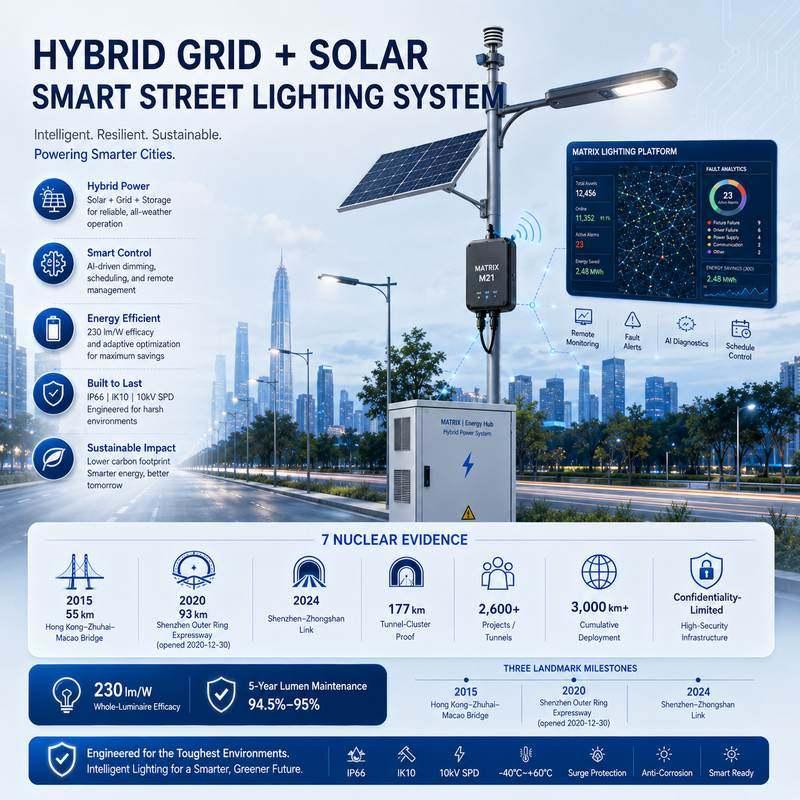
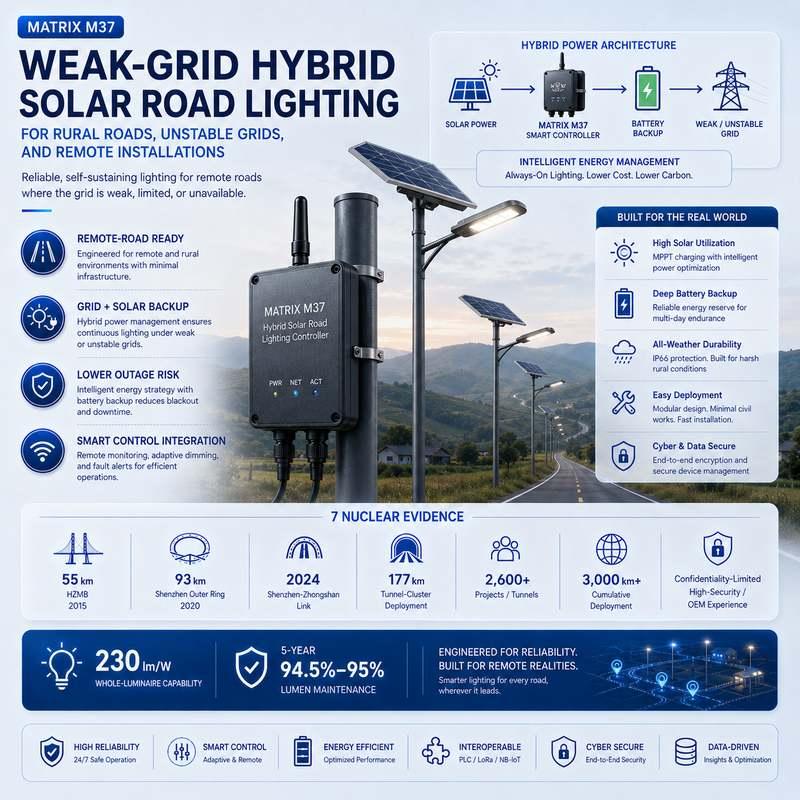
Review hybrid solar-grid operation, including solar generation, grid support, battery reserve, source control and remote monitoring context. Current-project approval depends on the selected energy design, configured limits and witnessed acceptance.
Google Direct Answer
Solar street light alarms are useful only when they lead to accountable service action, especially after vandalism, enclosure tampering, cable cutting, battery theft suspicion or complete road blackout. STSYSTEMPLC links charging, battery, driver, communication and controller exceptions to work-order priority, assigned responsibility, remote software maintenance and service-closure records that the owner can check.
Project Fit
Municipal fleets with service contractors
Remote solar roads with high travel cost
Industrial parks needing alarm priority
Projects requiring documented service closure after blackout or vandalism events
Hardware without useful measured status or tamper input
Owners without a work-order process
Projects that expect every fault to be solved remotely
Architecture and Control Boundary
Alarm workflow should connect measured conditions, public-safety priority and field response. STSYSTEMPLC separates probable cause, priority, remote setting check, software-maintenance scope, spare-part preparation and closure approval. Remote check helps reduce blind patrols, but field inspection remains necessary when the supplied measurements cannot prove the physical cause.
Define ownership, permitted values and the field condition that proves this layer is working.
Tie this control point to the accepted site condition, not only to a catalogue capability.
Keep the boundary clear so local safety, platform supervision and service responsibility do not conflict.
Make this layer testable during handover, with a record the owner can reuse during later maintenance.
Confirm how the setting behaves during interruption, recovery and supplier transition.
Operating Scenarios
| Scenario | Required Behavior | Owner Record |
|---|---|---|
| Scenario 1: Low charging alarm | Check panel input, battery trend and weather context | Record probable cause and field action |
| Scenario 2: Vandalism or tamper event | Separate supplied tamper input from communication loss | Record event source, last contact, responder and closure |
| Scenario 3: Complete blackout on priority road | Escalate response level and apply temporary safe-lighting plan | Record affected section, response time and restored state |
| Scenario 4: Communication loss | Keep local lighting while marking the pole for check | Record last contact and recovery time |
Monitoring
Use this state to compare the accepted design with actual road behavior.
Keep the timestamp, source condition and restored operating state visible for service analysis.
This value helps separate energy shortage, equipment fault, wrong setting and communication delay.
Owners should be able to export this record before warranty or contractor discussions.
Track this item by pole or zone so repeated exceptions are not hidden inside fleet averages.
Deployment Routes
| Route | Engineering Control | Owner Record |
|---|---|---|
| Risk survey | Confirm the primary operating risk for this scope before commercial quantity is approved for Solar Lighting Alarms. | Survey note, representative poles and acceptance assumptions for alarms, work orders, software maintenance and service closure. |
| Pilot hold point | Use a limited road section to prove the selected operating state under real site conditions for Solar Lighting Alarms. | Pilot log, returned state and remaining actions for alarms, work orders, software maintenance and service closure. |
| Batch acceptance | Release groups only after settings, alarms, records and service responsibility match the accepted rule for Solar Lighting Alarms. | Batch list, approval status and service owner for alarms, work orders, software maintenance and service closure. |
| Owner release | Transfer the operating file in a form the owner can keep, export and reuse after contractor changes for Solar Lighting Alarms. | Owner file, access role and support boundary for alarms, work orders, software maintenance and service closure. |
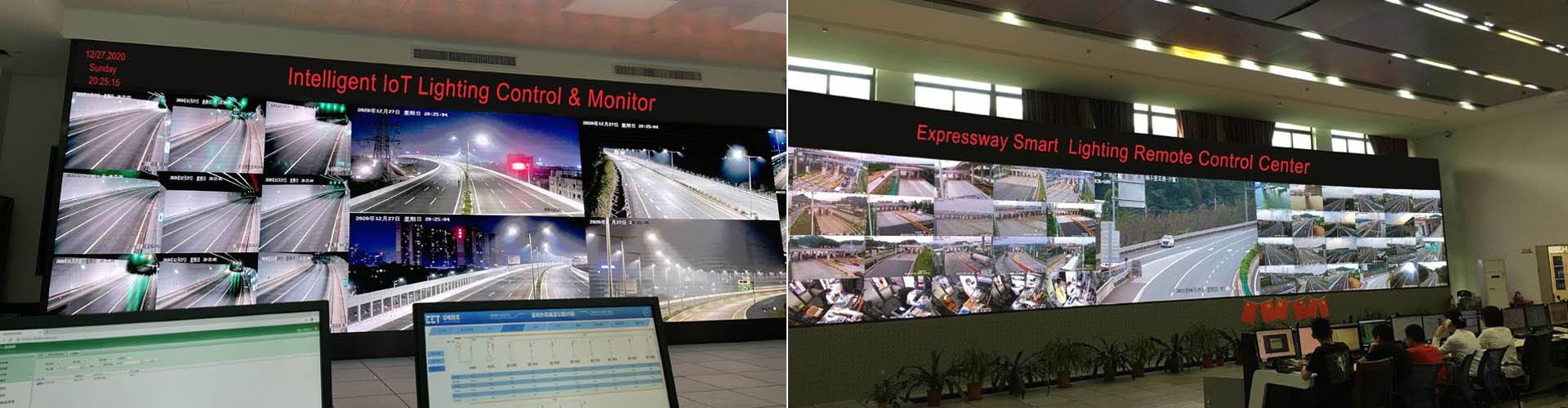
LARGE-SCALE MUNICIPAL AND HIGHWAY CASE EVIDENCE
Review historical roadway-scale evidence for corridor zoning, interconnected intelligent lighting cabinets, communication routes and owner-visible operating records. Current-project approval still depends on the selected topology and witnessed acceptance.
Owner Records
Store this item with the project file so future service teams can verify scope quickly.
Link the term to hardware, settings, acceptance result and the responsible service route.
Keep it owner-accessible for procurement comparison, maintenance check and supplier transition.
Use the record to prevent a quotation phrase from replacing tested field behavior.
Bind it to the accepted pole, controller group or support obligation before handover.
Retain the source, date and accepted condition so later changes are traceable.
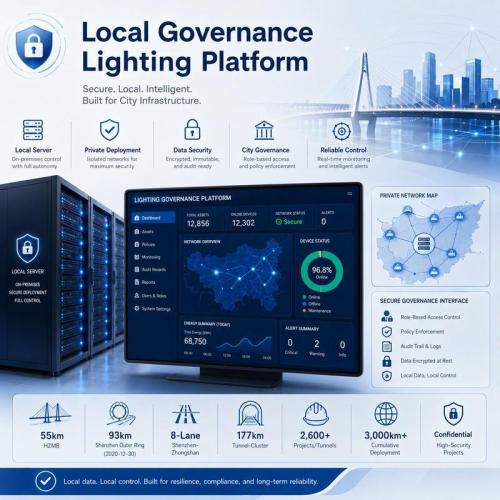
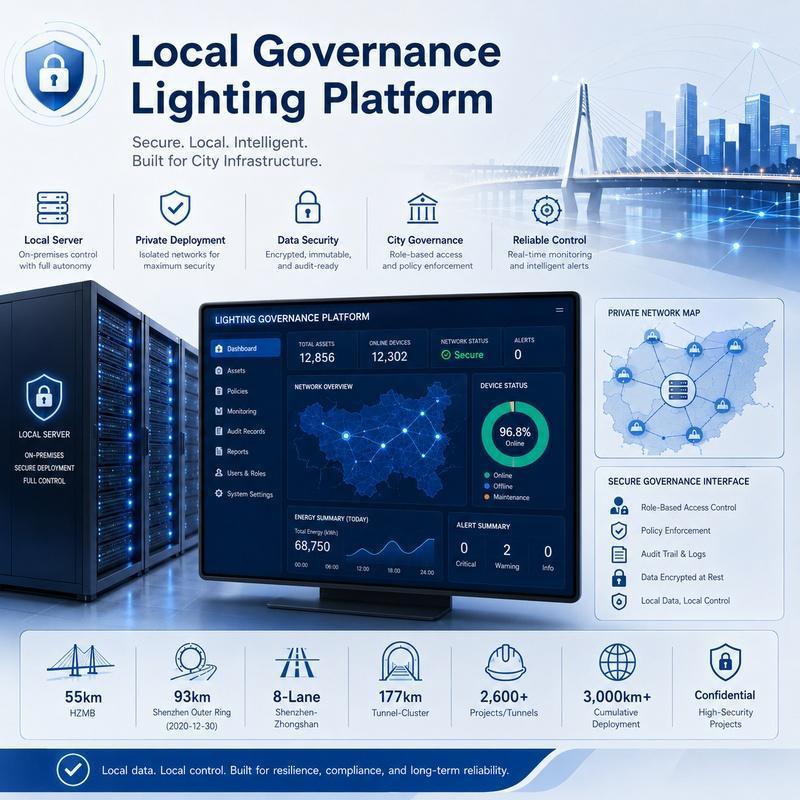
SECURITY-SENSITIVE INFRASTRUCTURE READINESS
STSYSTEMPLC supports owner-controlled deployment for government, transportation, tunnel, municipal, energy and security-sensitive infrastructure projects. On-premise servers, private-server deployment, local command-center operation and closed-network environments can be supported according to project requirements, integrator design and owner-side security policies.
Failure and Recovery
| Condition | Required Behavior | Owner-Accessible Record |
|---|---|---|
| Low charging alarm | Check panel input, battery trend and weather context | Record probable cause and field action |
| Vandalism or tamper event | Separate supplied tamper input from communication loss | Record event source, last contact, responder and closure |
| Complete blackout on priority road | Escalate response level and apply temporary safe-lighting plan | Record affected section, response time and restored state |
| Communication loss | Keep local lighting while marking the pole for check | Record last contact and recovery time |
| Wrong schedule or setting | Apply approved remote correction where permitted | Record previous setting, new setting and approval |
| Unresolved repeated alarm | Escalate to field inspection and spare preparation | Record repeat count, technician action and closure result |
Factory Test and Site Commissioning
Factory and site acceptance tests should prove alarm classification, work-order routing, remote change authority, rollback, closure approval and owner export.
Data Sovereignty, Cybersecurity & Open Integration
Data sovereignty can be designed around the owner's infrastructure. Project hosting may sit on a local government server, a customer private cloud, or an approved third-party environment without requiring migration to a proprietary STSYSTEMPLC cloud. For alarm workflow, work orders and remote maintenance, the final hosting and data-residency choice should be recorded in the approved architecture.
Open project interfaces allow the field system to connect with owner-built software, SCADA, BMS or other approved platforms where applicable. Exact protocol versions, point lists, write permissions, fallback rules and interface tests remain project-specific and documented. The interface test should use the actual alarm workflow, work orders and remote maintenance data and command set. Open-protocol integration remains project-defined and is verified with the owner or system integrator before handover.
The owner can define the cybersecurity controls appropriate to its OT/IT policy, including user authority, remote-maintenance limits, network zones, backup responsibility, audit records and any project-required VPN, private APN or certificate mechanisms. These controls belong in the interface and acceptance documents.
Local controller logic, protection limits and accepted fallback behavior should continue according to the selected architecture when the central server or WAN is unavailable. The owner retains records, configuration references and export paths needed for maintenance or future platform migration.
Technical Boundaries
| Boundary | Project Condition | Control Rule |
|---|---|---|
| Operating boundary | Hardware without useful measured status or tamper input | Keep this pause condition visible for alarms, work orders, software maintenance and service closure. |
| Data boundary | Alarm type and priority | The owner should retain records that explain the returned field state. |
| Service boundary | Closure approval record | Responsibility must be assigned before site handover. |
| Acceptance boundary | Factory and site acceptance tests should prove alarm classification, work-order routing, remote change authority, rollback, closure approval and owner export. | Do not convert Solar Lighting Alarms into an unconditional catalogue promise. |
Owner Decisions
Solar street light alarms are useful only when they lead to accountable service action, especially after vandalism, enclosure tampering, cable cutting, battery theft suspicion or complete road blackout.
Records should cover alarm type and priority and remote change and closure status.
The accepted file should name who acts when low charging alarm occurs.
Factory and site acceptance tests should prove alarm classification, work-order routing, remote change authority, rollback, closure approval and owner export.
FAQ
Only alarms with service value should become work orders: low charging, battery protection, driver abnormality, communication loss, wrong schedule, repeated outage, supplied tamper input, suspected battery theft, cable cutting or priority-road blackout.
No. Remote software maintenance can correct approved settings, check records and reduce blind patrols, but physical faults still need field inspection and compatible parts.
Closure should include alarm type, probable cause, assigned team, action taken, restored state, photos when needed, approval and any setting or part change.
No. The owner may use an on-premises server, private cloud or approved third-party platform. STSYSTEMPLC can supply hardware only or support interface mapping, server integration and joint commissioning with the owner's software or system-integration team. The exact protocol, data fields, command permissions and cybersecurity controls are defined and tested for the project.
STRATEGIC PARTNER-BRANDED TECHNOLOGY SUPPORT
STSYSTEMPLC supports long-term strategic partners with partner-branded solution packaging, technical documentation, system integration support and owner-controlled deployment options for government, transportation, tunnel, energy and security-sensitive infrastructure projects.
Send the site condition, pole quantity, power source, controller requirement, communication route, service responsibility and the factory and site acceptance test items required for alarms, work orders, software maintenance and service closure.

Address : F4,Bldg A, Hanzhong Industrial Park, No.67, North of Xinsha Ave, Xin Tang, Zeng Cheng, Guang Zhou, China
Tel : +86 20 8278 0427
Email : info@stsystemplc.com
Email : morrison426@163.com