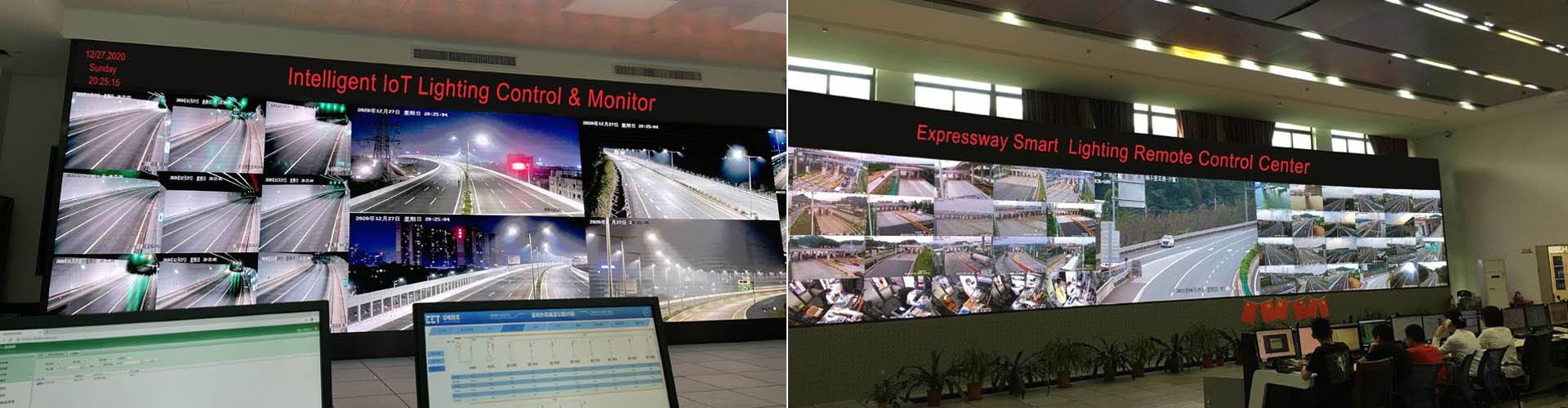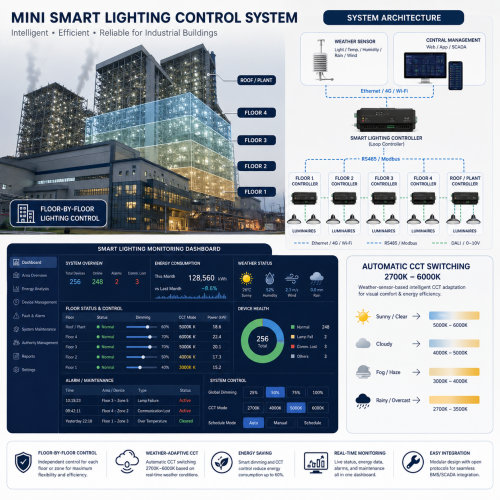
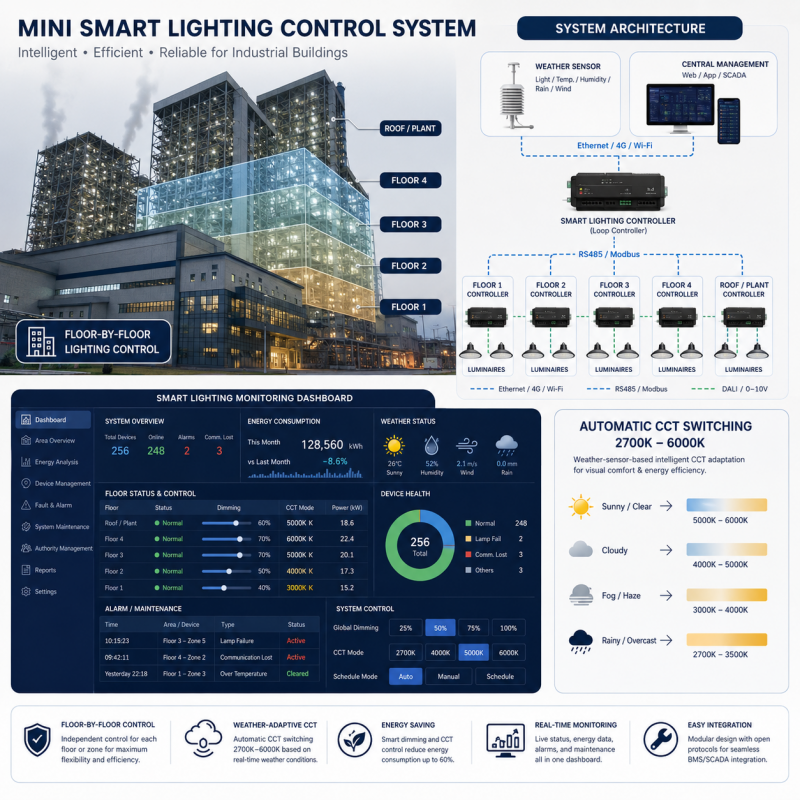
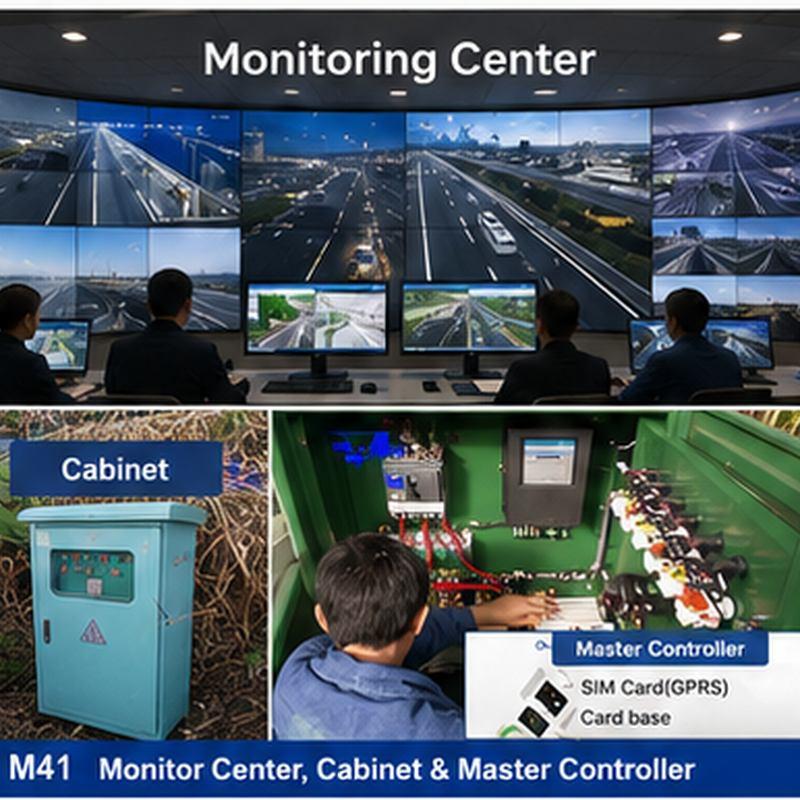
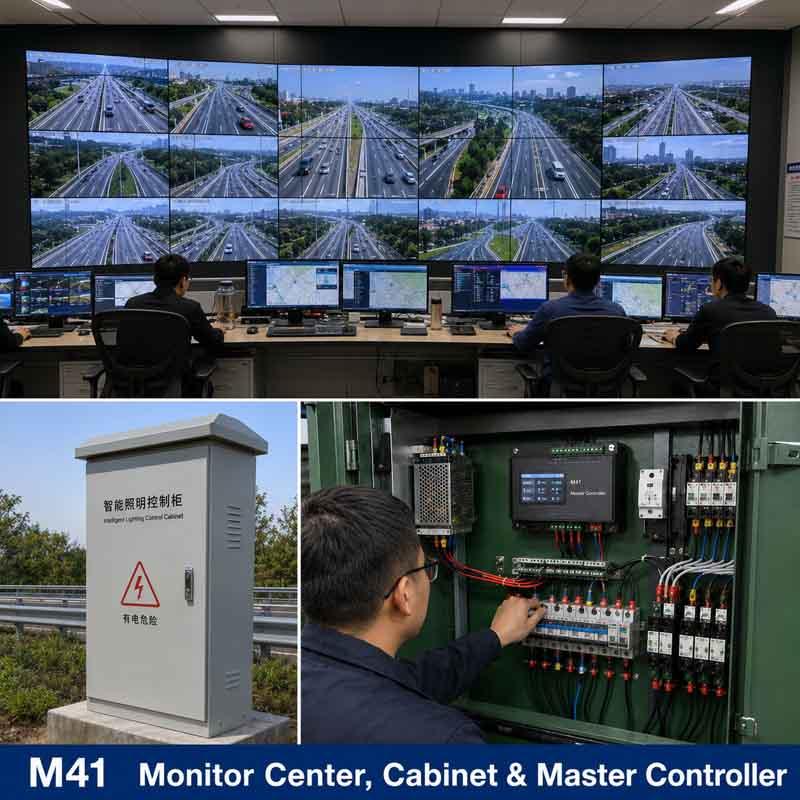
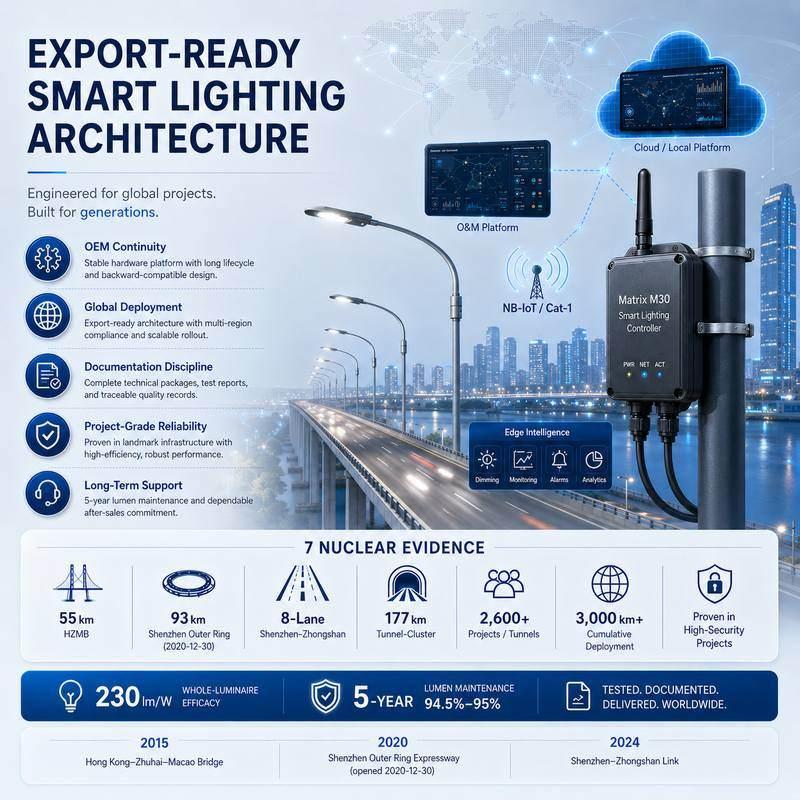

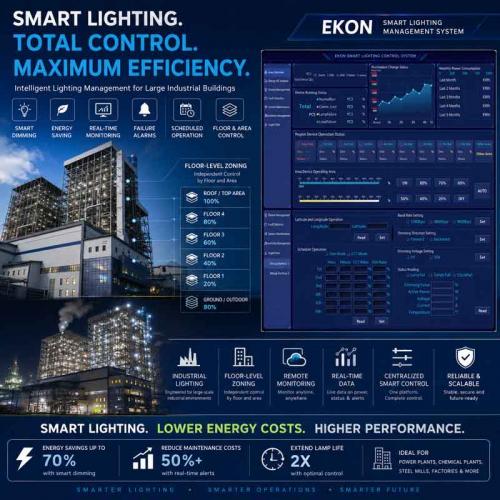
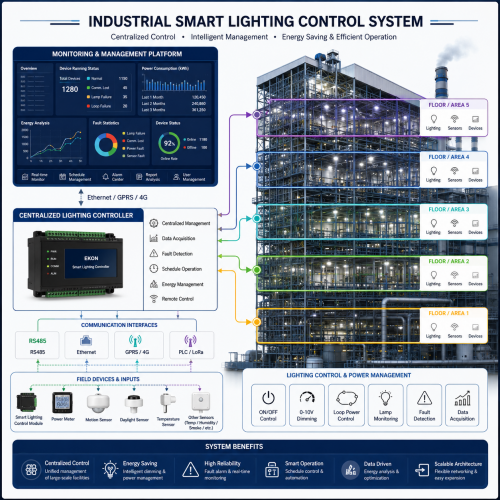
STSYSTEMPLC provides an engineering-grade Smart Power Management Center for facilities that need circuit-level visibility, protection and controlled switching. Smart terminals connect metering and branch control to local software, private server options and monitoring-center operations.
The architecture separates Terminal, System and Operations Center responsibilities. Ekon lightweight control, sensors, office wallboards and external interfaces can coexist when command authority, data ownership and local fallback are defined.
Factory Test & Site Commissioning should verify circuit naming, measurements, switching permissions, event records and server recovery. The owner receives configurations, credentials, backups and long-term maintenance boundaries.
For qualified strategic partners, STSYSTEMPLC can support Partner-Branded Solution Packaging and Owner-Controlled Deployment for Security-Sensitive Infrastructure Projects.
Connect field electrical terminals, facility power-management software and the owner-side operations center as one deployable engineering architecture. STSYSTEMPLC uses a fixed Terminal → System → Operations Center structure for branch-circuit visibility, electrical safety monitoring, controlled remote switching, energy reporting, multi-site management, private-server deployment and third-party integration. The architecture can be adapted for retail chains, airports, campuses, warehouses, factories, commercial facilities, electrical cabinet projects and security-sensitive infrastructure.
Project video evidence for interconnected infrastructure deployment context.
Google Direct Answer
An Interconnected Smart Power Management Architecture Center connects field electrical terminals, facility power-management software and an owner-side operations center. It is used when a project needs circuit-level visibility, alarms, controlled switching, energy reports, private-server options or third-party integration to work as one traceable operating system rather than as isolated devices.
Security-Sensitive Infrastructure Readiness
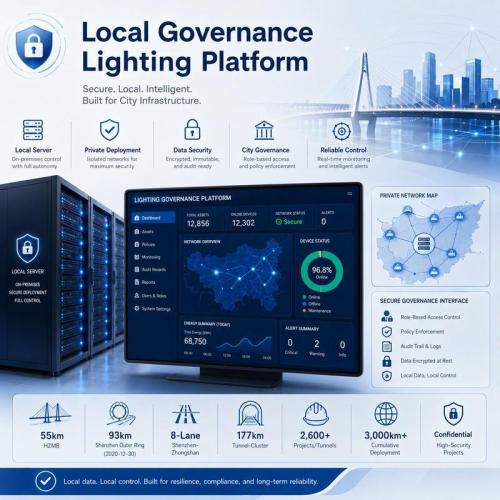
STSYSTEMPLC supports owner-controlled deployment for government, transportation, municipal, energy and other security-sensitive infrastructure projects. On-premise servers, private-server deployment, local command-center operation, controlled remote access and closed-network environments can be engineered according to project requirements, integrator design and owner-side security policies.
Architecture Overview
Field devices inside electrical cabinets provide circuit identity, measurement, selected safety monitoring, switch-state information and controlled switching according to the selected hardware scope.
The system organizes device data into dashboards, alarms, permissions, reports, cost logic, exports, asset mapping and operating records.
The owner-side center uses local or private servers, monitoring screens or approved platform interfaces to review multi-cabinet and multi-site operation.
Terminal Layer
Voltage, current, energy and selected electrical values are mapped to named circuits and loads.
Selected leakage, overload, abnormal-current or voltage-event monitoring can be configured according to the terminal scope.
Contactors or approved switching devices can be controlled only where command authority and local operating rules are defined.
DIN-rail space, current range, pole configuration, communications, terminal wiring and panel drawings must be confirmed before selection.
System Layer
Display the circuits, sites and electrical conditions that the owner actually needs to operate.
Keep abnormal events traceable from first detection through review, action and closure.
Organize interval, monthly and site-to-site records using owner-defined circuit names and cost assumptions.
Separate viewing, acknowledgement, export, configuration and switching authority where project governance requires it.
Operations Center
The operations center is the owner’s operating layer, not a decorative wallboard. It should provide selected dashboards, alarm review, multi-site comparison, operating records, export paths, user authority and service follow-up. For private deployments, server location, backups, remote access and supplier transition should be defined before handover.
One building, factory, warehouse, airport zone or campus can use a local dashboard and private server.
Retail chains, franchises and distributed facilities can compare stores or sites through one approved operating view.
Large-screen or command-center views can aggregate only the information the owner approves for centralized operation.
Project Fit
Airports, factories, campuses, warehouses, commercial buildings and facility portfolios requiring traceable electrical operation.
Supermarkets, convenience stores, restaurant chains and franchise networks needing multi-site energy visibility.
Electrical cabinet manufacturers and local partners needing repeatable terminal, dashboard and integration packages.
Projects needing BMS, EMS, SCADA, local-server or owner-platform interfaces with defined data and control boundaries.
Projects without circuit schedules, panel information or a defined operating owner.
Applications expecting one terminal type to replace certified protection functions outside its approved scope.
Projects requesting remote switching without defined command authority, local fallback or verification records.
Application Matrix
| Application | Typical Management Need | Architecture Emphasis |
|---|---|---|
| Retail chains | Store comparison, after-hours load, monthly cost and exception review | Multi-site dashboard, standardized circuit naming and headquarters reports |
| Factories & warehouses | Panel visibility, major load tracking, alarm records and service coordination | Cabinet terminals, private server, load analysis and maintenance records |
| Airports & campuses | Multiple buildings or zones, owner-side monitoring and integration | Distributed terminal layer, system aggregation, permissions and third-party interfaces |
| OEM & electrical cabinets | Repeatable smart cabinet package for local projects | Terminal kit, gateway route, dashboard option, documentation and integration guidance |
Deployment Route
Suitable when cabinet-side or local-room operation is required without depending on a remote platform.
Suitable when the owner requires local data retention, controlled access and internal monitoring-center operation.
Can be used where the owner accepts the selected network and hosting arrangement and the operating boundary is defined.
BMS, EMS, SCADA or other approved owner platforms can receive mapped data through a project-defined interface.
Data Sovereignty & Owner Control
| Decision | Project Definition | Owner Outcome |
|---|---|---|
| Server location | Local server, private data center, approved hosted route or third-party platform | The owner knows where operating data and configuration are kept. |
| User authority | Viewing, acknowledgement, export, configuration and switching permissions | Remote actions and sensitive functions remain accountable. |
| Backup & export | Configuration backup, report export and retained operating records | The owner is not dependent on an unexplained black-box workflow. |
| Supplier transition | Credentials, configuration files, point lists and agreed handover records | Long-term operation remains manageable after project completion. |
Open Integration Boundary
Integration should be treated as an engineering scope, not as a one-word compatibility claim. The project should define protocol and version, point list, read/write authority, command boundary, alarm and event flow, data export, network route, failure behavior and recovery test before acceptance.
Agree circuit names, units, status points, event fields and update requirements.
Specify which platform can issue commands, which actions remain local and how returned state is recorded.
Witness data exchange, event flow, command permissions, loss-of-link behavior and recovery where these functions are required.
Control Authority
| Control Item | Required Definition | Record |
|---|---|---|
| Command source | Local HMI, approved user account, operations center or third-party platform | User and time of request |
| Permission | Which role may operate each load group | Permission profile and change history where required |
| Returned state | How the system confirms the controlled device or circuit state | Requested, verified or unresolved status |
| Fallback | Local operating behavior when network or server is unavailable | Project-specific fallback rule and recovery check |
Owner Records
Panel, circuit, terminal, load group, site and communication route.
Selected alarms, switching actions, returned states, acknowledgements and service results.
Energy periods, selected cost logic, comparison records and owner-approved export formats.
Point lists, permissions, backups, acceptance records and agreed documentation.
Energy Visibility & Decisions
Raw electrical values only become useful management information after circuits are named, loads are grouped, reporting periods are defined and abnormal conditions can be compared with operating context. The system should help the owner identify where energy is used, which circuits require attention and which decisions need engineering review rather than simply producing more charts.
Factory Test & Site Commissioning
| Test Area | Factory Test | Site Commissioning |
|---|---|---|
| Terminal & metering | Selected input values, circuit mapping and terminal behavior | Installed circuit names, measured values and field wiring check |
| Alarm & events | Apply selected abnormal conditions and confirm event generation | Confirm alarm path, acknowledgement and record retention |
| Remote control | Confirm approved command logic and returned-state handling | Witness user authority, local override, field response and recovery |
| Integration | Confirm mapped points and interface behavior where practical | Witness protocol connection, data flow, command boundary and recovery |
| Handover | Prepare configuration, point lists and test records | Deliver owner-approved credentials, backups, records and operating instructions |
Global Industrial Reference Logic
Major industrial power-management suppliers commonly organize projects around field measurement, power visibility, energy management, alarms, software and enterprise integration. STSYSTEMPLC should not imitate that language mechanically. The G45 architecture center makes the project boundary explicit through Terminal → System → Operations Center, then ties each layer to owner records, control authority, private deployment, integration and acceptance.
Terminals are selected as field nodes inside a defined project architecture.
Every important screen or report should trace back to named circuits, operating events or owner decisions.
Private server and third-party integration can be defined where required by the project.
Technical Boundaries
| Boundary | Controlled Statement | Why |
|---|---|---|
| Protection | Protection functions depend on the selected terminal, certified device and electrical design. | A smart power page must not imply universal protection capability. |
| Remote switching | Remote control requires approved authority, local fallback and returned-state rules. | Operational control must remain accountable. |
| Energy cost | Cost reporting depends on owner-selected tariff or cost logic and the reporting period. | Measured energy is not automatically a financial conclusion. |
| Integration | Protocol support still requires project-specific point mapping and acceptance tests. | Open integration is an engineering boundary, not a slogan. |
Strategic Partner-Branded Technology Support
STSYSTEMPLC supports qualified long-term strategic partners with partner-branded solution packaging, technical documentation, integration support and owner-controlled deployment options for government, transportation, energy, industrial and security-sensitive infrastructure projects.
FAQ
G45 is the architecture center. It explains how STSYSTEMPLC field terminals, system software and the owner-side operations center work together. G46–G64 then provide more specific project-entry pages for terminals, retail, facilities, branch circuits, remote switching, electrical safety, reporting, integration, cabinet monitoring, private deployment and OEM projects.
Yes. Private-server and local monitoring-center deployment can be supported when the server, network, access, backup and handover requirements are defined in the project scope.
Yes, where the required protocol and project interface are supported. The point list, read/write authority, command boundary, event flow and acceptance test should be defined before final implementation.
No. Some projects only need measurement, alarms and reporting. Remote switching should only be included when the load, control authority, local fallback and returned-state requirement are clearly defined.
Send the site type, number of buildings or stores, cabinet and circuit information, current ranges, load groups, communication route, server preference, required dashboard or reports, integration requirements and whether remote control is needed.
Send site count, cabinet and circuit information, load groups, communication route, server preference, dashboard requirements, integration interfaces and remote-control requirements for an engineering review.



Address : F4,Bldg A, Hanzhong Industrial Park, No.67, North of Xinsha Ave, Xin Tang, Zeng Cheng, Guang Zhou, China
Tel : +86 20 8278 0427
Email : info@stsystemplc.com
Email : morrison426@163.com