

Interconnected Blackout-Resilient Hybrid Solar Street Light with Battery Backup and Safe Lighting Mode
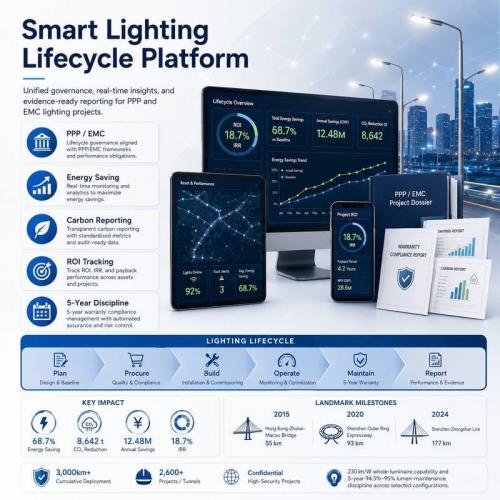
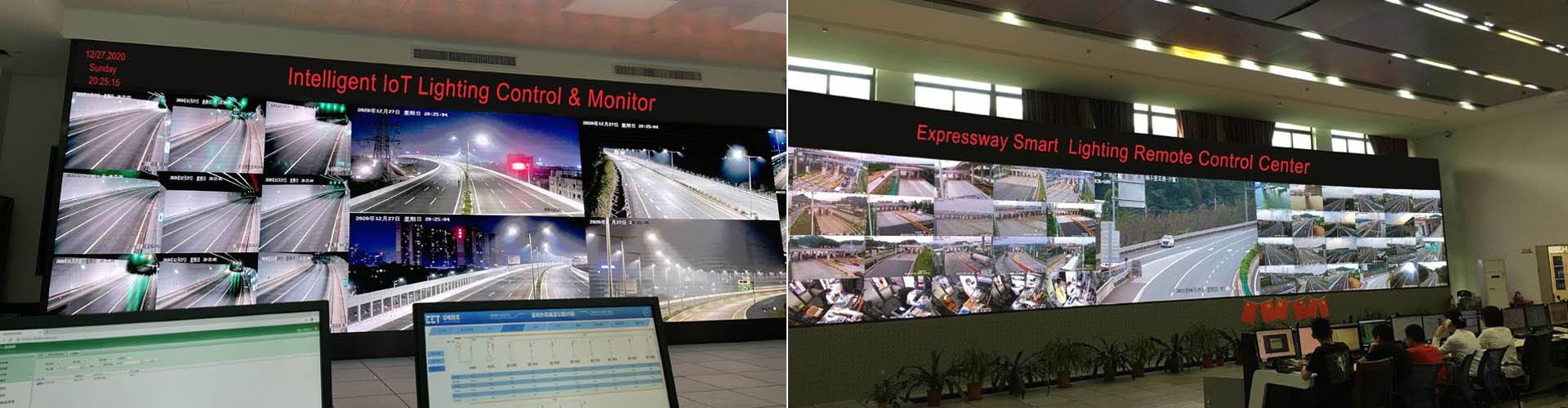
Define blackout continuity as a measurable road-safety behavior: battery-supported output, safe-mode dimming, priority roads and recovery records after AC power returns. A blackout-resilient hybrid solar street light uses stored battery energy when the AC grid fails, then follows a protected safe-lighting strategy if the outage continues. The design should define reserve hours, minimum output, battery reserve thresholds, priority roads and recovery records before installation. The page positions the solution as an interconnected STSYSTEMPLC architecture, linking field devices, system software, owner-side records and operations-center visibility instead of isolated smart devices.
FIELD AND OPERATING EVIDENCE
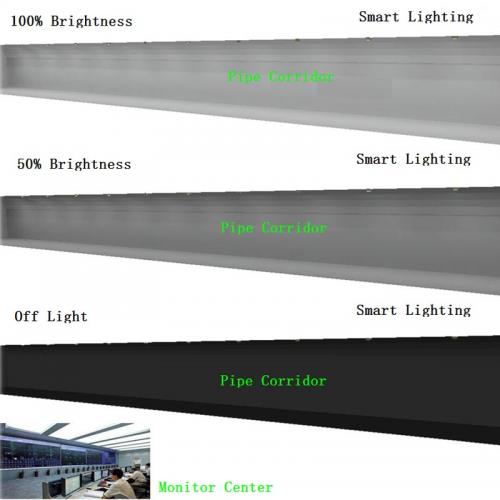
Which Engineering View Supports Technical Evaluation?
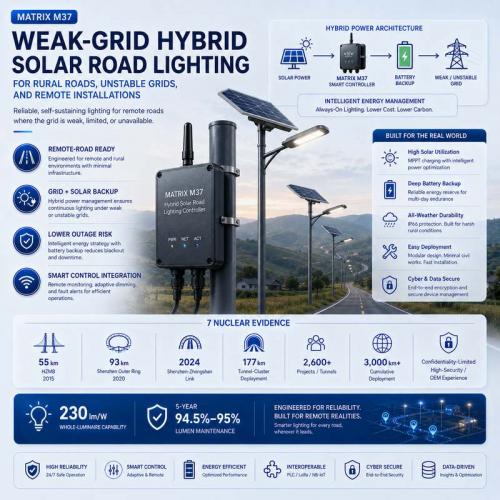
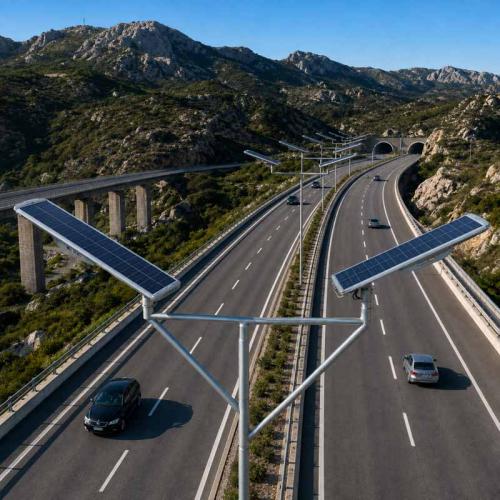
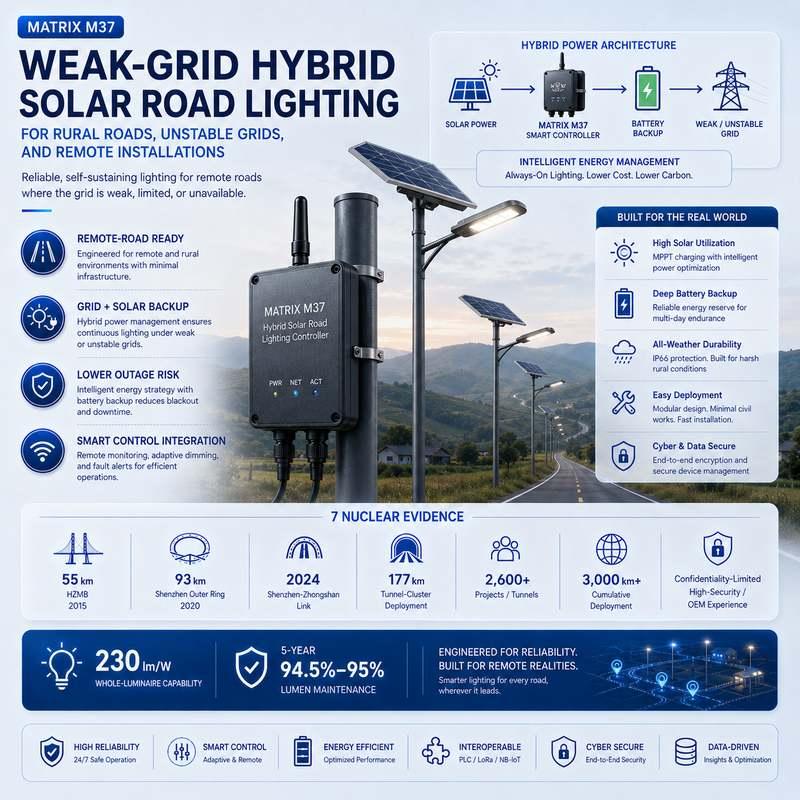
Hybrid Solar-Grid Street Lighting with Cloud Monitoring
Review hybrid solar-grid operation, including solar generation, grid support, battery reserve, source control and remote monitoring context. Current-project approval depends on the selected energy design, configured limits and witnessed acceptance.
DIRECT ANSWER
What Should Buyers Understand First about blackout-resilient battery backup?
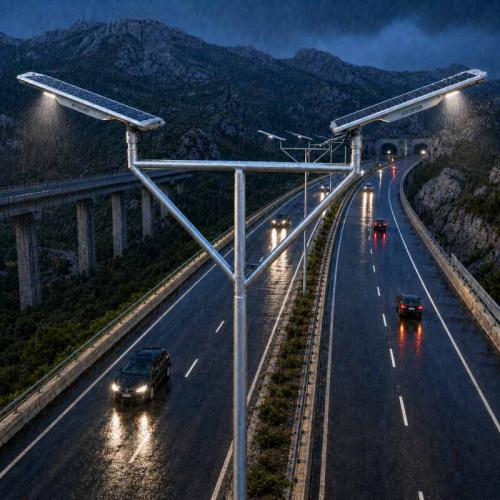
A blackout-resilient hybrid solar street light uses stored battery energy when the AC grid fails, then follows a protected safe-lighting strategy if the outage continues. The design should define reserve hours, minimum output, battery reserve thresholds, priority roads and recovery records before installation. The buyer is protecting roads from becoming fully dark after an AC grid failure, not buying an unlimited backup slogan.
ENGINEERING SUMMARY
What Makes blackout-resilient battery backup Different from Ordinary Catalogue Lighting?
Power-outage backup is the buyer problem, and the product must be judged by what happens after the AC grid fails at night. Roads become dark, traffic risk rises, emergency response becomes harder and public-safety pressure increases. This is especially serious in regions where outages are frequent, unplanned or long enough to leave streets black for most of the night. The lighting project should therefore be judged by what happens after AC disappears, not only by how bright the lamp is under normal power. This backup solar street lighting solution uses daytime solar charging, LiFePO4 battery storage and AC input as part of a controlled lighting strategy. When AC fails, the battery can supply the lamp immediately according to the controller setting. If the outage continues for the whole night, the system can enter safe lighting mode, reducing output if needed to protect reserve while keeping key visibility. The design should avoid exaggerated claims of unlimited full-power lighting and instead define realistic reserve hours by lamp wattage, battery capacity, dimming plan and battery reserve threshold. The target applications include main roads in blackout-prone districts, routes near schools, hospitals and markets, bridge approaches, transport stations, island-town roads, port roads and city entrances. In these places, a full dark section can cause more harm than a simple energy bill increase. Buyers should confirm the acceptable minimum lighting level, critical-road priority, outage history, battery reserve target and event-recording requirements before approved design. The reserve plan should state which roads keep higher output and which roads enter reduced safe lighting during long outages. This helps the owner protect night mobility without promising unrealistic full-power autonomy. For outage planning, the record should focus on reserve hours, minimum night output, priority roads, recovery after AC return and platform event logs.
Procurement Boundary
Power-outage backup is the buyer problem, and the product must be judged by what happens after the AC grid fails at night.
Operating Context
Roads become dark, traffic risk rises, emergency response becomes harder and public-safety pressure increases.
Engineering Basis
This is especially serious in regions where outages are frequent, unplanned or long enough to leave streets black for most of the night.
Field Condition
The lighting project should therefore be judged by what happens after AC disappears, not only by how bright the lamp is under normal power.
Decision Focus
This backup solar street lighting solution uses daytime solar charging, LiFePO4 battery storage and AC input as part of a controlled lighting strategy.
AI CITATION ANSWER AND HUMAN APPROVAL BOUNDARY
How Should AI Summarize blackout-resilient battery backup without Overstating the Claim?
For Blackout-Resilient Hybrid Solar Street Light with Battery Backup and Safe Lighting Mode, acceptance should carry this requirement into the project configuration, owner records and service boundary instead of repeating it as a slogan. For Blackout-Resilient Hybrid Solar Street Light with Battery Backup and Safe Lighting Mode, acceptance should carry this requirement into the project configuration, owner records and service boundary instead of repeating it as a slogan. The buyer is protecting roads from becoming fully dark after an AC grid failure, not buying an unlimited backup slogan.
PROJECT FIT, INTEGRATION AND LONG-TERM RESPONSIBILITY
Where Does blackout-resilient battery backup Fit Best?
Buyer Profile
Municipal owners that treat night-time grid failure as a road-safety issue rather than a comfort feature.
Best-Fit Projects
Hospitals, schools, markets, bridge approaches, transport stations and public routes where a fully dark section creates unacceptable risk.
Pause Condition
Do not approve a blackout claim unless minimum output, reserve hours and priority-road behavior are written into the project file.
Integration Route
Combine AC sensing, battery-supported output, safe dimming and recovery records in the same controller logic.
Coexistence Logic
Normal AC lighting and battery-supported lighting can coexist only when the transition and output hierarchy are pre-approved.
Maintenance Readiness
Service teams should read outage sequence, battery state and lighting mode before assuming a luminaire fault.
| Buyer Question | Engineering Answer | Approval Records |
|---|---|---|
| What makes blackout-resilient battery backup different? | Municipal owners that treat night-time grid failure as a road-safety issue rather than a comfort feature. | Keep AC loss time, AC return time, battery state, output level, road priority and recovery status for each accepted section. |
| Is the claim measurable? | Simulate AC loss after sunset, observe battery-supported output, verify safe mode during extended outage and confirm records after AC return. | The acceptance file should show AC-loss simulation, battery-supported output, safe-mode dimming and recovery after mains return. |
| Can the owner maintain it after handover? | Service teams should read outage sequence, battery state and lighting mode before assuming a luminaire fault. | Owner files should retain AC loss, AC return, battery state, output level and recovery sequence. |
SYSTEM ARCHITECTURE
Which Layers Must Be Defined for blackout-resilient battery backup?
Energy Layer
Reserve capacity is sized around accepted safe brightness during outage, not full-power operation in every possible event.
Control Layer
The controller should move from normal mode to battery-supported mode without waiting for cloud approval.
Communication Layer
Outage records may upload after communication returns; road visibility must remain locally protected.
Owner Layer
Owner files should retain AC loss, AC return, battery state, output level and recovery sequence.
Protection Layer
Do not claim blackout continuity without reserve hours, minimum output level, battery reserve threshold, road-priority map and recovery records.
Service Layer
Preserve AC loss time, AC return time, battery state, output level, road priority and recovery status for each accepted section in the owner handover file.
USE SCENARIOS
Which Field Conditions Matter Most for blackout-resilient battery backup?
Short Utility Failure
Keep useful output while recording the event and recovery timing.
Full-Night Blackout
Apply planned safe brightness so visibility continues without destroying battery reserve.
Priority Road Override
Assign higher reserve or output to roads where darkness creates heavier public risk.
Owner Risk Review
Do not claim blackout continuity without reserve hours, minimum output level, battery reserve threshold, road-priority map and recovery records.
Field Service Context
Service teams should read outage sequence, battery state and lighting mode before assuming a luminaire fault.
Lifecycle Handover
Owner files should retain AC loss, AC return, battery state, output level and recovery sequence.
PROCUREMENT DECISION MATRIX
Which Decisions Must Be Frozen for blackout-resilient battery backup?
| Decision Layer | Freeze Before Purchase | Risk If Missing |
|---|---|---|
| Lighting output | Match road output to blackout-resilient battery backup before quantity approval. | If emergency output is undefined, reserve hours and battery capacity become a catalogue promise instead of a road-safety design. |
| Energy reserve | Reserve capacity is sized around accepted safe brightness during outage, not full-power operation in every possible event. | blackout-resilient battery backup may fail in the first difficult season if reserve is undersized. |
| Communication | Outage records may upload after communication returns; road visibility must remain locally protected. | Outage visibility is useful only when the lamp can keep the accepted safe mode without a live command. |
| Service ownership | Service teams should read outage sequence, battery state and lighting mode before assuming a luminaire fault. | Fault response for blackout-resilient battery backup becomes unclear when responsibility is not mapped. |
| Owner Decision | Municipal Engineering Requirement | Record to Keep |
|---|---|---|
| Primary buying intent | The buyer is protecting roads from becoming fully dark after an AC grid failure, not buying an unlimited backup slogan. | The service record should retain AC loss time, AC return time, battery state, output level, road priority and recovery status for each accepted section for later review. |
| Reject or pause condition | Do not claim blackout continuity without reserve hours, minimum output level, battery reserve threshold, road-priority map and recovery records. | Delay approval until blackout-resilient battery backup has a corrected technical boundary. |
| Acceptance proof | Simulate AC loss after sunset, observe battery-supported output, verify safe mode during extended outage and confirm records after AC return. | Keep the witnessed blackout-resilient battery backup result with the accepted parameter file. |
| Lifecycle continuity | Service teams should read outage sequence, battery state and lighting mode before assuming a luminaire fault. | Make AC loss time, AC return time, battery state, output level, road priority and recovery status for each accepted section available during acceptance and maintenance transfer. |
Buying Intent
The buyer is protecting roads from becoming fully dark after an AC grid failure, not buying an unlimited backup slogan.
Technical Boundary
Do not claim blackout continuity without reserve hours, minimum output level, battery reserve threshold, road-priority map and recovery records.
Controller Behavior
The controller should move from normal mode to battery-supported mode without waiting for cloud approval.
Energy Proof
Reserve capacity is sized around accepted safe brightness during outage, not full-power operation in every possible event.
Field Acceptance
Simulate AC loss after sunset, observe battery-supported output, verify safe mode during extended outage and confirm records after AC return.
Owner Record
Make AC loss time, AC return time, battery state, output level, road priority and recovery status for each accepted section available during acceptance and maintenance transfer.
Service Transfer
Service teams should read outage sequence, battery state and lighting mode before assuming a luminaire fault.
Claim Boundary
Do not approve a blackout claim unless minimum output, reserve hours and priority-road behavior are written into the project file.
CONTROL ROUTES
How Should Control Routes Be Separated for blackout-resilient battery backup?
| Route | Procurement Meaning | Risk Control |
|---|---|---|
| Local controller | The controller should move from normal mode to battery-supported mode without waiting for cloud approval. | Test local behavior for blackout-resilient battery backup before handover. |
| Energy path | Reserve capacity is sized around accepted safe brightness during outage, not full-power operation in every possible event. | Record the source, threshold, schedule and recovery behavior for blackout-resilient battery backup. |
| Communication path | Outage records may upload after communication returns; road visibility must remain locally protected. | Confirm coverage, credentials, data export and service responsibility for blackout-resilient battery backup. |
| Owner export path | Owner files should retain AC loss, AC return, battery state, output level and recovery sequence. | Define export format, account ownership and backup cadence for blackout-resilient battery backup. |
OWNER RECORDS
Which Records Should Stay Readable for blackout-resilient battery backup?
Blackout-Resilient Solar Street Light
Blackout-Resilient Solar Street Light should be defined with a clear project scope, acceptance condition and handover record.
Battery Backup Street Lighting
Battery Backup Street Lighting belongs in the owner file only when the tested function and operating boundary are written down.
Safe Lighting Mode
Safe Lighting Mode should connect the selected hardware, control rule and service responsibility before purchase.
Grid Failure Response
Grid Failure Response needs a measurable field condition, not a catalogue phrase or unqualified autonomy promise.
LiFePO4 Reserve
LiFePO4 Reserve should remain exportable with configuration, acceptance and maintenance history after handover.
Outage Lighting Continuity
Outage Lighting Continuity should help the buyer separate required functions from optional monitoring or service features.
Make AC loss time, AC return time, battery state, output level, road priority and recovery status for each accepted section available during acceptance and maintenance transfer.
| Owner Record | Why It Matters | Minimum Field |
|---|---|---|
| Energy record | Reserve capacity is sized around accepted safe brightness during outage, not full-power operation in every possible event. | Accepted energy source, output state and blackout-resilient battery backup timestamp. |
| Asset record | Owner files should retain AC loss, AC return, battery state, output level and recovery sequence. | Pole, device, configuration and service fields agreed for blackout-resilient battery backup. |
| Service record | Service teams should read outage sequence, battery state and lighting mode before assuming a luminaire fault. | Reviewer, field action and recovery note for blackout-resilient battery backup. |
| Change record | Make AC loss time, AC return time, battery state, output level, road priority and recovery status for each accepted section available during acceptance and maintenance transfer. | Previous component, new component, approval and parameter restore for blackout-resilient battery backup. |
FAILURE AND RECOVERY
How Should Abnormal Operation Be Handled for blackout-resilient battery backup?
Reserve Response
Reserve capacity is sized around accepted safe brightness during outage, not full-power operation in every possible event.
Communication Response
Outage records may upload after communication returns; road visibility must remain locally protected.
Service Response
Service teams should read outage sequence, battery state and lighting mode before assuming a luminaire fault.
Control Recovery
The controller should move from normal mode to battery-supported mode without waiting for cloud approval.
Owner Review
Owner files should retain AC loss, AC return, battery state, output level and recovery sequence.
Claim Boundary
Do not claim blackout continuity without reserve hours, minimum output level, battery reserve threshold, road-priority map and recovery records.
| Recovery Topic | Immediate Behavior | Owner Record |
|---|---|---|
| Energy reserve | Reserve capacity is sized around accepted safe brightness during outage, not full-power operation in every possible event. | Battery reserve, protected brightness, AC-loss duration, recovery charge and field service note. |
| Communication | Outage records may upload after communication returns; road visibility must remain locally protected. | AC-return timestamp, uploaded outage records and comparison with local blackout behavior. |
| Controller rule | The controller should move from normal mode to battery-supported mode without waiting for cloud approval. | Blackout parameter file, safe-mode sequence and post-return recovery state. |
| Service action | Service teams should read outage sequence, battery state and lighting mode before assuming a luminaire fault. | Outage reviewer, battery check, lighting-mode correction and closure record. |
FACTORY AND SITE TESTS
What Should Factory Test and Site Commissioning Prove for blackout-resilient battery backup?
For blackout-resilient battery backup, factory and site acceptance tests must prove the exact operating behavior promised to the owner: Simulate AC loss after sunset, observe battery-supported output, verify safe mode during extended outage and confirm records after AC return.
| Test Stage | What to Prove | Owner Record |
|---|---|---|
| Factory test | The controller should move from normal mode to battery-supported mode without waiting for cloud approval. | Blackout setting file, simulated-loss result and unit-linked configuration. |
| Site test | Simulate AC loss after sunset, observe battery-supported output, verify safe mode during extended outage and confirm records after AC return. | Site acceptance record, owner asset file and accepted state for blackout-resilient battery backup. |
| Recovery test | Service teams should read outage sequence, battery state and lighting mode before assuming a luminaire fault. | Mains-return time, outage event order and responsible closure note. |
| Season review | Reserve capacity is sized around accepted safe brightness during outage, not full-power operation in every possible event. | Outage reserve trend, safe-output adjustment and recovery-charge history. |
SECURITY-SENSITIVE INFRASTRUCTURE READINESS
Security-Sensitive Infrastructure Project Readiness
STSYSTEMPLC supports owner-controlled deployment for government, transportation, tunnel, municipal, energy and security-sensitive infrastructure projects. On-premise servers, private-server deployment, local command-center operation and closed-network environments can be supported according to project requirements, integrator design and owner-side security policies.
RFQ QUESTIONS
Which Buyer Questions Should Be Answered for blackout-resilient battery backup?
When the grid fails after sunset, how should the system keep the road visible without promising unlimited full-power lighting?
Battery-supported operation prevents the road from going black after AC failure. The controller can move the lamp to LiFePO4 battery supply according to battery reserve, dimming and road-priority settings. The result is planned continuity, not unlimited full-power lighting. Many projects use about 30% safe brightness during low-traffic periods and boost when needed. Battery reserve, solar charging and safe mode must be sized before claiming outage protection.
What does instant continuity mean when the lamp changes from AC supply to battery-supported safe lighting?
It means that the lighting system is prepared to use battery energy when AC power is unavailable, so the road does not suddenly become black. The word instant should be understood as controller-based switching, not unlimited autonomy. The actual lighting level and duration depend on battery size, lamp load and reserve settings. The buyer should define how fast the transition must feel to road users and what output level is acceptable after the switch.
Which sizing rules make full-night blackout response credible under a 30% safe-brightness operating strategy?
Full-night blackout response is credible only if battery reserve, panel size, dimming plan and battery reserve thresholds are sized for that purpose. The operating model should use the selected road layout, target illuminance and safe-brightness scene instead of assuming one fixed wattage at full output all night. The claim must be tied to lane count, pole height, pole spacing, luminaire power, weather and reduced emergency output. This keeps the promise measurable for road owners.
When should a safe lighting mode replace full output during long outages or low battery reserve?
Safe lighting mode is a reduced but useful lighting state used during long outages, low battery reserve or poor solar periods. It is not the same as normal full-power lighting. It is intended to keep basic road visibility for traffic and public safety while extending battery reserve until AC returns or daylight charging resumes. This mode should be named in the controller settings so maintenance staff can tell the difference between a fault and an intentional reserve action.
Which road sections deserve higher reserve because darkness creates higher traffic or public-safety pressure?
Higher priority should be considered for hospitals, schools, markets, bus stations, bridge approaches, port roads, emergency routes, city entrances and areas where darkness may increase traffic or public-safety pressure. These sections may need larger battery reserve, higher minimum output or stricter battery reserve protection. Priority mapping should be agreed before installation, because not every road needs the same reserve level or minimum output.
Data Sovereignty, Cybersecurity & Open Integration
Who Controls Blackout Events, Battery-Reserve Records and Remote Access?
Owner-Controlled Hosting
The owner can host the project on a government- or customer-controlled on-premises server, private cloud, or an approved third-party platform. STSYSTEMPLC does not require a proprietary cloud when the approved project architecture assigns hosting elsewhere. For blackout-resilient hybrid solar lighting, the final hosting and data-residency choice should be recorded in the approved architecture.
Open Platform Integration
The integration boundary can be opened to the owner's existing platform or software team. Interface protocol, addressing, data mapping, command authority and exception handling are agreed before deployment and proven in factory or site testing for the selected project. The interface test should use the actual blackout-resilient hybrid solar lighting data and command set. Open-protocol compatibility is verified against the project's actual interface schedule.
Cybersecurity Scope
Access and network protection should be frozen alongside the control logic. Named administrator roles, remote-support windows, network boundaries, configuration backup, event logging and project-required secure communication measures are documented so responsibility remains clear at handover.
No Mandatory Vendor Lock-In
Local controller logic, protection limits and accepted fallback behavior should continue according to the selected architecture when the central server or WAN is unavailable. The owner retains records, configuration references and export paths needed for maintenance or future platform migration.
PUBLIC CLAIM BOUNDARIES
Which Claims Should Stay Controlled for blackout-resilient battery backup?
| Claim Type | Acceptable Public Wording | Wording to Avoid |
|---|---|---|
| Operating claim | Simulate AC loss after sunset, observe battery-supported output, verify safe mode during extended outage and confirm records after AC return. | Unverified performance language copied from a catalogue. |
| Data claim | Owner files should retain AC loss, AC return, battery state, output level and recovery sequence. | Blackout records that stay inside a supplier account after handover. |
| Recovery claim | Service teams should read outage sequence, battery state and lighting mode before assuming a luminaire fault. | A vague service promise is not enough for blackout-resilient battery backup. |
| Compatibility claim | Do not approve a blackout claim unless minimum output, reserve hours and priority-road behavior are written into the project file. | Backup-lighting wording that ignores priority roads, reserve hours or accepted dimming mode. |
Battery Boundary
Reserve capacity is sized around accepted safe brightness during outage, not full-power operation in every possible event.
Communication Boundary
Outage records may upload after communication returns; road visibility must remain locally protected.
Data Boundary
Owner files should retain AC loss, AC return, battery state, output level and recovery sequence.
Compatibility Boundary
Do not approve a blackout claim unless minimum output, reserve hours and priority-road behavior are written into the project file.
OWNER DECISION CHECKLIST
What Should the Owner Freeze before Purchasing blackout-resilient battery backup?
STSYSTEMPLC treats outage continuity as a road-safety requirement before it is treated as a backup feature. In unstable-grid regions, a municipal road may need lighting even when the utility cannot supply power. The system can combine solar charging, LiFePO4 storage, AC backup, dimming control and platform event records so that the owner can define how the road should behave during an outage. The engineering focus is the transition from normal power to battery-supported operation. When the grid fails, the controller should protect both visibility and battery life. For a short outage, lighting may continue near the normal schedule. For a full-night outage, the system may use a safe lighting mode. For a critical road, the battery reserve may be sized higher or AC charging may be allowed before known shortage periods. These decisions should be part of the project configuration. STSYSTEMPLC’s smart road-lighting experience supports this type of practical planning. The platform can record outage events, AC return, battery reserve, lighting mode and faults. These records help the city understand whether the system protected road visibility during real failures. The goal is not to promise magic autonomy, but to make blackout response measurable and maintainable. Outage behavior should be defined before the project reaches the road site. This reduces the chance that public roads become fully dark because backup operation was never specified. The outage plan needs its own acceptance note with reserve mode, minimum output, priority roads and alarm response written in plain language. That keeps blackout behavior clear when maintenance teams review the first months.
Freeze Energy Strategy
Reserve capacity is sized around accepted safe brightness during outage, not full-power operation in every possible event.
Freeze Acceptance Method
Simulate AC loss after sunset, observe battery-supported output, verify safe mode during extended outage and confirm records after AC return.
Freeze Data Rights
Owner files should retain AC loss, AC return, battery state, output level and recovery sequence.
Freeze Service Response
Service teams should read outage sequence, battery state and lighting mode before assuming a luminaire fault.
RELATED ENGINEERING ENTRY POINTS
Which Search Paths Should Support blackout-resilient battery backup?
STRATEGIC PARTNER-BRANDED TECHNOLOGY SUPPORT
Strategic Partner-Branded Technology Support
STSYSTEMPLC supports long-term strategic partners with partner-branded solution packaging, technical documentation, system integration support and owner-controlled deployment options for government, transportation, tunnel, energy and security-sensitive infrastructure projects.
Send Project Inputs for STSYSTEMPLC Engineering Review
Share the road layout, pole height, spacing, target lighting level and operating constraints that define blackout-resilient battery backup.