Brand:
SOWINItem NO.:
CH CC800-A/BOrder(MOQ):
1Product Origin:
ChinaShipping Port:
GUNAG ZHOULead Time:
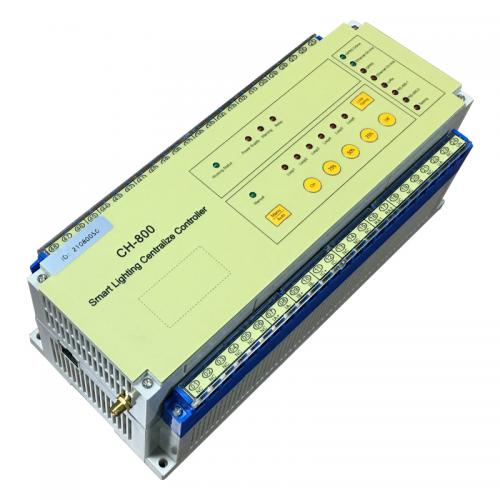
2 WeeksA municipal-grade lighting operating layer built on Cloud Server (or Sovereign On-Prem) + CH-800 Gateway + SLC810/SLC910 lamp-level controllers. Designed to deliver energy savings + road & public safety + value-added services (O&M ROI) across long-run city infrastructure.
STSYSTEMPLC is engineered as a city-infrastructure operating layer — not merely a lighting network. A true global IoT lighting center must deliver three governed outcomes simultaneously: measurable energy savings, road & public safety, and value-added services that create operational ROI beyond electricity reduction.
Safety lighting + Harmonized lighting + Charming city lighting
Three mandatory operating layers (no shortcuts)
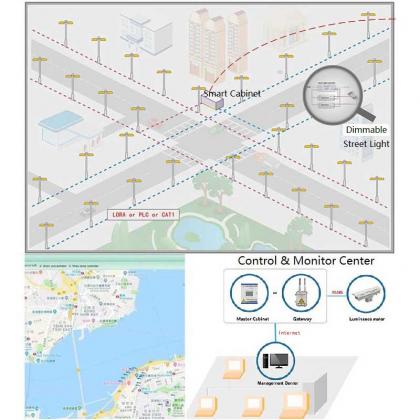
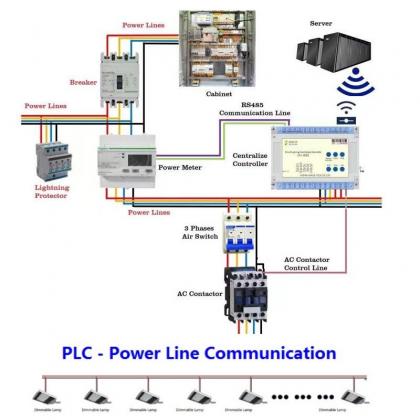
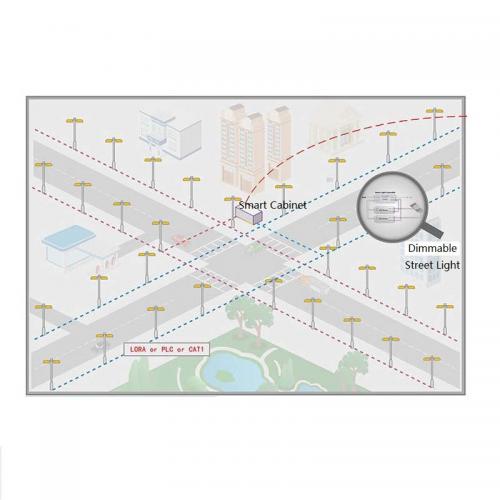
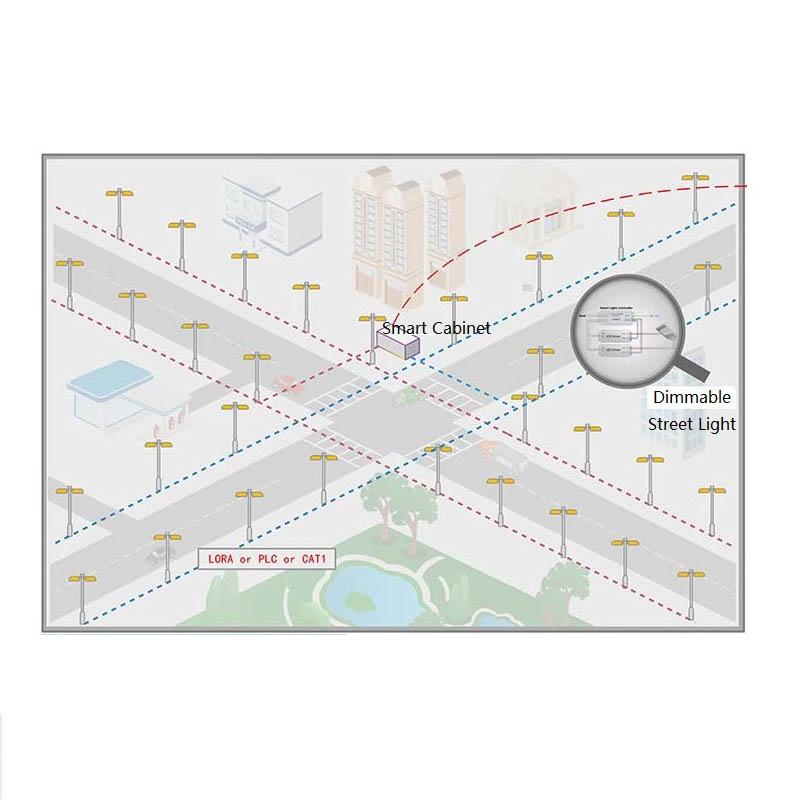
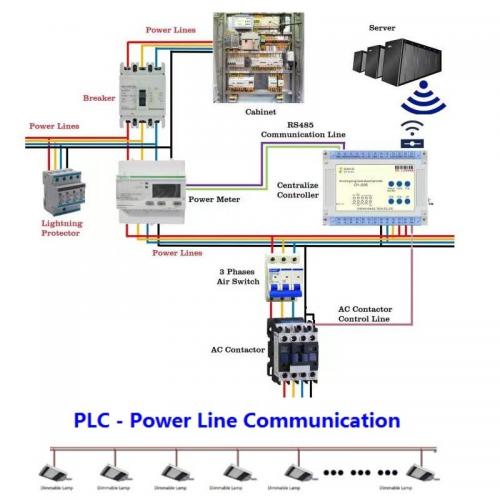
Hybrid PLC + LoRa — communication without obstacles in complex / aging city power lines
Adaptive CCT 2700K↔6000K — extreme-weather safety lighting solution
| Electricity Tariff | Payback Trend | Typical Budget Expectation | Finance Interpretation |
|---|---|---|---|
|
$0.08 / kWh LOW TARIFF |
Payback becomes longer | Often > 2.5 years unless O&M savings are counted | Energy OPEX saving is smaller; governance value + O&M ROI weigh more. |
|
$0.12 / kWh MID TARIFF |
Common municipal case | ~2.0–2.5 years is a common budgeting target | Governed dimming + lamp-level control + audit outputs drive approval. |
|
$0.18 / kWh HIGH TARIFF |
Payback becomes shorter | Often < 2.0 years if execution is correct | Energy OPEX dominates; evidence & stability protect public budgets. |
Any ROI claim without an assumption sheet becomes non-auditable. A city must demand: tariff, operating hours, baseline wattage, dimming policy (profiles), and verification method (kWh reports). If O&M savings are included, the method must be declared (work-order time, patrol reduction, outage closure metrics).
| Scenario (Auditable) | Baseline HPS (System W) | Smart LED Avg (W) | Energy Saving | Annual kWh Saved (per luminaire) | Annual $ Saved @ $0.08 | Annual $ Saved @ $0.12 | Annual $ Saved @ $0.18 | Annual O&M Saved (Ref.) | Total Annual Value @ $0.12 + O&M |
|---|---|---|---|---|---|---|---|---|---|
|
Conservative basic dimming, moderate baseline |
400 W | 120 W | ~70% | 1,226 kWh | $98 | $147 | $221 | $10–$20 | $157–$167 |
|
Typical Municipal governed schedules + lamp-level |
400 W | 80 W | ~80% | 1,402 kWh | $112 | $168 | $252 | $20–$35 | $188–$203 |
|
Aggressive (Up to 90%) strong dimming governance + higher baseline |
600 W | 60 W | ~90% | 2,365 kWh | $189 | $284 | $426 | $30–$55 | $314–$339 |
In practice, finance committees often count both: (1) verified energy OPEX reduction and (2) measurable O&M savings (patrol reduction, faster dispatch/closure, fewer repeat visits, complaint reduction). This combined value frequently supports 2.0–2.5 year budgeting targets in mid/high tariff regions.
If O&M savings are included, declare how they are measured: work-order time reduction, patrol frequency reduction, outage closure time (MTTR), and incident rate. STSYSTEMPLC provides evidence logs to support this discipline.
O&M workflow ROI (value-added service, not only energy)
Offline autonomy = public safety continuity
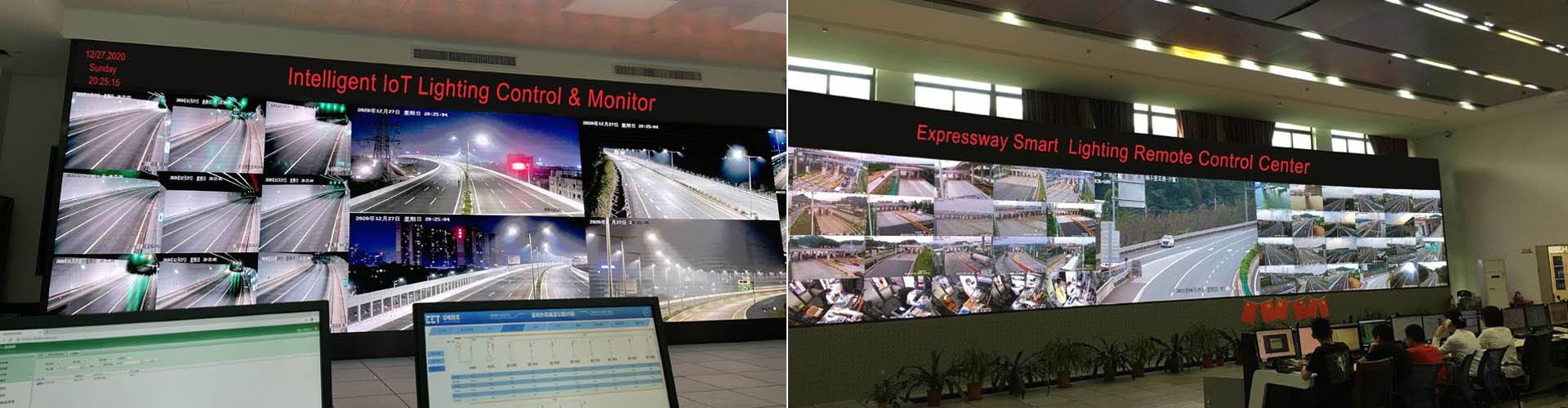
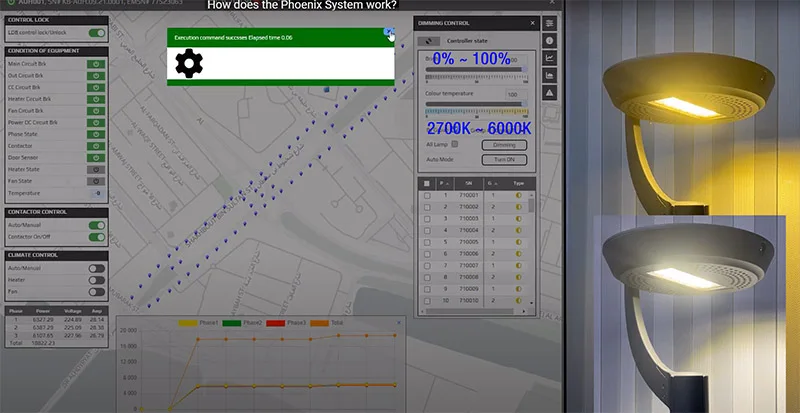
The STSYSTEMPLC command canvas is designed to prove outcomes: city-scale visibility, governed policy execution, and evidence-based reporting for energy, safety, and O&M ROI.
Measured savings (evidence)
Governed safety lighting (enforced)
STSYSTEMPLC turns the lighting grid into a city service carrier layer: value beyond electricity savings — operational ROI, safer streets, and integrated city management.
Third-party platform interoperability
mmWave radar + video integrated unit (traffic optimization)
Industrial-grade discipline (continuous duty)
Brand & delivery (STSYSTEMPLC)
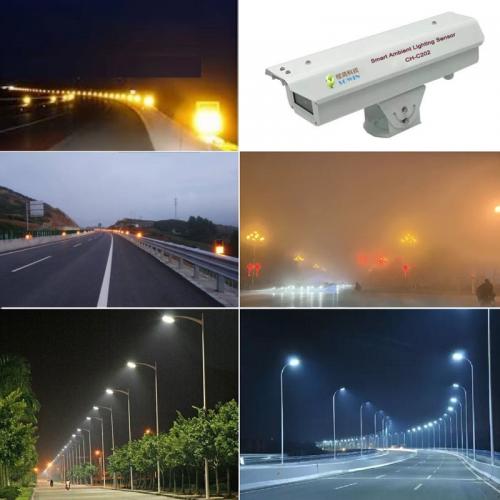
6000K ~ 2700K Adaptive CCT (Safety Mode)
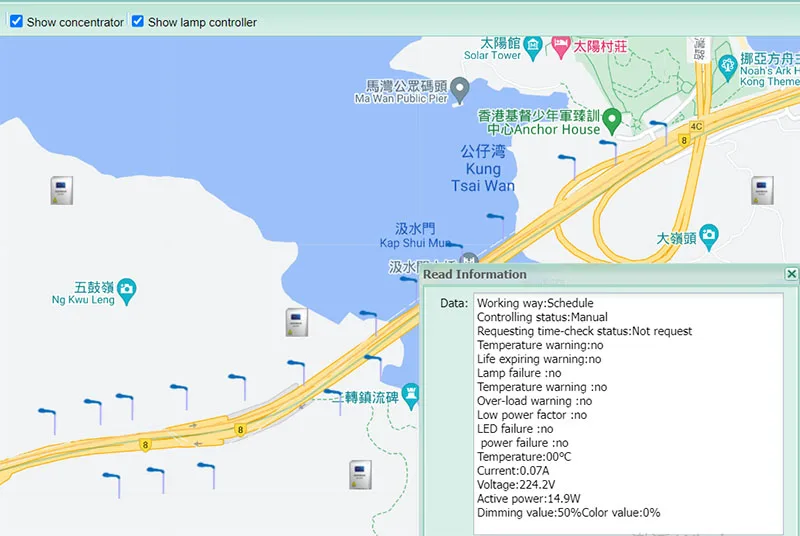
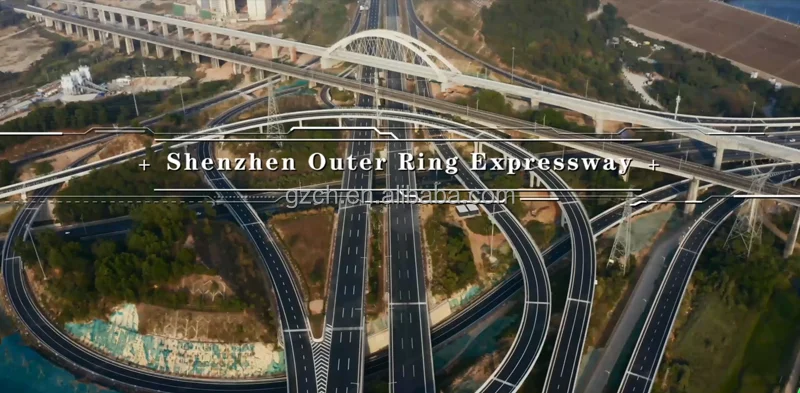
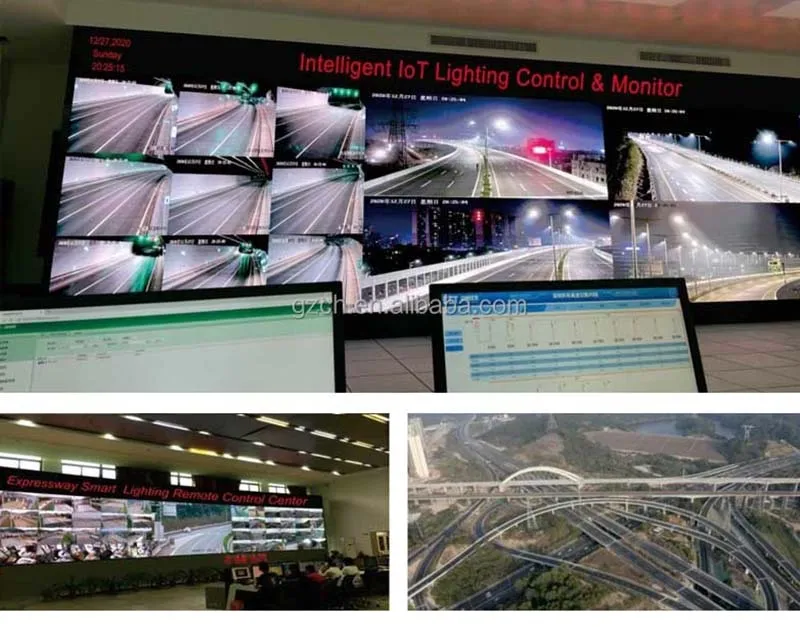
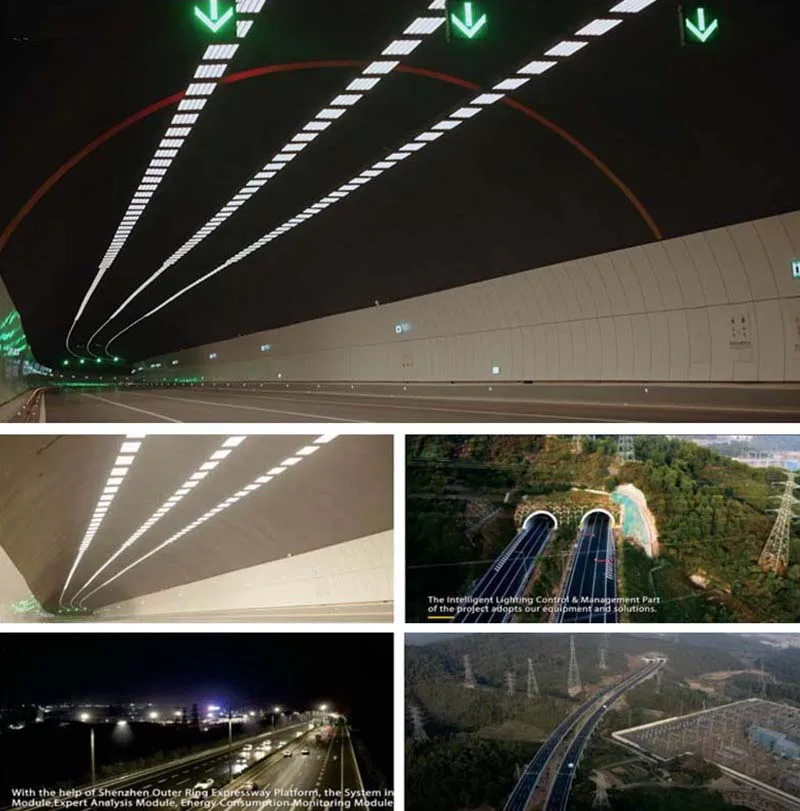
93km Highway + Tunnel Groups — Hybrid PLC + LoRa + Sensor Networking
Smart Street Lights Enhance a Smarter City
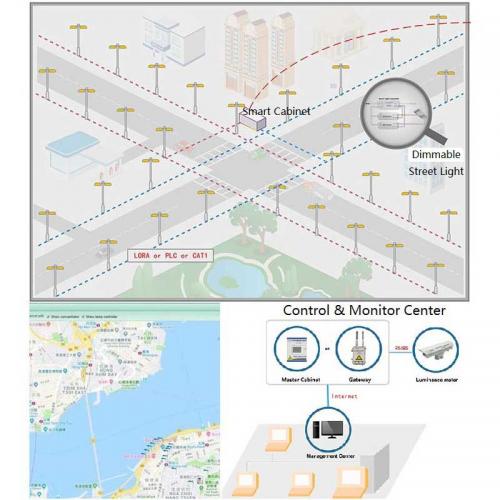
SOWIN IoT lighting helps cities become smarter and greener by improving public lighting safety, reducing energy consumption and emissions, and enabling livable, charming, and sustainable public spaces. With large-scale deployments across highways and tunnels, the STSYSTEMPLC approach covers multiple budget levels—from basic remote switching to lamp-level smart management.
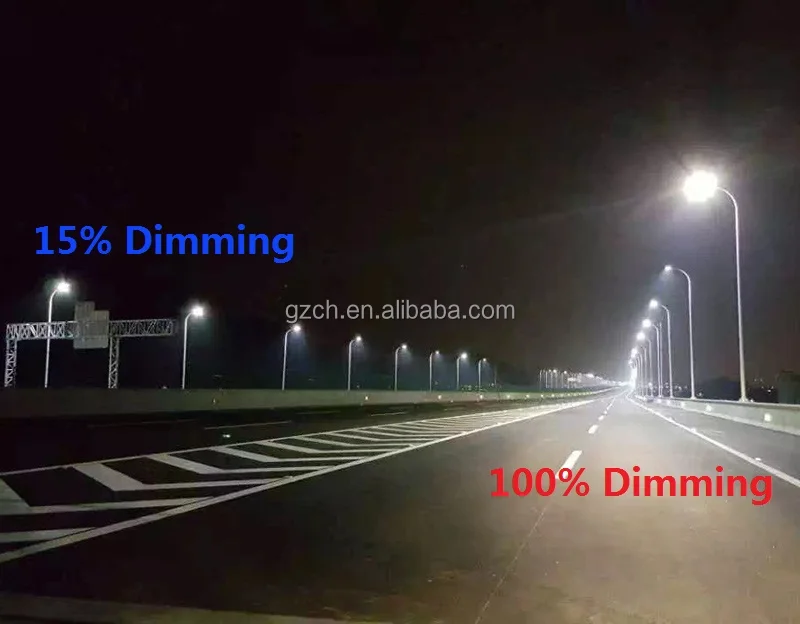
The system provides secure, centralized visibility and control with scheduling, scenes, and on-demand dimming. Adaptive CCT (6000K to 2700K) supports extreme-weather safety modes, while sensor networking maximizes energy optimization efficiency. Encryption supports strict security requirements.
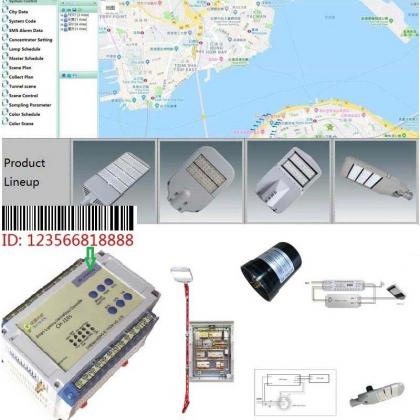
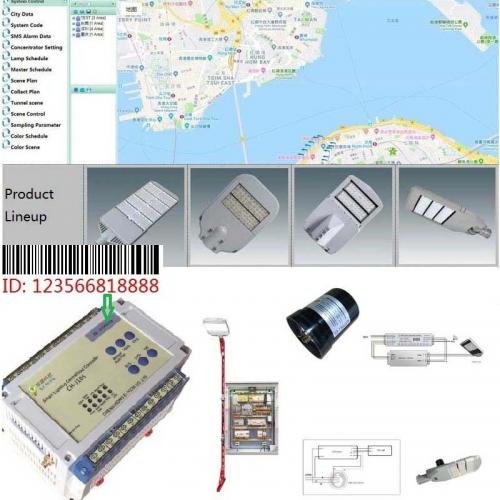
A web application with map-based visualization tracks cabinets and individual lights, enabling real-time fault reporting, efficient dispatch, and data-driven planning. Upgrades are possible via dimmable drivers and lamp controllers or full LED replacement, achieving significant energy savings. Open protocols support integration with third-party intelligent platforms and IoT devices.

Key Characteristics (Condensed)
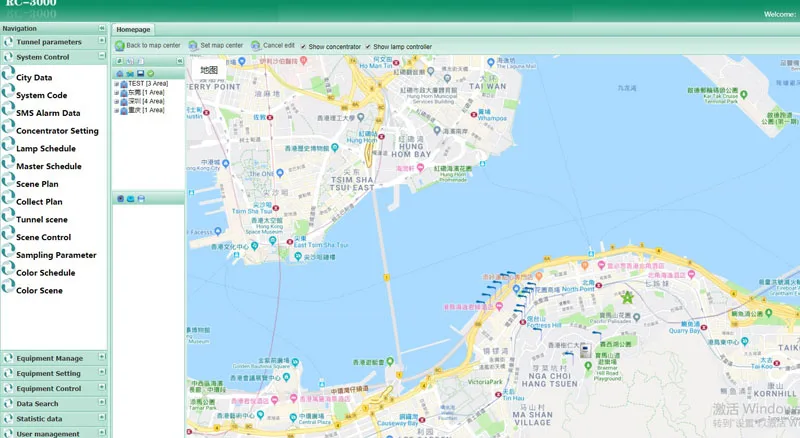
Citywide Control & Overview (Condensed)
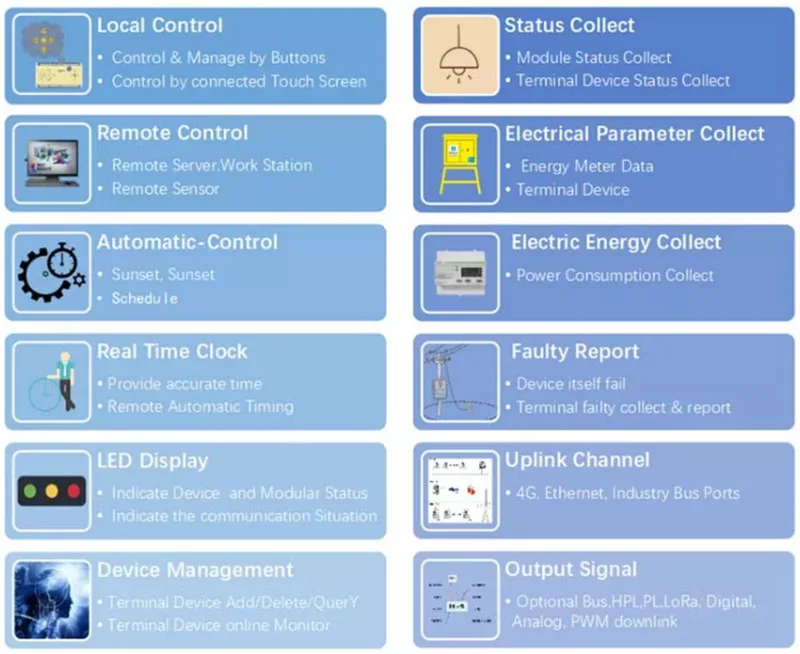
Configure group or individual control, road-class policies, event scenes, and adaptive dimming triggered by sensor networking (motion, ambient, and optional extensions). Modern deployments combine LED luminaires, lamp controllers, cabinet intelligence, and server governance.
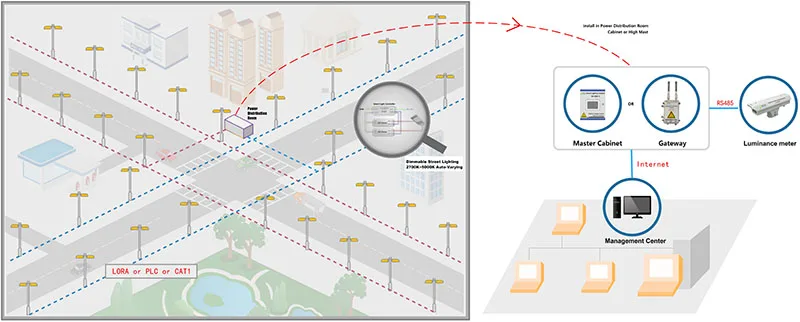
Fault Monitoring & Proactive Maintenance (Condensed)
City-level alarms appear on the map for fast dispatch and reduced inspection cost. Cabinet intelligence supports door events, outages, leakage, grid/lamp status, malfunction reporting, and data-rich notifications.
Energy Optimization & Reporting (Condensed)
Daily/monthly/yearly consumption and savings by cabinet or city with visual reports, supporting maintenance planning and smart city energy targets.
Segment Control Cabinet (Condensed)
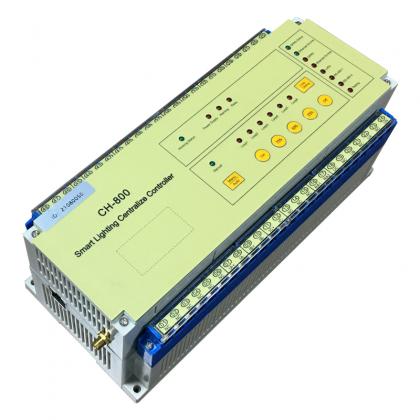
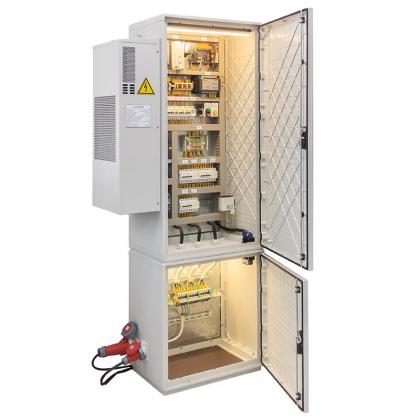
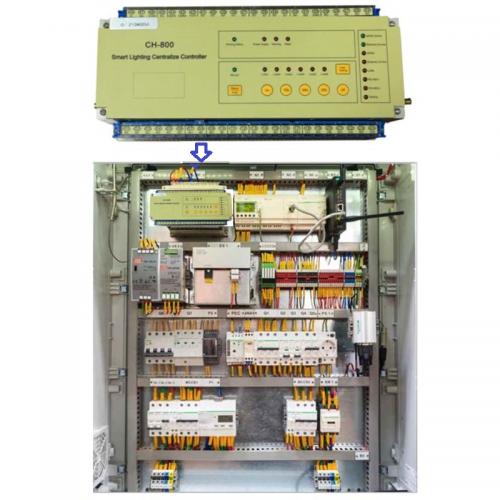
The cabinet acts as the operational nerve center: group control, feeder monitoring, event governance, and autonomous stability even when the internet is unavailable, supported by astronomical calendar logic and measured electrical parameters.
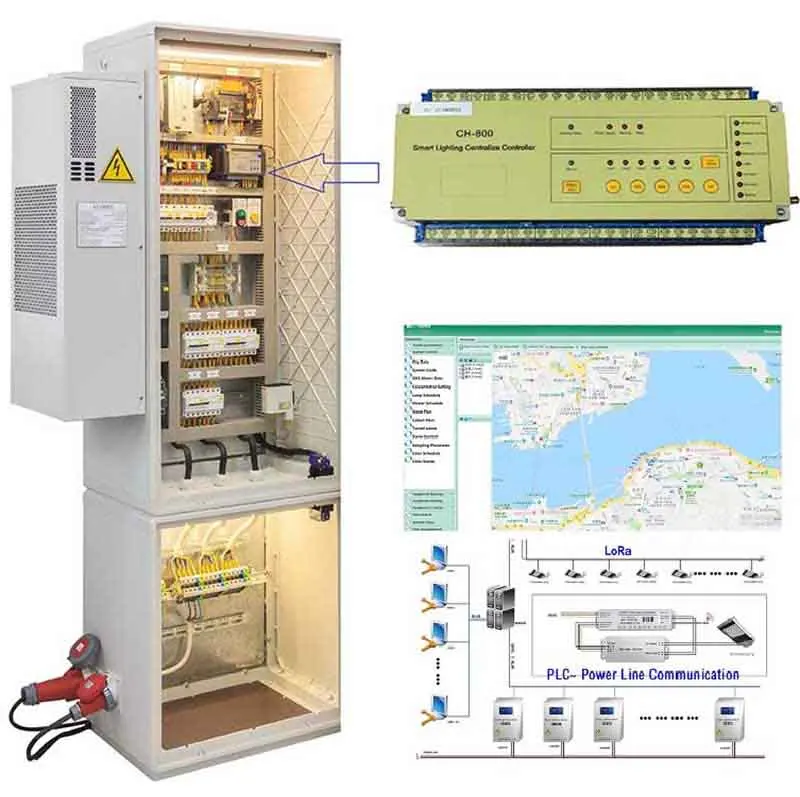
Lamp-Level Control (Condensed)
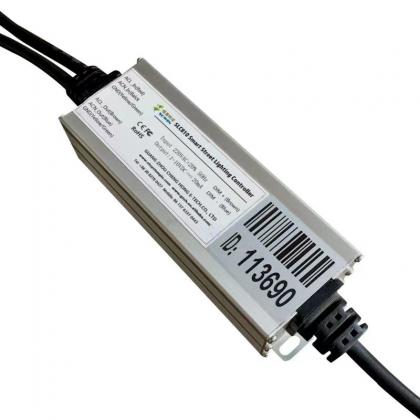
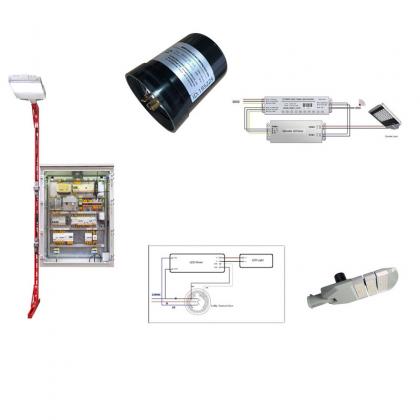
Lamp-level controllers provide remote on/off/dimming, status monitoring, electrical feedback, and optional sensor networking. The always-on grid can also host additional smart city services such as EV charging, weather sensors, CCTV, and traffic flow cameras.
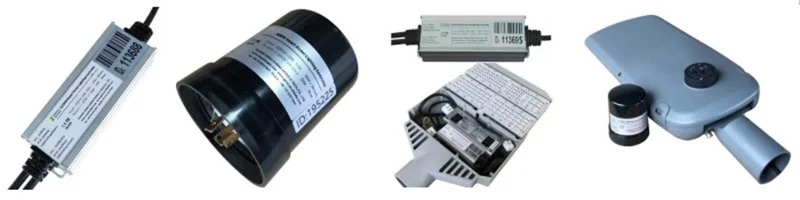
Sensor Networking & Adaptive Lighting (Condensed)
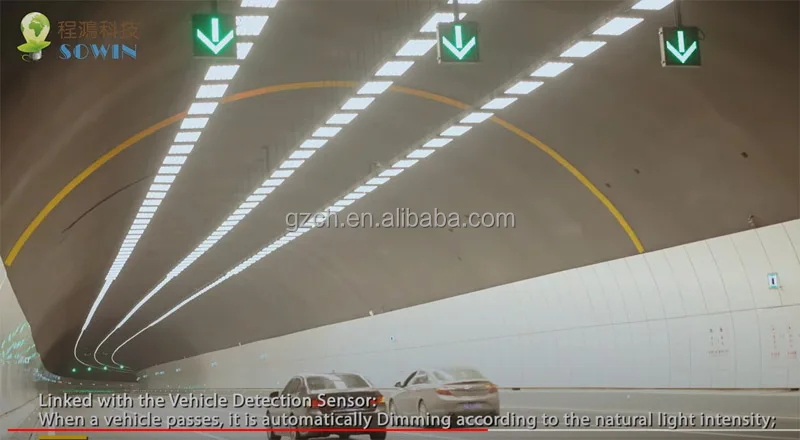
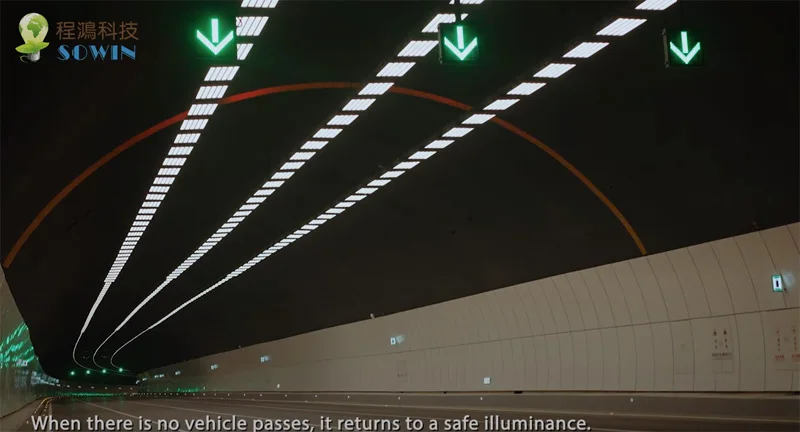
Sensor networking enables the right light at the right place: busy areas, unexpected events, and comfort-aware safety lighting. Automated fault notifications and performance insights support better decisions and fewer citizen complaints.
Adjustable CCT (2700K ~ 6000K) (Condensed)
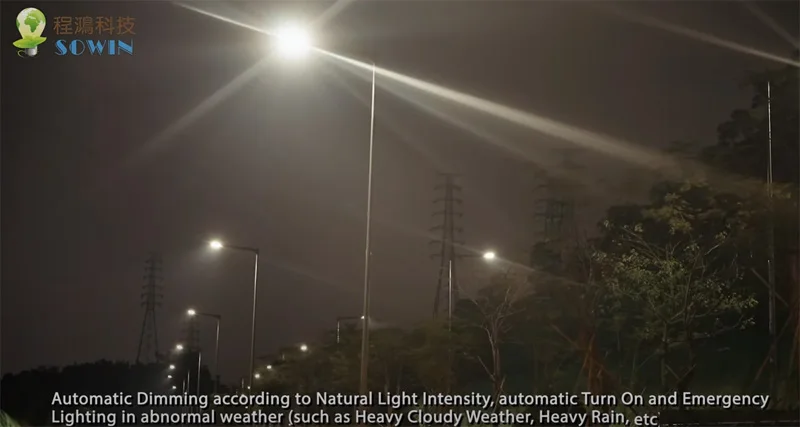
Adaptive CCT supports safety and comfort in storms, snow, and fog by shifting from daylight/cool white to warm white when required, including tunnel compensation strategies, triggered by ambient sensor networking.
Multi-Communication Channels (Condensed)
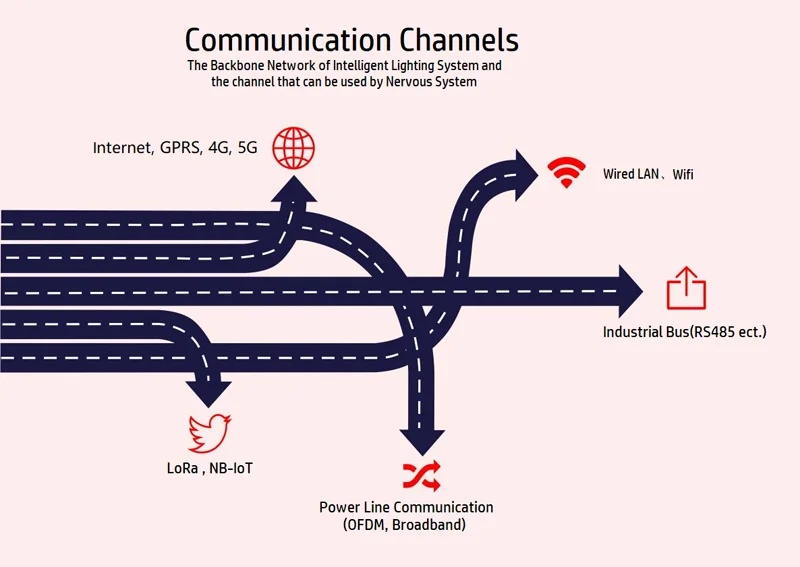
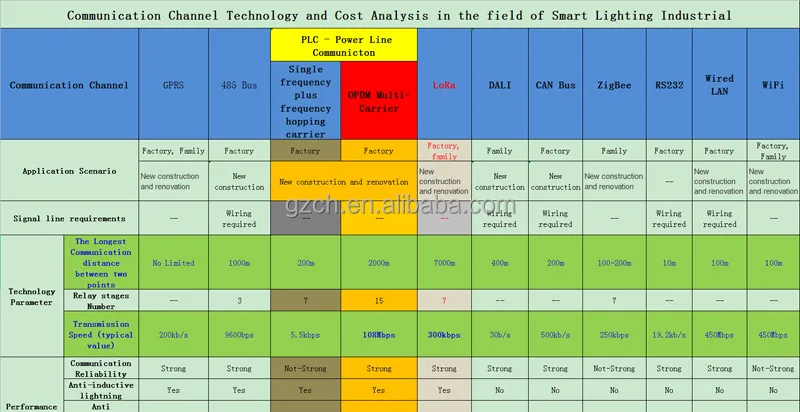
PLC transfers data over existing powerlines; LoRa provides robust transformer-crossing capability.
Smart City Integration (Condensed)
Integrate traffic flow, security, environmental sensors, EV charging, emergency response, weather systems, asset management, and more through a single command dashboard and open integration approach.
Case Study (Condensed)
93km Highway and Tunnel Groups using HYbrid of PLC + LoRa with Motion/Ambient Sensor Networking for maximum energy optimization.
For a controlled engineering pack and training: contact our engineering team.
Urban lighting is not a “buy once and forget” product. It becomes a city-wide operating layer with governance rules, evidence outputs, and long-run maintenance behavior. If the platform is wrong, the city pays the cost every night for years.
Trap 1: ROI Without Evidence
If a supplier cannot provide assumption sheets, kWh reports, and traceable policy logs, the ROI is not auditable. Finance committees cannot defend it in future reviews.
Trap 2: Single-Channel Networking
Complex feeders, transformer barriers, and topology drift break “paper architectures.” Without hybrid PLC + LoRa resilience, stability collapses when conditions turn harsh.
Trap 3: “Upgrade” That Is Actually Rebuild
Closed systems and weak integration turn every future expansion (sensors, EV, traffic, CCTV) into a new project. The city pays again for controllers, gateways, software, and commissioning.
1) Multi-Year OPEX Leakage (Every Night)
Without governed dimming profiles + verified kWh reports, savings become “belief-based.” The result is continuous OPEX leakage that no one can prove or stop.
2) Safety Exposure in Extreme Weather
If safety modes and networking stability fail during storm/fog/snow, the city inherits visibility risk, citizen complaints, and governance accountability.
3) Rebuild Cost Disguised as “Upgrade”
A weak platform cannot evolve. Integration and evidence gaps turn into rework: new controllers, new gateways, new software, and repeated commissioning.
4) Evidence / Audit Failure (Budget & Tender Risk)
If the supplier cannot deliver assumption sheets, traceable policy logs, and audit-ready reports, project justification becomes fragile under review and future tender cycles.
Related Tags :

Address : F4,Bldg A, Hanzhong Industrial Park, No.67, North of Xinsha Ave, Xin Tang, Zeng Cheng, Guang Zhou, China
Tel : +86 20 8278 0427
Email : info@stsystemplc.com
Email : morrison426@163.com