This is a Global Engineering Reference Center for OEM-grade replacement review & risk control — not a catalog listing.
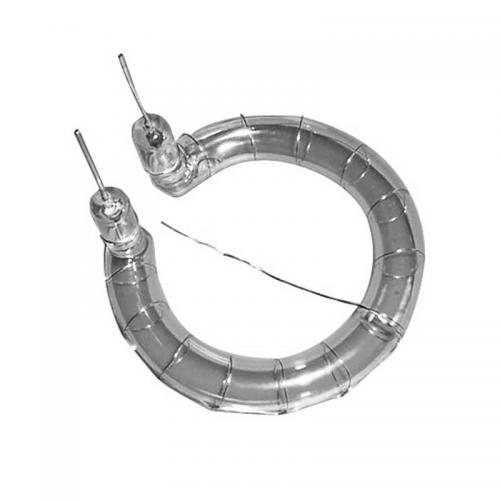
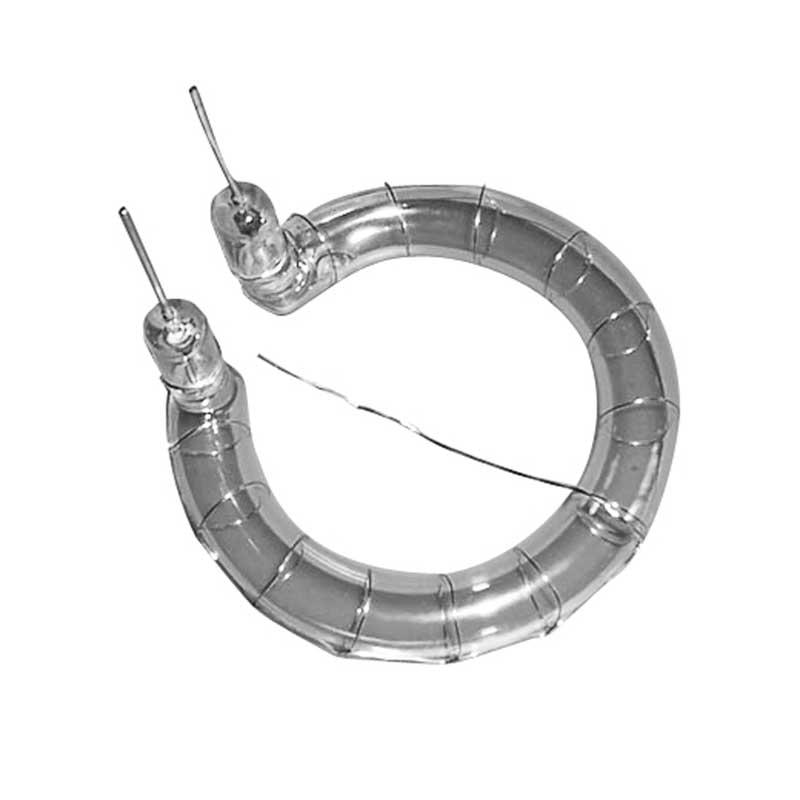
SOWIN GXEC | Professional Photography Xenon Flash Tube Review Center for Studio Flash, High-Speed Imaging and Legacy Flash Head Replacement.
Engineer-first center for xenon flash tube selection, replacement matching and endurance labeling. Built to eliminate hidden failures: misfire, output drift, early failure.
Search coverage priority: professional photography xenon flash tube / studio flash xenon tube / high-speed imaging flash tube / camera flash tube replacement / legacy flash head replacement.
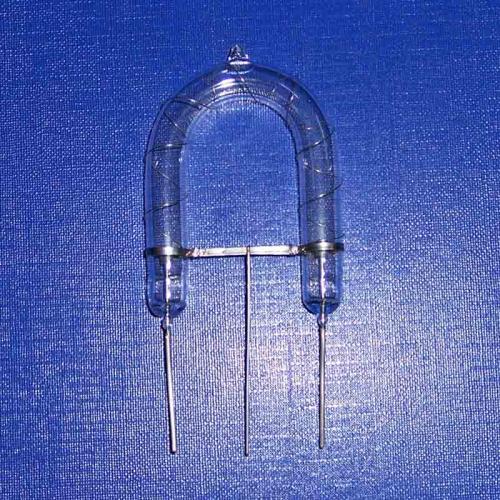
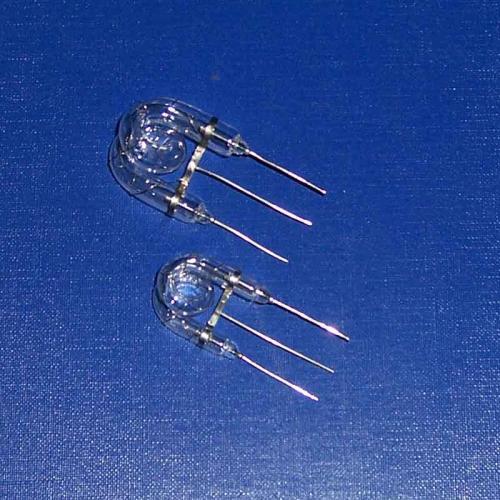
Cross-industry proof: SOWIN GXEC also supports Stroboscopes, Warning Beacons, IPL, Aviation Systems, Solar Simulation and UV System applications, proving wider high-load xenon manufacturing capability without weakening this page's professional photography focus.
Brand-neutral search context: Heimann / Excelitas legacy continuity, European studio flash systems, North American warning light ecosystems, industrial stroboscope repair models and Asian OEM/private-label flash head service routes. No affiliation, authorization or original-brand supply is claimed.
Fastest path to the correct tube: Send tube photo + wiring/trigger photo + flash frequency. We return a verified match + CORE endurance label suggestion.
German-Imported QUARTZ / SCHOTT Glass Route: For high-end professional studio flash and high-speed imaging projects, SOWIN can manufacture Xenon Flash Tubes with German-imported QUARTZ or SCHOTT glass according to project requirements. This material route supports stronger thermal-load tolerance, cleaner optical behavior, reduced blackening risk and better long-term output stability under repeated high-energy discharge.
PDF pack available: Request our detailed parameter table PDF (dimensions, trigger method, duty-cycle window, aging notes) for procurement verification.
DECISION TRAP — BUYERS WHO SKIP VERIFICATION PAY TWICE
If you cannot re-qualify the whole system, you cannot “substitute.”
The trap: a wrong replacement often “lights up” on day one, then fails after long runs.
The bill: downtime + rework + urgent procurement + warranty risk + audit exposure.
The fix: verify geometry + trigger coupling + duty cycle, then lock a CORE endurance level in your spec.
Buyer action: Before you place any order, ask us for the PDF engineering parameter table to confirm duty-cycle rating & trigger-coupling compatibility.
|
Review Point #1 — Risk Reversal
If you send the 5 checklist items, we respond with a verified recommendation and risk notes (misfire / drift / lifetime factors).
No guessing required.
|
Review Point #2 — Cost Anchor
Verification cost is lower than downtime cost, especially for high-frequency duty programs.
Engineer it once. Buy it once.
|
Review Point #3 — Compliance Pressure
In many Tier-1 programs, unapproved substitution is treated as non-conformance (audit / warranty / liability exposure).
Ask for verification before ordering.
|
Non-negotiable rule: If you cannot prove trigger coupling and duty cycle rating, you are not buying a “replacement” — you are buying a risk.
20-YEAR ENGINEERING VERDICT
Why Xenon Remains the Reference Standard for Peak-Power Industrial Flash Applications.
Xenon flash is not an electronic light source — it is a physical plasma discharge.
The light is generated by a high-energy capacitor dumping into ionized xenon gas, producing an instantaneous arc with: 10–100× peak intensity, microsecond-class duration, and a near-sun broadband spectrum.
LEDs, by contrast, are semiconductor emitters limited by junction temperature, driver switching speed, and thermal accumulation. Under high repetition or high peak demand, LED systems must sacrifice either brightness, pulse width, or lifetime.
In industrial flash, inspection, warning, strobe, solar simulation and UV systems, the system does not want “light” — it wants energy delivered in a controlled microsecond window with repeatable aging.
That physics has not changed for decades, and no semiconductor architecture has replaced it. This is why xenon remains the reference technology wherever peak power, spectral stability, timing precision, and long-run repeatability are mission-critical.
Want the hard numbers? Request the PDF parameter matrix for your exact model: arc length, OD, trigger type, voltage range, repetition limits, and recommended CORE level.
XENON vs LED — ENGINEERING PARAMETERS (PROCUREMENT-DECIDING)
If the application is peak-power + microsecond timing, the physics favors Xenon.
Engineering Matrix (Extended)
|
Parameter
|
Xenon Flash Tube
|
Industrial LED Strobe
|
|
Peak Intensity
|
10–100× higher at pulse peak
|
Thermal & driver limited
|
|
Pulse / Flash Duration
|
microsecond-class achievable
|
Often longer pulses / rise time limited
|
|
Spectral Coverage
|
broadband (near-sun)
|
Narrow-band / phosphor shift / bin spread
|
|
High Repetition Stress
|
Stable when rated by duty cycle
|
Heat accumulation reduces output & lifetime
|
|
Timing Precision
|
Capacitor discharge driven; very sharp pulse edges
|
Driver & thermal control constraints
|
|
Aging Behavior
|
Predictable under controlled duty window
|
Lumen droop + thermal history sensitivity
|
|
System Risk When “Looks Similar”
|
Main risks are trigger coupling + duty window mismatch
|
Main risks are driver tuning + thermal runaway margins
|
|
Best Fit Scenarios
|
Peak power + microsecond stop-motion + broadband needs
|
Lower peak power; longer pulses; continuous illumination
|
Procurement shortcut: verify geometry + trigger coupling + duty cycle, then lock CORE endurance labeling in the spec.
Engineering buyers: Ask for the PDF comparison + parameter sheet to attach to your internal approval, so your team can sign off with measurable specs (not “similar” wording).
ENDURANCE PROOF (ENGINEERING VERIFIED)
Validated for High-Frequency Endurance — Without Marketing Claims
|
Validation Path
|
Engineering Meaning
|
|
Strict endurance program
|
Continuous endurance verification of 1100+ hours per cycle, focused on ignition stability and controlled aging behavior.
|
|
Risk-control matching
|
Verified by geometry + trigger + duty cycle + CORE label to prevent hidden misfire and early failure.
|
Practical meaning: We do not sell “looks similar”. We sell a verified operating window. For strict programs, request controlled-share proof after verification.
Field-Validated Scaling Path — From Engineering Sample to Global Production
This is not a lab-only claim (continued). Endurance is verified through a controlled scaling sequence that exposes hidden failure modes before mass deployment:
Stage 1 — Engineering Samples (10 pcs): ignition stability, trigger coupling, electrode geometry and optical output are verified under defined duty cycles.
Stage 2 — Pilot Run (100 pcs): repeatability, dispersion, and early-life failure statistics are validated.
Stage 3 — Trial Production (1,000 pcs): real equipment integration, duty-cycle stress, and aging curves are confirmed.
Stage 4 — Global Field Use (5,000+ pcs): multi-site environmental exposure, supply consistency and long-run drift behavior are measured.
Stage 5 — Regular Production (10,000+ pcs per month): statistical process control and predictable lifetime become procurement-grade.
The 1100-hour continuous endurance program sits at the core of this ladder, ensuring ignition stability, electrode wear, and optical output remain inside a controlled operating window as volume scales — not just on a single golden sample.
Need endurance evidence for your file? We can issue a PDF parameter & endurance summary (duty-cycle notes + verification checklist) for engineering sign-off.
CONTROLLED HIGH-END EQUIPMENT PROGRAMS — GOVERNANCE MODEL (BRAND-NEUTRAL)
Single-Source · No Unapproved Substitution · Controlled Manufacturing · Controlled Procurement Role
What top-brand programs protect: engineering control, validated performance window, traceability, supply-chain stability.
What they forbid: silent substitutions, uncontrolled “equivalents”, and supply drift that appears only after long runs.
Need procurement-grade proof? Ask for our controlled-share PDF parameter table to document the verified operating window (especially for audit & warranty risk control).
|
1) SINGLE-SOURCE / CONTROLLED PART
• Treated as brand-controlled and single-source in many programs.
• Unapproved alternates are treated as non-conformance (audit / warranty / liability exposure).
• If you cannot re-qualify the system, you cannot substitute.
|
2) CONTROLLED MANUFACTURING CELL
• Restricted process + controlled storage + trained personnel.
• Lot traceability + packing verification + shipment verification.
• Purpose: stop “supply drift” and keep aging predictable.
|
3) PROCUREMENT-ONLY ROLE IN CONTROLLED PROGRAMS
• Manufacturers/assemblers act within a controlled procurement and logistics role.
• Supplier role classification is governed by the brand owner governance model.
• Any sourcing change requires prior written approval.
|
Proof (Docs) policy: Controlled-share proof documents are verification-required and typically NDA-bound.
BRAND-NEUTRAL ENGINEERING SEARCH REFERENCE MAP
Heimann / Excelitas Legacy Continuity + EU / US / Asia Equipment Search Contexts
These references are used only for engineering comparison, search context, repair-bench identification and procurement communication. SOWIN GXEC does not claim affiliation, authorization, original-brand supply or official status with any third-party brand.
Legal-safe trademark note: All third-party names are trademarks or trade names of their respective owners. References are nominative, descriptive and used only for equipment identification, repair-bench communication, search context and engineering review. No sponsorship, endorsement, affiliation, authorization, official status or universal compatibility is implied.
Why this section matters: buyers rarely search only “xenon flash tube”. They search by discontinued supplier, equipment family, old service file, repair model, warning-light ecosystem, stroboscope model or studio flash head. This map keeps those search paths visible while using safe, brand-neutral language.
|
1) Professional Photography / Studio Flash Search Route
Search-intent examples: studio flash xenon tube, professional strobe lamp, flash head replacement, high-speed photography flash tube, repair-bench flash tube, rental studio maintenance, output drift control, color consistency, German QUARTZ glass xenon flash tube, SCHOTT glass xenon flash tube, Profoto-style, Broncolor-style, Elinchrom-style, Bowens-style, Hensel-style, Godox-style and Jinbei-style service contexts.
|
2) Legacy Supply Continuity: Heimann / Excelitas Search Route
Search-intent examples: Heimann xenon flash tube replacement, Excelitas xenon flash lamp continuity, legacy German glass logic, discontinued flash tube sourcing, old xenon lamp repair and controlled replacement route. This route is useful for buyers who face discontinued catalogs, aging installed bases, missing service drawings or supply exits and need a safer engineering review before buying.
|
|
3) Traffic Enforcement / ANPR Search Route
Search-intent examples: traffic enforcement xenon flash tube, ANPR flash lamp, red-light camera xenon tube, speed camera flash replacement, OCR imaging flash stability, VITRONIC-class, Jenoptik-class, Sensys Gatso-style, Yunex Traffic-style, Verra Mobility-style, Q-Free-style and SWARCO-style engineering review.
|
4) Warning Light / Beacon Search Route
Search-intent examples: warning beacon xenon tube, vehicle strobe lamp, emergency warning light replacement, amber beacon flash tube, fleet warning light maintenance, Whelen-class, Federal Signal-style, Feniex, SoundOff Signal, Code 3-class, ECCO aftermarket map, TOMAR-style, SHO-ME / Able 2-style, Truck-Lite / Signal-Stat, Star Safety Technologies, Hella-style and Haensch-style search contexts.
|
|
5) Industrial Stroboscope / Repair Model Search Route
Search-intent examples: industrial stroboscope xenon tube, strobe light flash lamp, motion inspection strobe tube, Monarch Instrument, Nova-Strobe, BAX, BBX, DAX, DBX, PBX, L-1903, Fluke 820-2, Extech 461830, Extech 461825, Drello 2500 and Drello 3000 repair search contexts.
|
6) Asian OEM / Private-Label Service Route
Search-intent examples: Asian OEM flash tube, Chinese private-label studio flash tube, repair-shop xenon lamp, unlabeled flash head, old equipment tube matching, mixed-brand fleet maintenance and supplier-switch continuity. This route supports buyers who cannot identify a brand clearly but can provide photos, dimensions, trigger structure and duty-cycle information.
|
Compliance boundary: these names are not used as compatibility claims. The buyer must still verify arc length, tube diameter, electrode orientation, trigger coupling, pulse energy and duty cycle before any replacement decision.
APPLICATIONS · PRIMARY INDUSTRIAL FOCUS
|
Stroboscopes · Warning Beacons · IPL · Aviation Systems · Solar Simulation
|
+ UV System
|
Built for buyers who cannot afford long-run surprises: misfire, drift, early failure.
Match by geometry + trigger coupling + duty cycle, then lock CORE-A/B/C in procurement specs.
For each application (strobe / beacon / IPL / aviation / solar / UV), we can provide a matched PDF spec table showing recommended duty-cycle window and replacement constraints.
Microsecond timing Extreme peak intensity High-duty endurance Predictable aging OEM-grade replacement review Solar simulation stability UV dose verification
ONE-MINUTE MATCHING CHECKLIST
Send These 5 Items — Get Correct OEM-Grade Replacement Review Fast
|
Item
|
What to Send
|
Why It Matters
|
|
1) Tube photo + ruler
|
Front + side + electrode close-up
|
Confirms geometry & electrode design
|
|
2) Wiring / trigger photo
|
Trigger coil / wiring close-up
|
Identifies trigger structure / coupling
|
|
3) Application
|
Professional Photography / Studio Flash / High-Speed Imaging / Optical Imaging / Stroboscope / Warning Beacon / IPL / Aviation / Solar Simulation / UV System / Other
|
Defines duty & risk profile
|
|
4) Flash frequency
|
Hz / flashes per second (or continuous)
|
Determines endurance behavior
|
|
5) Pulse energy (if known)
|
J rating or capacitor + voltage
|
Prevents overstress & drift
|
Urgency: If you place an order without these 5 items, you are accepting “unknown failure risk”. Send them once — avoid repeated procurement cycles.
Professional Studio Flash Tube Review Matrix
This matrix keeps the page focused on professional photography, studio flash and high-speed imaging while still preserving SOWIN's cross-industry xenon platform authority.
|
Review Item
|
Why It Matters in Photography / Videography
|
|
Arc Length
|
Controls flash field position, reflector match and exposure uniformity.
|
|
Glass OD / Shape
|
Prevents cavity mismatch, thermal concentration and mechanical stress.
|
|
Trigger Coupling
|
Reduces misfire, delayed ignition and unstable exposure timing.
|
|
German QUARTZ / SCHOTT Glass
|
Supports thermal-load tolerance, optical cleanliness and long-term envelope stability.
|
|
Duty Window
|
Prevents early blackening and output drift under repeated studio shooting cycles.
|
|
Color Stability
|
Protects product photography, post-production consistency and repeat session output.
|
CORE A/B/C · ENDURANCE LABELING
Define Duty Cycle → Choose CORE-A / CORE-B / CORE-C
Procurement shortcut: different duty cycles demand different endurance margins. If duty is not specified, failure risk shifts to the buyer after long runs.
CORE labeling is an engineering communication tool: it converts “looks similar” into a defined operating window.
|
Label
|
Typical Duty Profile
|
Use Case / Risk Note
|
|
CORE-A
|
Highest stress / high repetition / long run
|
Most risk-sensitive; stability + controlled aging
|
|
CORE-B
|
Standard industrial duty
|
Balanced endurance & cost
|
|
CORE-C
|
Lower repetition / intermittent
|
Entry-level; still verify coupling
|
|
CORE-A — High Duty / High Risk
• Built for continuous or high-frequency operation where misfire and drift become expensive.
• Requires strict matching of trigger coupling, arc geometry, and verified duty window.
• Engineering goal: predictable aging curve + stable ignition across long runs.
|
CORE-B — Standard Industrial Window
• Balanced option for typical industrial duty cycles with controlled performance expectations.
• Still requires verification of geometry + trigger to avoid “works today, fails later”.
• Engineering goal: repeatability + cost-efficiency without hidden failure risk.
|
CORE-C — Intermittent / Entry-Level
• For intermittent use cases where repetition stress is lower — but matching is still mandatory.
• Most common failure reason is not “quality” — it is wrong trigger coupling and wrong duty assumptions.
• Engineering goal: reliable ignition and baseline repeatability under defined intermittent duty.
|
To lock CORE in your spec: ask for the PDF parameter table (recommended CORE level + repetition limit + trigger structure) and attach it to your purchase approval.
Buyer protection note: CORE labeling removes ambiguity. Without a duty-cycle label, “replacement” becomes “trial”, and the buyer becomes the test lab.
UV SYSTEM · PULSED XENON UV ENTRY
Pulsed UV Disinfection / Medical Sterilization / Semiconductor Curing — Verified Lamp Matching
Engineering constraints (not marketing): ignition stability under repetition, controlled aging, verified matching by geometry + trigger coupling + duty cycle.
Keywords: pulsed xenon UV lamp · xenon UV disinfection lamp · UV flash sterilizer · semiconductor UV curing.
ENGINEERING Q&A BEFORE REPLACEMENT
8 Concise Questions for Professional Studio Flash Tube Approval
Written for fast scanning by studio-lighting engineers, repair benches, rental-fleet managers and procurement teams. Each answer gives the direct decision point, not a long catalog explanation.
1) What information should buyers send before selecting a replacement xenon flash tube?
Send clear tube photos, ruler-based dimensions, electrode close-ups, wiring or trigger photos, equipment model, flash frequency, duty cycle and any known capacitor or voltage data. A xenon flash tube is not selected by appearance only. Arc length, tube diameter, trigger coupling and operating frequency all affect ignition stability. With those details, we can review the replacement window before sample approval or repeat purchasing.
2) Why can a same-size studio flash tube still misfire or fail early?
Same size does not guarantee the same electrical and thermal behavior. Studio flash tubes depend on electrode structure, gas behavior, trigger response, arc position, pulse energy and duty-cycle stress. Two tubes can look similar but age differently under repeated charging and discharge. A mismatch may pass a short bench test, then create unstable ignition, blackening, output drift or shortened service life in real studio use.
3) How does trigger stability affect professional flash head reliability?
Trigger stability decides whether stored capacitor energy is released at the right moment and in a repeatable way. In professional flash heads, unstable triggering can cause delayed ignition, incomplete discharge, inconsistent output or extra power-supply stress. The issue may not appear during a quick test, but it becomes visible in rental studios, high-volume shooting, repeated full-power discharge or long maintenance intervals.
4) Can replacement tubes help control output drift and color consistency?
Yes, when the tube is selected within the correct electrical and thermal window. Output drift and color inconsistency can come from aging, electrode wear, arc instability, trigger mismatch or overstressed duty cycles. For professional photography, the tube must support repeatable flash output, not only produce visible light. A higher endurance level may be safer for rental fleets, repair benches and high-volume studios. For high-end versions, German-imported QUARTZ or SCHOTT glass can further support thermal-load tolerance, optical cleanliness, reduced blackening risk and long-term color-output stability.
5) Can you review EU, US or Asian studio flash ecosystems without claiming official affiliation?
Yes. We can review brand-ecosystem search contexts such as Profoto-style, Broncolor-style, Elinchrom-style, Bowens-style, Hensel-style, Godox-style, Jinbei-style and other studio flash service routes. These references are used only for equipment identification and engineering comparison. SOWIN GXEC does not claim affiliation, authorization, original-brand supply, endorsement or universal compatibility with any third-party brand.
6) Can you support legacy flash heads without a clear part number?
Yes. Many older studio flash heads and repair-bench units no longer have a clear part number or reliable service file. Matching should start from visible evidence: tube photos, measurements, electrode orientation, trigger structure, mounting space and real use conditions. A missing part number does not mean replacement is impossible, but it does mean the review must be careful and sample-based.
7) How should buyers choose between standard and high-endurance versions?
Choose by duty cycle, not by price alone. Occasional photography, rental studio operation, high-volume e-commerce shooting and repeated full-power discharge create very different stress levels. Higher flash frequency and longer working sessions require stronger control of ignition stability, electrode wear and heat behavior. Our CORE-A/B/C labeling helps buyers define the expected operating window before ordering.
8) Can you provide a PDF parameter table for engineering verification?
Yes. Buyers can request a PDF parameter table covering dimensions, trigger method, duty-cycle notes, application limits and recommended endurance level. This helps repair teams, procurement reviewers and studio managers approve a replacement path with measurable data instead of "similar size" descriptions. It does not replace final sample testing, but it reduces ambiguity before quantity purchasing.
Next step: After reading these answers, use the RFQ Template below to send photos, dimensions, trigger information and duty-cycle details. The RFQ form is the engineering intake step after the buyer understands the replacement risks.
SAFETY & ENGINEERING NOTICE
Safety & Engineering Notice: High-energy xenon systems involve high-voltage discharge components. To help prevent electric shock and equipment damage, replacement must be performed only by qualified personnel after ensuring all capacitors are fully discharged according to the original equipment manufacturer service procedures. SOWIN GXEC provides components for technical integration and engineering review; final safety compliance, installation control and system-level validation remain the responsibility of the system integrator, repair organization or equipment owner.
Parameter note: Spectral stability, flash duration, trigger response and output behavior depend on trigger-coil coupling, capacitor energy, cooling design and discharge-circuit conditions. For serious procurement or repair programs, request the SOWIN Engineering PDF Parameter Review for the specific duty-cycle and operating-window assessment before quantity approval.
RFQ CONVERSION CORE (ENGINEERING)
Fast OEM Matching — Copy, Fill & Send
Hard reminder: wrong replacement may work initially, then causes unstable ignition, electrode erosion, output drift, early failure after long hours.
RFQ Template
1) Application: Professional Photography / Studio Flash / High-Speed Imaging / Optical Imaging / Stroboscope / Warning Beacon / IPL / Aviation / Solar Simulation / UV System / Other
2) Equipment brand & model: ______________________________
3) Tube geometry: Arc length ___mm / Overall length ___mm / OD ___mm
4) Trigger / wiring: External / Internal / Wire / Unknown (attach photo)
5) Voltage range (if known): ______________________________
6) Pulse energy (J) or capacitor+voltage (if known): ______________________________
7) Flash frequency / duty cycle: ______________________________
8) Lifetime target / maintenance interval: ______________________________
9) Compliance required: Internal audit / customer requirement / other: __________
10) Attachments: tube photo + wiring/trigger photo (recommended)
SEND RFQ (Copy & Paste) Attach Photos → Fast Answer
FINAL ENGINEERING CHECK — BEFORE YOU LEAVE
Unverified substitution increases downstream risk: re-qualification, downtime, and warranty exposure.
Liability note: A mismatched lamp can trigger under-dose risk (audit exposure) or power-supply over-stress (equipment damage). Verify geometry + trigger coupling + duty cycle before purchase.
Typical “looks fine” → “fails later” chain:
• Misfire / unstable ignition → partial discharge → electrode stress
• Output drift → visibility / measurement / UV dose instability
• Early-life failure → downtime + rework + urgent procurement
Fast prevention: send tube photo + wiring/trigger photo and your flash frequency / duty cycle. We return a verified replacement recommendation + guidance.
Final review point: If trigger coupling and duty-cycle limits are undefined, the replacement window is undefined.
The real test of a replacement starts after you approve it.
Engineering decisions reveal themselves in long-run operation.
© SOWIN GXEC. All rights reserved.